

Roborock Saros 20 Flow Review: The Robot Vacuum Your Messy Family Won't Scare Away
The last time I owned a robot vacuum, it had the power of one of those lightweight, keyboard vacuums, and constantly ran into things. At least, that's how I recall it. We got rid of it because three strands of cat hair inevitably led to 45 minutes of delicate surgery. So when I read the specs on Roborock's Saros 20 Flow, it was like a Model A driver shopping for a Tesla. It's no exaggeration to say, with apologies to the Beastie Boys, that this thing has got more features than I got gray hairs.
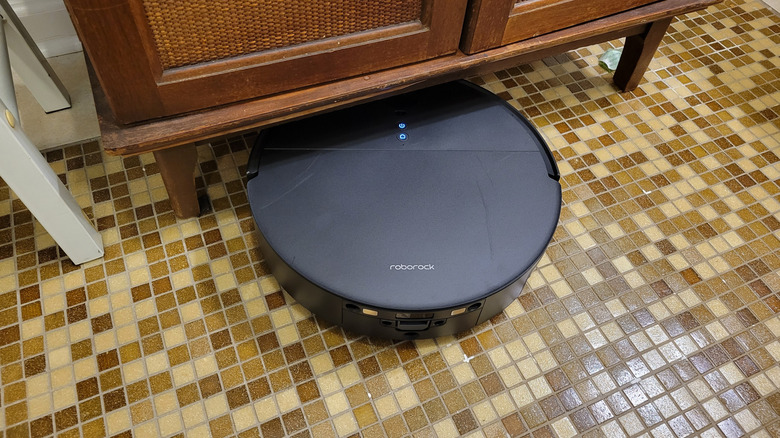
The Saros 20 Flow is one of Roborock's 2026 flagship models and was previewed at IFA 2026 and launched September 14, just under the wire to beat some import restrictions that might impact which new robot vacuums you can purchase after a recent U.S. ban. And if "Saros 20 Flow" isn't enough of a mouthful, every notable feature on this robot vacuum has an equally bewildering name ... SpiraFlow, HyperForce, DuoDivide, and many more. Behind these names hide key vacuuming and mopping functions, as well as anti-tangle brushes, enhanced edge cleaning, and a ton of navigation features. Other selling points include live video streaming; remote steering; a 6,400 mAH battery that lasts more than 300 minutes and recharges in half that; comprehensive smart assistant support, including a built-in voice assistant; and a stature that allows it to get under things other vacuums usually can't.
Of course, what I was most interested in was vacuuming and mopping, but first came setup ... basically snapping a ramp in place, filling the water tank, and plugging the dock in. The vacuum connected right to the app and, after some rough mapping of my downstairs, was ready to roll.
Methodology
I've owned a few radically less expensive robotic vacuums over the past 18 or so years, and I have more experience repairing vacuums (including robot vacs) than anyone wants. After reviewing all the specs of the Roborock Saros 20 Flow, I felt pretty comfortable with what I needed to check out. For much of my testing, I simply set it up and let it go, periodically following it around to see if anything had broken or if we were going to need new cats. I noted what seemed to be going well and what didn't. This is no small feat in my house, which has sometimes got more clutter than Picasso got paint.
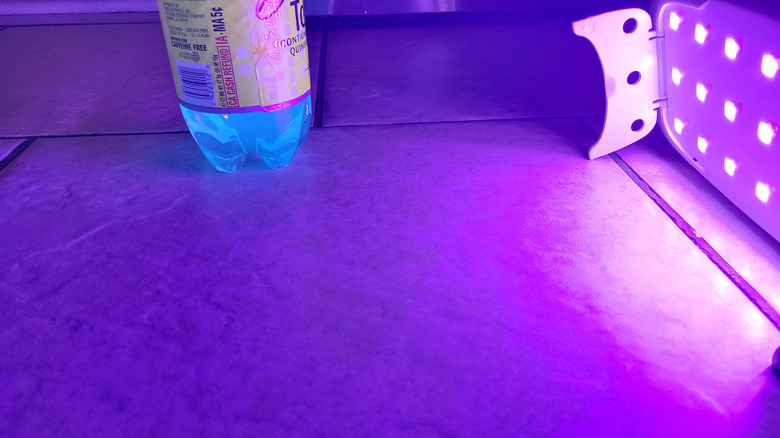
The next bit was more structured and intentional. I challenged the vacuum and mop functionality with the usual stuff like rice and ketchup, and also with some things more typical of our floors, like small Lego bricks. Since the roller system promises to actually remove stains and soil rather than spreading it very thinly across an entire room, I needed a way to test the efficacy of the mopping and arrived at UV detection. UV detection is used to test cleaning processes for cleanrooms, medical applications, and the like. My medium of choice was tonic water, which contains quinine, an antimalarial chemical that fluoresces under UV light.
Toward the end, I did some cursory testing of AdaptLift Chassis 3.0 — a fancy way of saying the vacuum can climb over two-tier transitions and thresholds as tall as 3.46 inches. My home didn't have a threshold to test it on, so I created one with a 1-inch pine board and a 2x4, totaling 2.5 inches.
SpiraFlow pressurized roller-mopping system
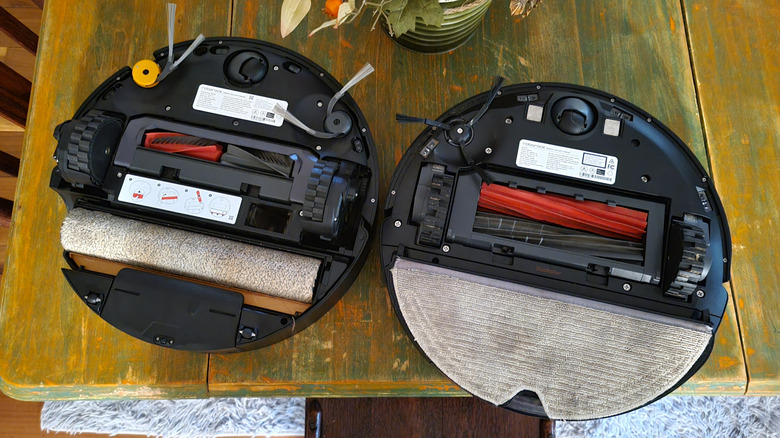
SpiraFlow 2.0 is a mechanism for washing floors that involves evenly wetting a 10-inch roller (think paint roller), controlling that moisture with a "precision scraper" (think squeegee), spinning the roller at 240 RPM to clean messes and stains, then squeegeeing away the dirt and dirty water into a wastewater tank. The system uses warm water and, ideally, automatically dispenses a floor cleaning solution, but Roborock's recommended cleaning solution for the device was out of stock. Rather than testing the vacuum with someone else's cleaner (which is not recommended), I cleaned vinyl, hardwood, and two tile floors with plain water without a hitch.
Most wet/dry vacuums use thin pads or spinning scrubbers that seem to collect some dirt and evenly distribute the rest, but I found that the SpiraFlow system constantly rinses the roller as it cleans, with occasional visits to the dock for a thorough hot-water washing. These visits happened twice per room for the first few days, but once it rid my floors of some previously invisible grime, the roller managed rooms with a single dock-washing each. I watched the roller extend outward for better edge mopping, and I did catch it extending the roller in the middle of an open floor once for no apparent reason, but also no apparent harm done. The lifting roller pulled away from carpets when vacuuming and kept them dry, and also left the mopped floor nearly dry — an important consideration for anyone with wood or laminate flooring.
However, to really test its cleaning abilities, I spritzed some tonic water on my tiled floor and left it to dry. After the robot vacuum mopped the area, I found that the UV light only showed a few traces of quinine and that when I touched the floor, I did not feel any sticky residue.
Vacuuming debris with HyperForce suction
The Roborock Saros 20 Flow sucks up stuff with a suction power that can reach 36,000 Pascals (Pa), which is more than what you typically get from upright vacuums. This suction power is part of a well-designed system for liberating soil from floors and carpets with spinning brushes deployed at the right speed for whatever the vacuum thinks it's cleaning up. (The full 36,000 Pa is only available in Turbo mode.) Whatever is sucked up by all those Pascals is moved into a surprisingly small dustbin, which is auto-emptied by the dock.
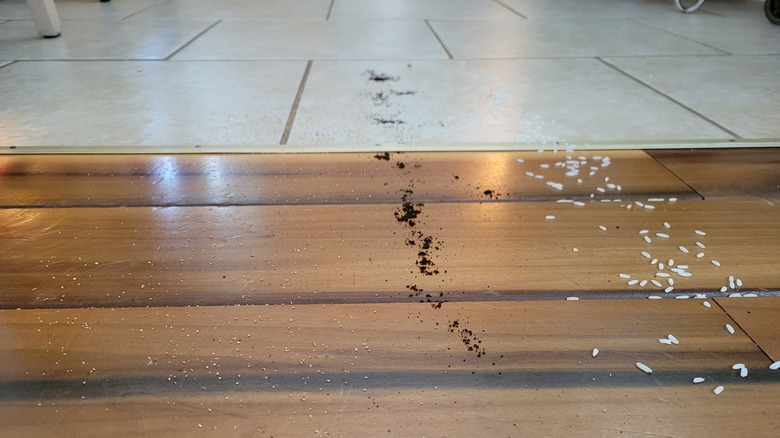
All of this worked well enough during automated daily vacuuming, and vacuuming mostly went well for my test materials. Damp and dry espresso grounds were picked up with no problem. Rice wasn't flung all over the room ... a courtesy not extended to walnut shell abrasive, a medium normally used for the gentle sandblasting. The vacuum's brushes seemed to spread the walnut shells around a lot, but did eventually manage to pick it all up. Based on our previous experiences with robot vacs, my wife expressed some concern that rug fringes might get tangled in the brushes, but it never happened. I did receive two voice notifications for "Error 5: main brush jammed" for a Lego brick and a toy car's rubber tire, which were easily removed.
The only other trouble came when I threw the vacuum a curveball to test its stain-target AI cleaning, which is designed to change its cleaning strategy based on the mess it detects. The device attempted to vacuum a liquid spill in the form of a non-staining dyed drink mix. In principle, when the vacuum recognizes a puddle of liquid, it should turn off both the side brushes and vacuum. This resulted in a little liquid in the brushes and vacuum chamber ... though almost none in the dustbin.
DuoDivide anti-tangle brush
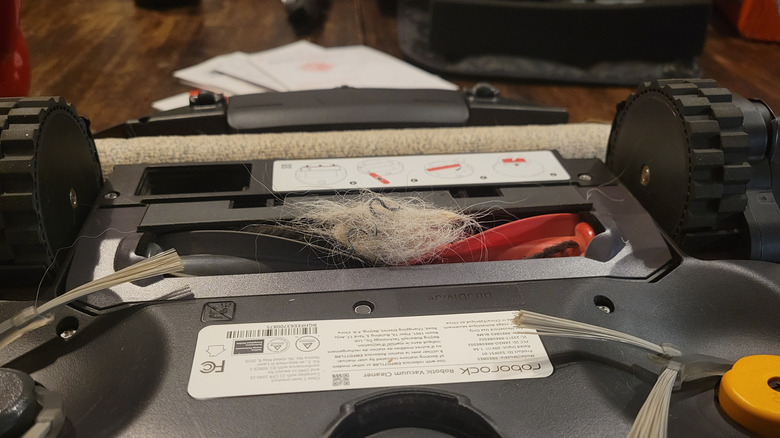
Five of the six people in our household have ponytail-length hair, which creates an unhappy environment for shower drains and robot vacuums alike. If you've ever tried to operate a vacuum, especially a robot vacuum, in such an environment, you know what an utter nightmare this can become. (This is also true of small radio-controlled toy cars, by the way, and for much the same reason.) Hair gets wrapped around brushes and axles or spindles and eventually starts slowing down the works significantly. This probably stresses the electric motors and certainly decreases the efficacy of the brushes.
To deal with this, Roborock employs a two-brush design that I've seen on other companies' vacuums as well, which shuffles strands of hair toward the space between them, rather than having them wrap immediately and semi-permanently around a single brush. How exactly this works is still a bit of a mystery to me, but hair that I retrieved from hairbrushes and a drain hair catcher simply disappeared into the dustbin.
While the hair of our Great Pyrenees/border collie mix occasionally (three times that I recall) collected between the brushes without getting sucked into the dustbin, the brushes never stalled. Remarkably, the vacuum (even when a bit of hair was trapped between brushes) leaves practically no dog or cat hair on our floors — this is the first time I've ever seen something like this. This alone makes the Saros 20 Flow a good pet vac ... and, like Roborock's S6 MaxV, this robot vacuum doubles as a pet cam of sorts after a recent update. It does seem to insist that a stuffed giraffe is a pet and has taken several pictures of it in various locations. The stuffed giraffe is much less afraid of the vacuum than my exceptionally poor livestock guardian dog.
Edge, corner, and threshold reach
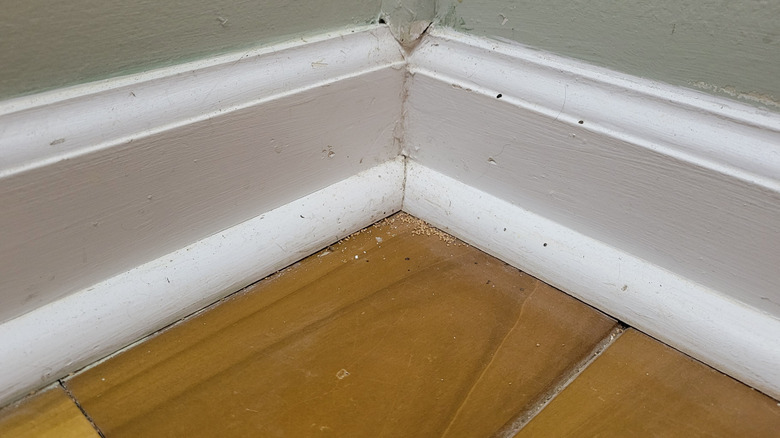
I watched the Saros 20 Flow's methods of cleaning along baseboards and was mostly satisfied with the results. Then I spread more of the walnut abrasive around the corners of a room, which left me a little less satisfied. The idea here is that, rather than using extendable brush(es), the Saros 20 Flow has two long, horizontally stationary brushes that are designed to reach into corners and sweep out debris for the vacuum to pick up.
I watched it almost obsessively, and there are two key thoughts I had. First and foremost, it doesn't seem to work in corners. It does fine against edges and even under cabinetry toe-kicks. But it seems to leave stuff in corners pretty consistently. Now, this would seem to be a matter of geometry. If the brushes are long enough, they should reach into the corners. Perhaps they're not spinning fast enough to fully extend the curved bristles fully. Or perhaps the reversible side brushes never reversed; I can't remember having seen them reverse. But note that Roborock doesn't promise 100 percent corner coverage the way it promises 100 percent edge sweeping, but only 30 percent more corner coverage (compared with Roborock's Qrevo Curv 2 Flow).The vacuum also mops against edges, which it does by horizontally extending the mop roller itself beyond the Saros 20 Flow's housing so that it can mop right up against surfaces like walls, baseboards, and toe-kicks.
Although the corner-cleaning technology was a bit disappointing, I was happy to see how the AdaptLift Chassis 3.0 performed. The vacuum managed the 2.5-inch hurdle I created just fine, and I can't imagine having a taller threshold that isn't more of a trap than a transition.
Various forms of navigation magic
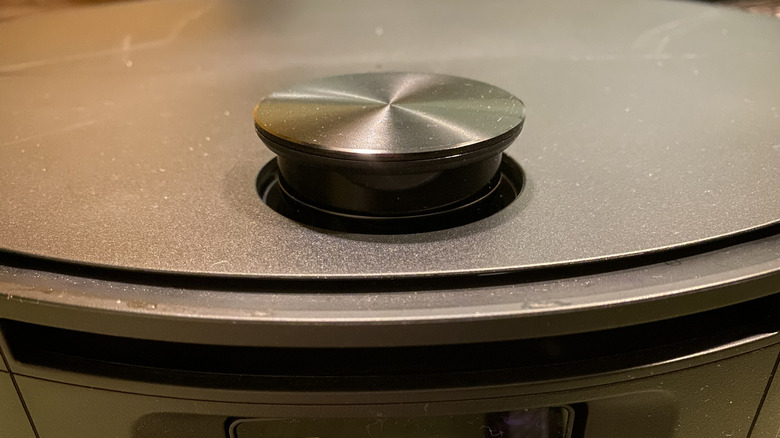
How the Roborock Saros 20 Flow gets around, and gets around things, is a complex topic involving many moving pieces. Sensors and processing responsible for much of this work include lateral projection geometry; retractable, top-mounted LiDAR; a 100-degree rearview camera; an RGB camera feeding AI stain detection; and AI obstacle recognition that identifies more than 300 types of objects. Meanwhile, SmartPlan 3.0 detects room types and your household habits to build a customized floor-cleaning plan.
The mapping via Roborock's app is well-executed. Obstacle avoidance was completely successful with the exception of a single Paw Patrol sock that the vacuum rolled right over the first time (it was under a desk, so visibility might have been limited). On the second pass, the vacuum detected and avoided it. Discovered obstacles show up on the floorplan map, and were named when confidently identified ... often incorrectly. A double cat bowl was misidentified with 82 percent confidence as a pedestal, and another object with 88 percent confidence as a plastic bag ... and I never found that obstacle at all. AI is also responsible for helping the vacuum to navigate mixed surfaces and maintain wet/dry separation so that the automatic roller shield engages when it should and the roller mop lifts out of the way. This was the only inconsistent function I noticed amid all the navigation and detection complexity the Saros 20 Flow brings to the table.
Remote control via the mobile app is impressively smooth. The controls aren't quite as precise as they could be (tapping a rotate button turns the device rather more than I'd prefer), and the vacuum could use a few more controls (90-degrere rotation, for example). But overall, this function worked very well.
The Verdict
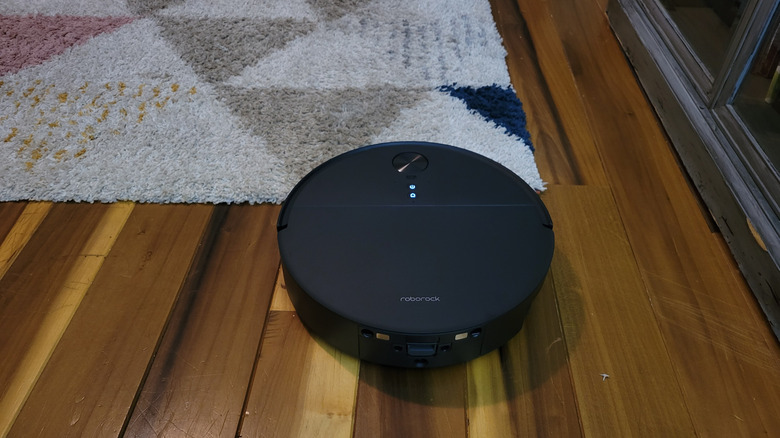
Vacuums have evolved enormously, and while this essential household appliance now looks totally different, few are more different than the Saros 20 Flow. Roborock undertook something extreme here, packing a single robotic vacuum with almost every feature it could pull together. The few issues it has — not handling wet spills properly, for example — would ordinarily be minor inconveniences at best or motivation to change cultural practices (like immediately hand-cleaning wet spills) at worst. Any shortcomings of a $1,700 device tend to be exaggerated by the size of the investment.
The mop functionality was eye-opening. The results of daily mopping aren't as easy to see as those of vacuuming and, with some shame, I confess that I was disturbed by how much gunk was collected in the dock's dirty water tank after a few days. Vacuuming and navigation were notably better than other vacuums I've used. Vacuuming and mopping took an average of 5.95 square feet per minute, about which the app keeps very detailed records.
I first thought of this vacuum as a luxury device for people with large, open, minimalistic spaces, but I think that's probably exactly backwards. Because Roborock has thrown everything into the Saros 20 Flow, it's uniquely suited to a large, messy family of pets, semi-feral children, and husbands who "forget" to take off their shoes at the door. This vacuum is nearly perfect; it's also a big investment. But that doesn't make it a luxury item. You can get 95 of the results for half the price by selecting something simpler from Roborock's lineup, and that probably works better for rich minimalists with pets that don't shed. The rest of us can really use all the bells and whistles of the Saros 20 Flow.