

How To Transform Rotting Pumpkins From Trash To Garden Treasure
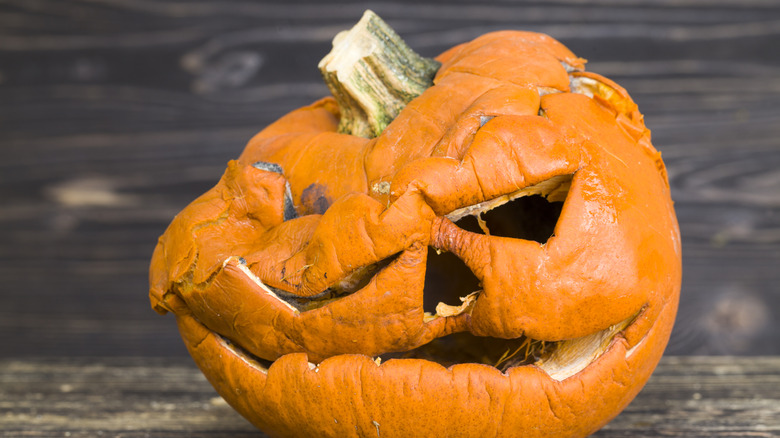
If your jack-o-lantern's grin begins to droop and its stem starts to cave in, it's time to bid adieu to your gourd. A pumpkin's demise might signal the end of festive fall decor and spooky paraphernalia, but you can rest assured that your winter squash is gearing up for a very active afterlife. Once you compost your pumpkin, you can reap the benefits of a lush, environmentally-friendly garden fertilizer and prepare for a bountiful harvest next spring.
Over one billion pounds of pumpkins wind up in landfills in the U.S., and when they don't decompose properly, they emit methane, which is more powerful than carbon dioxide. Skip the environmental headache and use your pumpkin to your benefit as a complimentary helper around the yard. Its rich nutrients and elements like nitrogen and potassium help fortify plants throughout their growth process and contribute to strong roots and vibrant greenery. Why shell out cash on fertilizer when you already have the elements you need?
You can compost any part of a pumpkin, but remove the seeds, as they can potentially sprout. To compost your pumpkin, cut it into small, manageable pieces and remove any decorative elements, wax, and so on. Pumpkins act as the "green" compost material — quick to rot while providing moisture and nitrogen — and should be mixed with brown compost materials like dry leaves, wood chips, and straw, which are slower to rot and provide the necessary carbon for your compost. Keep in mind that painted pumpkins should not be used for composting. If you remove the seeds and don't want to have them as a snack, you can plant pumpkin seeds roughly 100 days or so ahead of Halloween for a homegrown jack-o-lantern.
How composting a pumpkin can help your garden
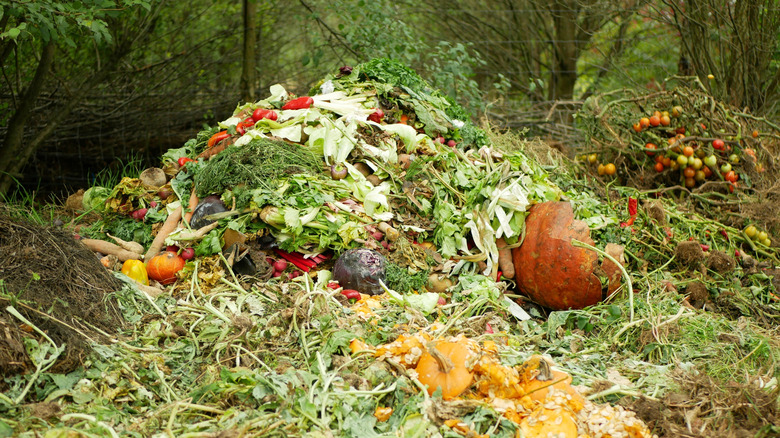
If you decide to use your orange pumpkin as "green" composting elements, the gourd will decompose into humus, an organic matter that helps soil retain water and nutrients. Compost also supports the soil ecosystem, including beneficial microorganisms and earthworms that aerate the soil. All in all, a few snippets of the winter squash can go a long way and play an important role in your gardening ecosystem.
Since you're learning how to compost and want to make use of your old Halloween statement-maker, take note of the ways in which your finished product can assist around the yard come spring. Work compost into new flower and vegetable garden beds before planting to enrich the soil. If you're working with herbs and leafy green vegetables such as kale, spinach, etc., pumpkin compost will assist with the root development, and in turn, yield a greater harvest. Plus, pumpkin compost assists struggling flowering shrubs with blooming by providing much-needed nutrients. Should you want to give this method a try but aren't working with much or already have a full composting bin, you can simply bury pumpkin pieces directly in the soil roughly eight to 12 inches deep to take advantage of its nutrients.