

Heat Your Garage During Cold Months With A System That Doesn't Take Up Floor Space
We may receive a commission on purchases made from links.
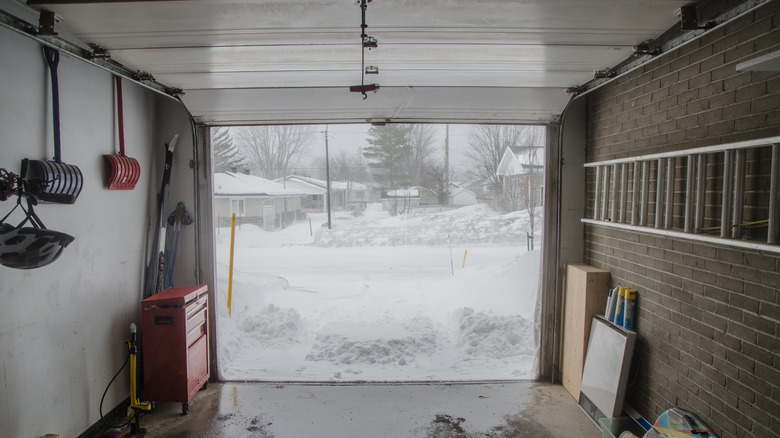
Heating a garage can be an uphill battle. They're often poorly insulated, if they're insulated at all. And one of the walls has a habit of mostly disappearing whenever someone's coming back from the grocery or heading to dance class, sucking nearly all the heat out several times every winter day. You need a powerful heater that's capable of catching up quickly when necessary, and one you won't have to sacrifice precious floor space to. It's a heavy-duty task beyond even most of the best-reviewed, affordable space heaters, but the Heat Storm 6,000-watt garage heater ($399.99) brings the heat while staying out of the way.
This garage heater doesn't look like an ordinary space heater because it's meant for mounting on a ceiling or wall. This is important because having a 20,000-BTU heater in the middle of your garage can be inconvenient and uncomfortable. The heater uses carbon fiber infrared heating elements to warm spaces from 1,000 to 1,800 square feet with hybrid radiant/convection heat. It comes with a remote, a remote thermostat (so the garage temperature is sensed where you feel it, not up at the ceiling), and Wi-Fi for use with a smart home mobile app. It's also well-received, with 4.5 stars on 42 ratings and 100% of Home Depot purchasers recommending it.
All of that makes it a good choice for any garage — especially a poorly insulated one — used as a workspace during cold months, or for storing particularly cold-sensitive things. It's a sound choice for both small garages (since it doesn't take up floor space) and large ones (because it's designed to heat a large space).
The good and bad of installing a high-wattage garage heater
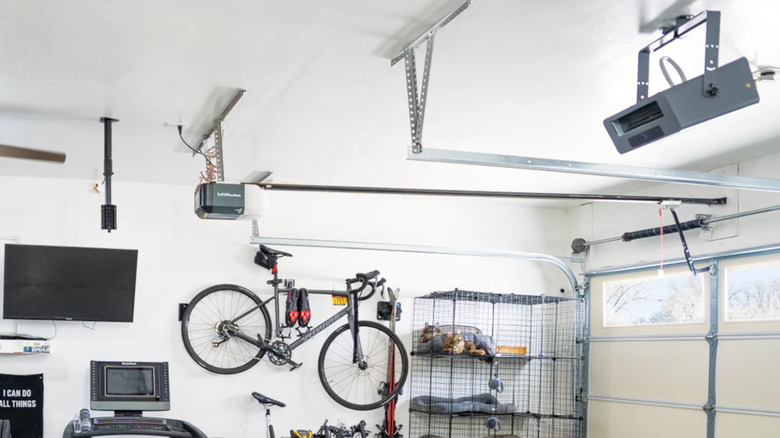
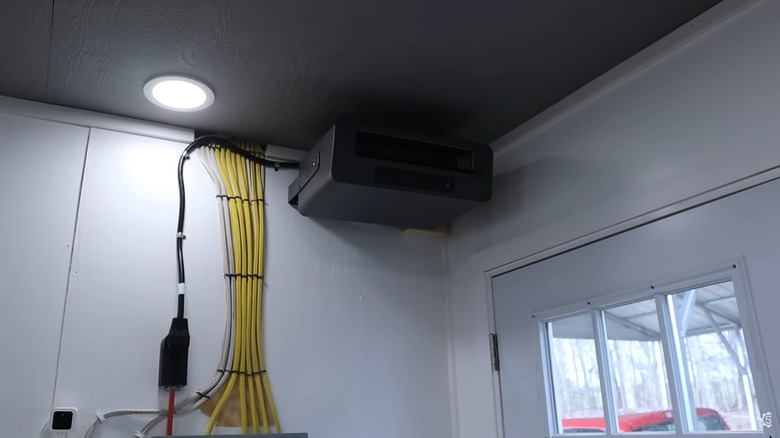
While the Heat Storm garage heater is energy-efficient, it still uses a lot of energy: 3,000 to 6,000 watts. A device with that kind of power draw requires wiring beyond what you might have in your garage by default, and it's not necessarily a DIY job. A 6,000-watt, 240-volt appliance requires its own electrical circuit with a 30-amp breaker and at least 10-gauge electrical cable. The heater can be installed with three- or four-prong 30-amp plugs, usually available for 240-volt appliances as dryer plugs, but Heat Storm says the heater should be hardwired, which is both easier and cheaper. Many garages are unfinished or only superficially finished, and circuit breaker panels are commonly found in garages, which can make the wiring a little easier.
Hooking up this heater is no more difficult than connecting a plug to a dryer, but adding a breaker and running 10-gauge wire through a wall is not the safest or easiest thing you'll do on any given day. Fortunately, the rest of the installation is simple because of the included adjustable mounting bracket.
There are other options ... and even more powerful options. Home Depot offers electric garage heaters rated as high as 15,000 watts ... probably overkill for the average residential garage. There are also propane heaters, both tank-mounted and freestanding, and propane has its ... ahem ... proponents. But it also has its own inconveniences (e.g., tank refills) and risks (explosions), so many opt for the less alarming infrared heater dangers and the wire-it-and-forget-it approach.
What's so smart about a smart heater?
The curmudgeons and analog warriors with wood-fired stoves and lots of egg-beater drills in their garages are probably a little put off by the Heat Storm's smart app integration features. But, in truth, it's awfully convenient to be able to remotely control, in advance, the temperature of a space you don't occupy on a regular schedule with a Wi-Fi-enabled smart heater from Home Depot.
The Heat Storm garage heater is optionally controlled by the SmartLife: Smart Living app, available for Android, iPhone, iPad, and Apple Watch. App details suggest the mobile app runs on HeyTuya, Tuya's AI-heavy SmartLife smart home ecosystem. It can also be integrated directly with Home Assistant via its Tuya integration. The free version of the app gives you basic controls and automations, along with voice assistant integration for Alexa and Google Assistant. Paid plans offer features like cloud storage, features for security camera feeds, and support for various alerts related to smart home features and security. There are also advanced, paid cloud storage and lighting plans that mostly don't relate to the heater. Tuya and SmartLife are robust, reputable platforms, but note that the app-control features, including controlling the heater from outside of the home, rely on a cloud service that might not be available at some point in the future. And it's worth considering that, while the Android app has 4.6 stars overall, it has shockingly bad ratings over the past year or so.