

Triangle-Shaped Metal Files: What Are They Good For?
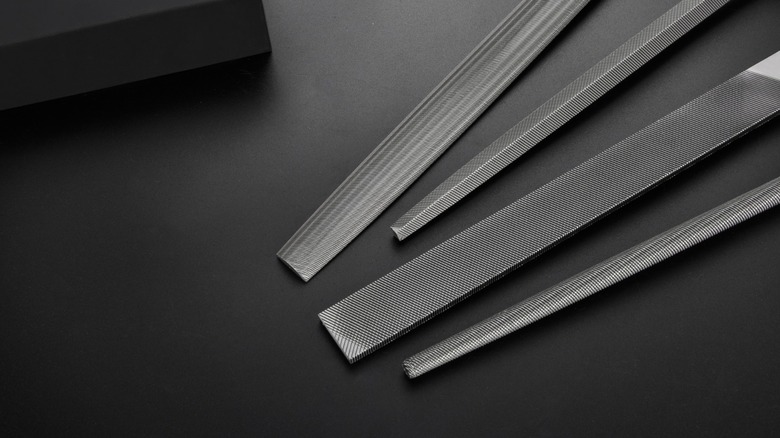
Despite all the power grinding and sanding machines available for shaping wood and metal, you don't always have enough clearance to use one, and sometimes the task is too delicate for a power tool. When you need to file something manually, you might be surprised by the variety of wood and metal files available. They come in different sizes with teeth that provide a coarse or fine grind, and with a variety of cross-sectional profiles. One of the profiles is triangular, and this type of file can be very useful in specific situations.
A triangular file, also known as a three-square file, has a cross section like an equilateral triangle, with three sides of the same length and three 60-degree angles. It's designed for abrading inside angles that are less than 90 degrees, and you can use one to cut a V-groove in wood or metal or to fine-tune dovetail joints or other delicate woodwork cutouts.
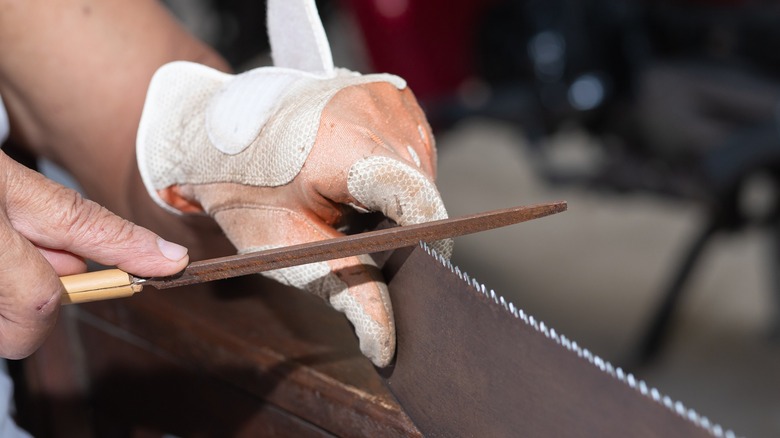
One of the traditional uses for triangular files is saw sharpening, because the triangular cross section fits perfectly in the corner between the tooth and the blade. When it comes to sharpening chain saws, a round file is the correct one to use to sharpen standard concave teeth. However, if you have a chain with less common square-ground chiseled teeth, a triangular file works better, because its profile allows it to sit flat against the edge of the tooth and to fit tightly in the corner between the tooth and the chain.
Getting the most from a file
Files vary in coarseness which is defined by the length of the teeth and their number. Coarse files with a sparse arrangement of long teeth are the best ones to use for wood projects, because they work quickly and don't get clogged easily. When it comes to metal, a fine file is better. It polishes to a smoother edge, and because fine-tooth files are generally shorter, it's more manageable and maneuverable.
Although files can have teeth that cut in two directions, most cut only on the push stroke. When using one to sharpen a lawnmower blade, for example, apply pressure on the push stroke, then ease off on the pull stroke. This is especially important when filing a metal edge, because it prevents the teeth from cutting in the reverse direction and chipping the edge or causing other damage. As you use the file, the teeth will tend to become clogged with sawdust or metal shavings, so keep a wire brush or a file card (which is a specialized wire brush with short bristles just for this purpose) on hand to clear it.
Metal files seem indestructible, but they're actually delicate tools that need proper maintenance. The teeth can be easily damaged, so professional tradespeople keep their files wrapped in a cloth when transporting them. They keep the files separated from other tools when storing them in drawers, and they never expose the teeth to oil or water, which can impair the cutting action.