

One Of The Biggest Drawbacks Of Using A Mulching Mower For Lawn Maintenance
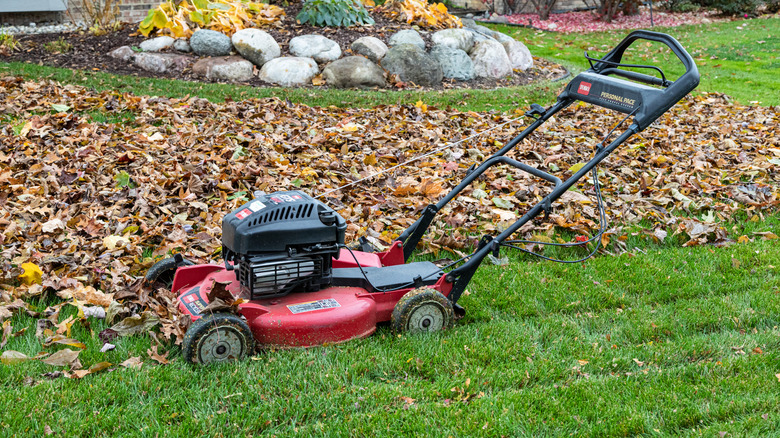
When you need smaller grass clippings, or perhaps want to break down leaves into mulch, a mulching mower can arguably be the perfect ally. Unlike traditional rotary lawn mowers, mulching mowers offer the advantage of cutting grass into small enough pieces so they fall back into the turf and decompose more quickly, instead of sitting on top of your lawn. Despite all the potential benefits of using a mulching mower, there are, in fact, certain scenarios where this piece of equipment is not ideal. One of the biggest drawbacks of a mulching mower is that you cannot use it on grass that is overgrown or wet because of risks to both the equipment and your lawn.
Whether you have a separate mulching lawn mower or use a mulching kit for a side-discharge mower, the same limitations apply. First, as a rule of thumb, a mulching mower will not perform well if you need to remove more than one-third of the height of your grass due to overgrowth, per the Illinois Extension. Mulching mowers are also especially vulnerable to clumping from wet grass. Moisture from the lawn can cause grass to clump up on the curved blades, which are normally designed to increase the number of cuttings. However, under such conditions, the mulching mower may be incapable of doing so. Grass clumps might even accumulate in other parts of the equipment, reducing overall efficiency and possibly damaging it.
Risks of using a mulching mower on overgrown or wet grass
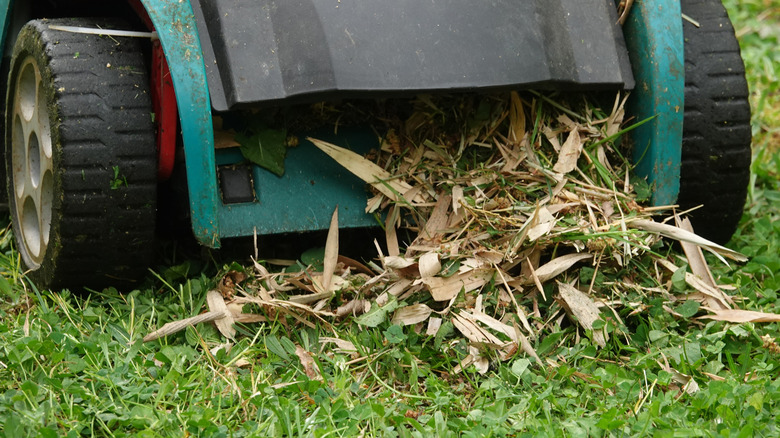
Not only can these clumps of thick or wet grass accumulate along the blades, but they can also place strain on the motor as the mower works harder to cut the grass. If you're trying to power your mulching mower through wet grass and it keeps shutting down or the mower will not start, there's a chance that grass clumps are to blame. What's more, using a mulching mower on wet grass can cause clumping underneath the deck, which may then decrease the airflow needed for efficient mulching action. This process may also leave wet grass clumps on your lawn, which can suffocate healthy turf by blocking airflow and sunlight.
As the Illinois Extension notes, the size and distribution of grass clippings can vary depending on the mower's overall size and design. In other words, you don't want to assume a mulching mower will automatically equate to a healthy lawn, even if you avoid using it on wet or overgrown grass. Be on the lookout for signs that your turfgrass is being deprived of oxygen and nutrients, such as wilting, soil compaction, or yellow or brown spots. If you stick with your mowing schedule and avoid mulching tall or wet grass, these symptoms may indicate underlying issues, including poor soil aeration or nutrient deficiencies.