

DIYers Are Turning To This Pocket-Sized Tool To Make Caulking Less Stressful
We may receive a commission on purchases made from links.
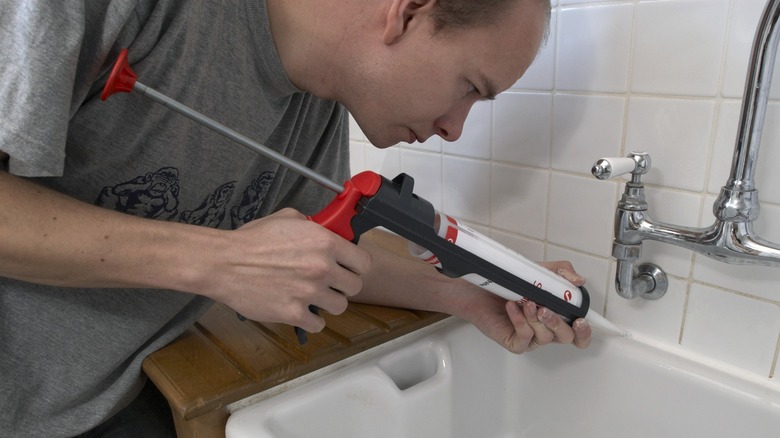
Time to reapply that shower seal! The job of applying silicone caulk can be easy if you do it right and extremely messy (and stressful) if you don't. If you apply too much silicone with the caulk gun and use the old-school method of tooling it — aka smoothing it out — with your finger, you need a lot of rags or paper towels to keep your finger clean. The rags or towels can then spread difficult-to-remove caulk all over the room. The problem isn't that you were tooling with your finger; the same thing can happen when you use a cheap, plastic finishing tool, because you also have to keep that clean.
The pocket-sized Saker Silicone 3-in-1 Caulking Tool, currently available at Amazon for $12.47, has a mechanism that helps avoid the mess. You simply put one of the provided silicone sleeves on the pointed tip, run the tool lightly along the bead to give it a concave profile, and the excess caulk comes off without wiping. Rather than carrying around rags that get increasingly covered in caulk and messy, you never have to touch the sticky material. You just need a small container into which to deposit the excess caulk.
This product has a 4.2-star rating from over 8,000 reviewers, and many positive comments mention both its tooling capabilities and its ability to remove old silicone caulk. The caulk-removal end of the tool has a corner-shaped metal blade that you can push or pull along a bead of old caulk and, if you're lucky, have it come off in one piece.
Different ways to use the Saker Silicone 3-in-1 Caulking Tool
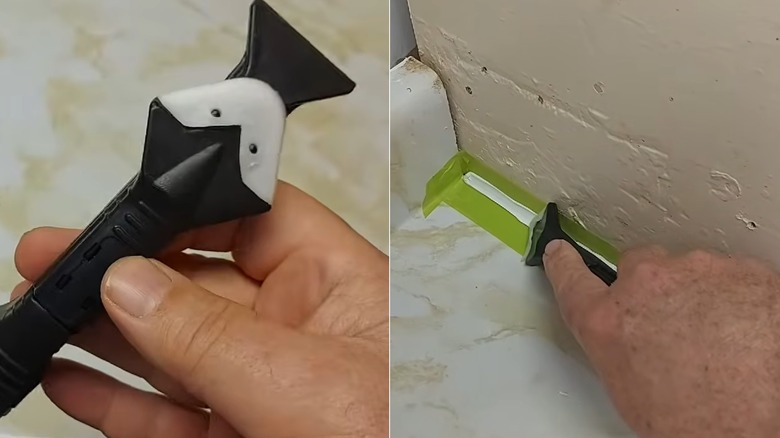
Because it's waterproof, silicone caulk is the sealant you need for bathroom and kitchen fixtures, and these rooms often have tight corners that make you slip while caulking and deposit too much material. According to users, the Saker tool is ideal in such situations. "It's helpful for getting a cleaner, more even finish, especially in tight areas," one reviewer attested. Other than that, the finishing end can come in handy when you're on a ladder doing exterior caulking around windows, doors, and corner trim because it extends your reach.
On the other side is the scraper. It's shaped to fit tightly into 90-degree corners, and it allows you to scrape away old, moldy caulk. One reviewer used the tool to remove caulk from an all-glass shower, but it also works for bathtub rims, around sinks, and along toilet bases, where moisture and mold are most problematic. Moreover, you can use it to remove and repair tile grout. Once the old caulk is gone, you can apply new material and smooth it with the finishing end of the tool.
Do note that while compact, this tool measures around 7 ½ inches long, which might make it difficult to maneuver around unusually shaped tubs (as was the case for one reviewer). It's always a good idea to test the tool on an inconspicuous area first to avoid any surprises. Moreover, the manufacturer advertises that you don't need tape, but it may still be worth using. As one customer reported, "The smoothing process is greatly simplified, and much neater, if masking tape is used above and below the line of caulk placement."