

What Is The 1-2-3 Rule Of Pruning?
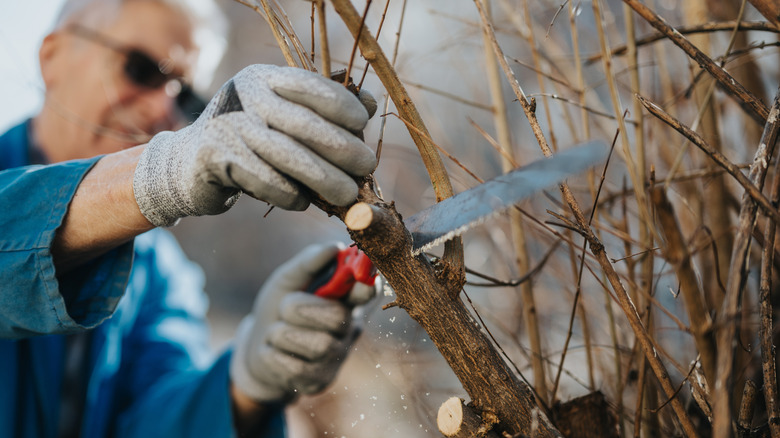
You've got your yard work planned out for the week. Before you get started pruning trees in your yard, it's essential to know about the 1-2-3 pruning method. Any time you're cutting a branch that's more than 1 inch in diameter or that is too heavy for you to hold as you prune it, you should use this technique. You'll want to use a pruning saw instead of pruning shears since the branch is thick. Its goal is to prevent undue stress and damage to your tree. Always be sure that you're pruning your tree at the proper time of year; read our guide on how and when to prune 50 trees, shrubs, and flowers for more.
Also known as the three-stage cut, the name comes from the fact that you'll be making three cuts in the branch you're trying to prune, rather than just one. Start your first cut 6 to 12 inches away from the trunk, underneath the branch (sawing upwards). You'll continue to saw until you've cut a quarter of the way through the branch. Stop here; don't cut all the way through.
Move your saw a few inches farther down the branch, away from the first cut. This time, you'll start at the top of the branch, sawing downwards. This cut will cause the rest of the branch to cleanly come off. Meanwhile, the first cut you made keeps the bark from being stripped off the tree as the rest of the branch falls away. For your third and final cut, you can saw near the outside of the branch collar, safely removing the rest of the branch. Leave the collar intact, so the tree can properly heal.
Safely performing the 1-2-3 method
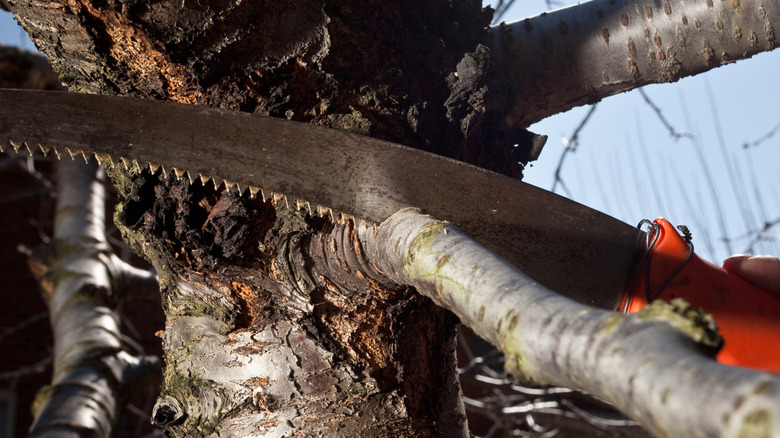
In order to properly perform the 1-2-3 pruning method, you'll want to gear up first. When working with a tree branch that is taller than you (i.e., the branches could fall onto you), always wear a helmet. You'll also want to utilize safety glasses while pruning. Because you'll be using a pruning saw instead of hand shears, make sure the blade is sharp and firmly attached, as a dull blade can be more dangerous.
Since your second cut will cause the branch to fall from the tree, you'll want to clear the entire area below so it can safely hit the ground. Be sure that the tree branch you're working with isn't close to any power lines before you start cutting. Never attempt to catch a falling branch; since the 1-2-3 method involves branches that are too heavy to hold properly, attempting to support the branch while cutting it can also be dangerous. And, if you end up needing to remove more than just a few branches, check out our guide on how to safely remove a tree yourself.