

Forget Traditional Subway Tile Backsplash: There's A Gorgeous Modern Alternative
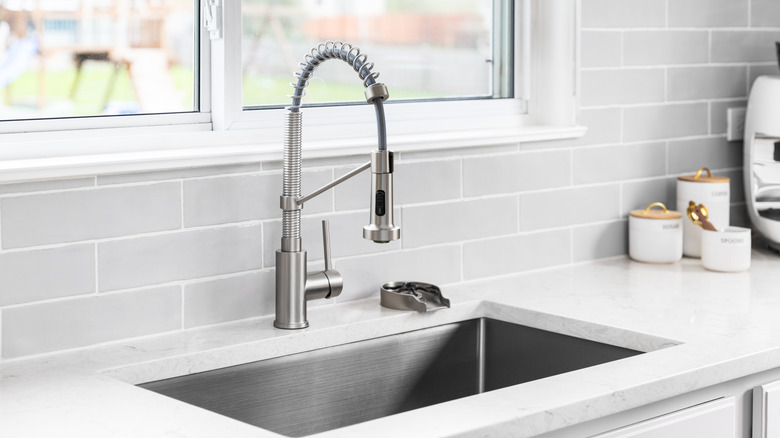
Subway tiles might be classic and timeless, but they're also everywhere. We've seen them so much and for so long that they have become a default choice. But it's time to ditch the basic subway tile backsplash from your tastefully designed kitchen. Give it more personality with lava stone backsplash, a material that pairs raw, natural character with a polished, contemporary feel. You can either go for a single, large slab or choose bespoke tile layouts in a palette that runs from rich earthy tones to sleek grays, with some brands offering as many as 34 color options. And whichever color you choose to go with, it's sure to bring both boldness and coziness to your otherwise boring kitchen.
But where does all this character come from? Lava stone's visual appeal can be traced back to its volcanic origins (they're usually sourced from the volcanoes in France). Once it hardens, the stone is sliced into slabs, glazed with enamel, and baked in high-temperature kilns. And it's during the cooling process that it gets its signature crackled look, which can range from high-gloss to matte, or may appear crystalline or transparent. This process also means no two slabs end up looking alike, an individuality that's hard to mimic with subway tiles. So while traditional subway tiles' backsplashes offer consistent spacing and clean rectangular units, these same qualities make them generic and plain, too. Lava stones will have the opposite effect on your kitchen.
Why lava stones make for a striking backsplash
Lava stone's glaze gives its surface a little sheen, and because it fuses with the natural stone in the kiln, it produces a slight shift in tone. The result is a surface that can subtly change as light moves across it rather than looking flat. So, you can use it as a focal material by putting it on your kitchen's backsplash where it can stand out rather than disappearing in the background.
Beyond its looks, lava stone needs little upkeep. Truly, a bit of soapy water is enough to clean up spills. It's also highly durable and extremely hard to damage, as it can tolerate heat, cold, and sudden temperature swings with aplomb. And these qualities make it an especially good fit behind the range. Not to mention that it is an eco-conscious choice, unlike marble and granite which are quarried from mountainsides. Moreover, with their supplies shrinking quickly, lava stone is an ideal alternative if you want a natural and unique idea for your kitchen backsplash.
That being said, lava stone has one catch: the price. It is a premium material, costing north of $250 per square foot, a major chunk of which is courtesy of shipping. Add the painstaking, intricate craftsmanship process behind each slab, professional installation, and your final bill will climb even higher. But if the price suits your budget, bring it home for a striking finish.
How to choose a color and finish for backsplash
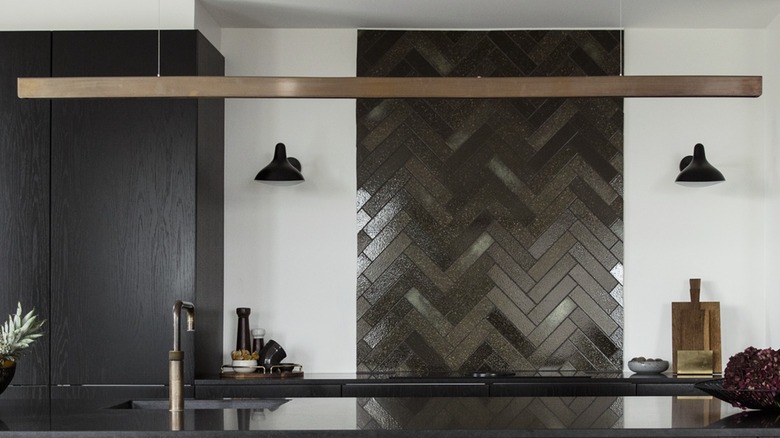
Your instinct might be to match colors of the backsplash per your kitchen's color theme. However, pay more attention to the color temperature of your room and ensure it matches the backsplash. It's because when the undertones clash, the end result can feel jarring. For example, spaces with wood floors, brass fittings, and soft, warm lighting pair well with warm colors like terracotta, rust, amber, and olive. On the other hand, kitchens with white walls and white cabinets go well with cooler lava stone tones such as pale grey, cobalt, and sage.
Also, decide how attention-grabbing you want the stone to be. If your kitchen is busy with patterns already, neutral colors like charcoal, ivory, or pale gray might balance it. Alternatively, in a monochrome or quiet kitchen, bold colors like terracotta and sage can give the space a distinct personality. And if you prefer a minimal kitchen, go for solid backsplashes in colors like mineral grays, deep charcoal, matte white, warm earthy, and subtle translucent glazes. For a calmer kitchen, coordinate the backsplash with the floor tile. As for the finish, matte is best for everyday use as it hides smudges and can take scrubbing when needed. On the other hand, scratches and marks are quite visible on glossy finish, though the surface is easy to wipe clean.
Once you've settled on a finish and color, coordinate it with the countertops, sink, and kitchen island so that it feels tastefully done. For example, glaze the countertop and a large-format backsplash tile in the same honey mustard shade, matching it with the kitchen's brass detail, so everything comes together neatly. Another way is to match the color of the lower cabinet with a lava stone counter to design a monochromatic kitchen.