

Sharpen Drill Bits With Ease Using This Handy Compact Tool
We may receive a commission on purchases made from links.
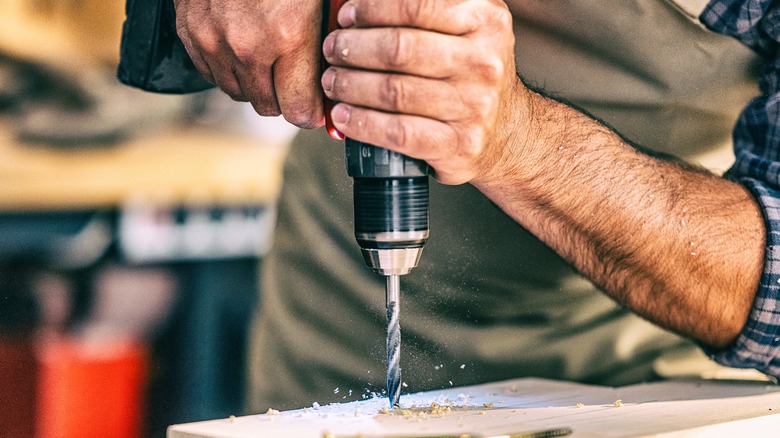
If you've ever tried to drill through wood with a dull bit, you know how frustrating the experience can be. It's even worse if you're trying to drill through metal. The bit spins ineffectively, making little progress, and eventually it begins to overheat. If you're drilling with a narrow bit and keep going, there's a good chance it will break. All of this makes having a drill bit sharpener in the shop an excellent idea. If you've got one that works as easily as a pencil sharpener, it's even better.
A drill bit isn't a pencil, of course. The former terminates with a pair of bevels instead of a point, and rather than shaving wood, the sharpener has to hone the bevels. The tool is easier to use than a standard manual pencil sharpener, because you don't have to crank a handle. Just plug it in, insert the bit to be sharpened, turn it to align the tip with the grinding stone, and press the start button.
The MDPSDS Drill Bit Sharpener is designed to hone bits to a 130-degree angle. Although this is closer to the ideal angle for metal-boring bits (135 degrees) than it is for wood bits (118 degrees), it's essentially a midpoint that works for both. As of this writing, almost 200 Amazon users have reviewed this tool. They have given it an overall rating of 4.3 out of 5 stars, and none complained that it didn't make their bits sharper. In fact, a user commented that their "bits are acting 'brand new' for the time being."
Fast sharpening for most bit sizes
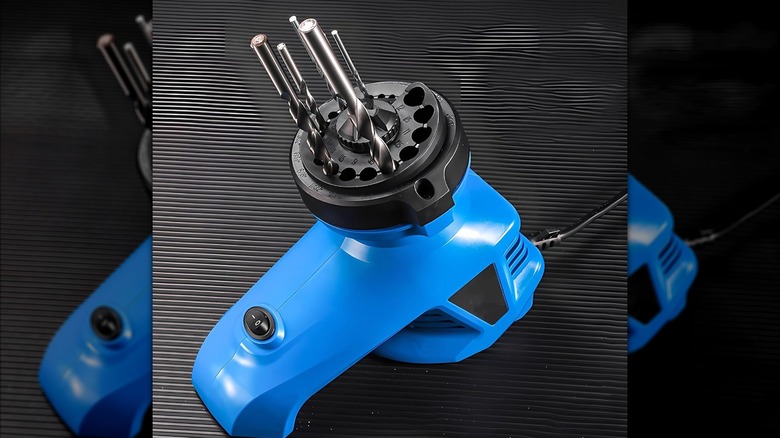
When you sharpen a drill bit manually, you have to adjust its angle to the grinding wheel or belt sander to get a sharp point. The MDPSDS tool does this automatically because the angle of the grinding stone is preset, and the slots into which you insert the bits are sized to hold the bits snugly. The sizes of the 19 slots range from 1/8 to 15/32 inches, and they are graduated in both metric and SAE units.
While you can control the grinding action by adjusting the downward pressure you put on the bit, you shouldn't force it. That makes the motor work harder, and by wearing too much material from the tip, it can shorten the life of the bit. With just light or moderate pressure, it should only take a few seconds to sharpen a bit using this tool.
Because the grinding angle is a little bit sharper than the ideal angle for drilling metal, you may find that the bit cuts through metal faster than it did before sharpening. That can be a good thing for sure, but it usually means the bit will dull faster and require sharpening more often. Also, because a sharper point tends to generate more friction, you should be on the lookout for overheating when drilling through hard metals. Keep a bowl of water handy so you can immerse the bit to cool it off when the bit starts smoking.