

Fall Vs Spring: When's The Better Time To Add Crushed Eggshells To Garden Soil?
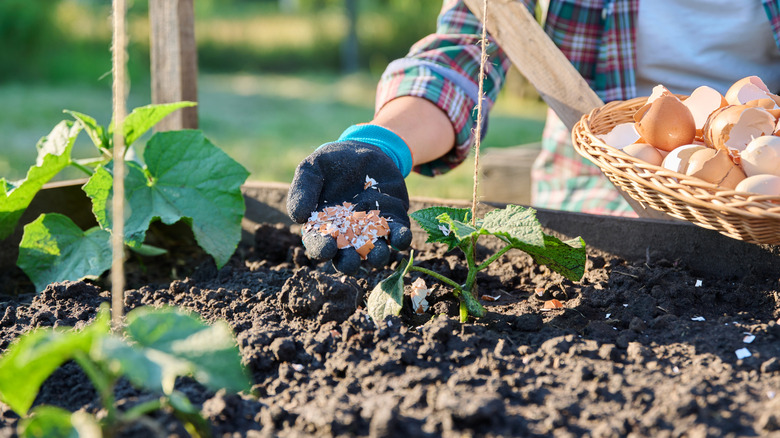
You've heard about the benefits of eggshells in the garden — they're rumored to deter slugs, balance soil pH levels, and perhaps most importantly, give your garden a much-needed dose of calcium. There's a long list of plants that benefit from crushed eggshells, including tomatoes, cucumbers, and eggplant. But which season is best to put the shells in your garden to maximize their effectiveness? Since they need time to break down and deliver nutrients to the soil, fall is usually the best time to add them to your garden beds.
The calcium in eggshells makes them hard and slow to break down, especially if they're in bigger pieces. It's not uncommon for people to find big pieces of old eggshells in compost and soil from seasons past – if the eggshell is intact, that means the soil hasn't received its nutrients. Adding eggshells to your garden in the autumn gives them plenty of time to break down before next year's planting season.
That said, it's okay to add eggshells to your garden once spring rolls around, but the benefits may be delayed. Regardless, how you prepare the shells in advance makes a big difference. The smaller the eggshell particles, the more quickly they'll break down and release their calcium and other minerals into your garden, helping your beloved plants thrive.
Make the most of eggshells in the garden
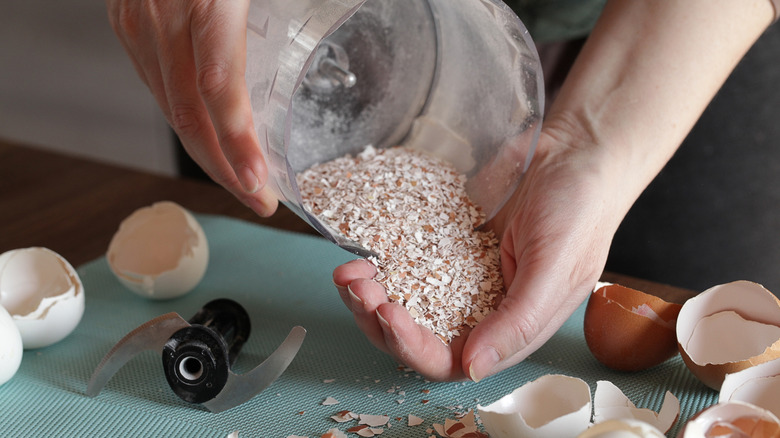
If you're using eggshells in your garden beds this autumn, give them a head start before they touch the soil. Grind them up into a fine powder using a coffee grinder, food processor, or mortar and pestle. To make the eggshells easier to grind, bake them at 400 degrees Fahrenheit for about 10 minutes to fully dry them out. Once you've got them at the right consistency, sprinkle and mix them into the soil while preparing your garden bed for winter. If you're curious and want to measure this method's efficacy, you can perform a soil test before you add the shells, then a second one in the spring to see how much calcium the decomposing shells contributed.
But let's say you forgot to add the eggshells last autumn, and now it's spring. If a test shows that the soil is low in calcium, or if your plants are showing signs of a calcium deficiency, such as parachute-shaped, yellowing leaves, eggshells can still help. You'll just need to adjust the application so the calcium can actually reach the soil. Rather than grinding up the shells, boil up to 20 of them in water, then let it soak overnight. Strain the mixture the next day and add two cups of the liquid to the soil around each plant to provide a dose of calcium. This way, you can help your garden thrive with these kitchen scraps, even if you missed your chance to add them in the fall.