

Here's How Often You Should Replace The Belts On Riding Lawn Mowers
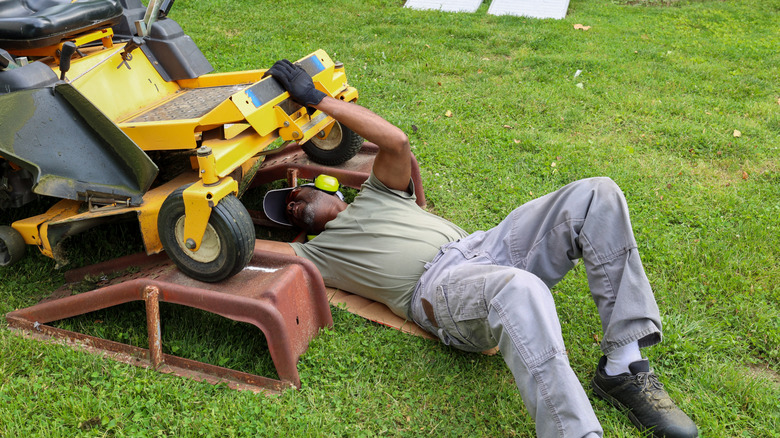
Buying a home with a lawn can come with a whole new set of responsibilities, especially if you've also picked up a riding mower to keep it looking good. Yes, it's another machine that needs attention beyond filling the tank, but a few lawn mower tune-up and maintenance tips can help you stay on top of the upkeep. However, even with consistent maintenance, some mower pieces will need to be replaced periodically, including the belts — these essential parts typically need to be replaced every one to three years.
Riding mowers typically have a minimum of two belts: the drive and the deck belt, though some models may have more. These transfer power to the cutting blades and drive system, and when a belt becomes worn or damaged, your mower may struggle to do its job. Staying on top of worn parts is a simple way to extend a lawn mower's life, and regular belt checks can help you get ahead of potential breakdowns. Some equipment dealers recommend looking for cracking or fraying on mower belts every month. But how do you know when it's time to actually replace one? Your mower manual's maintenance schedule, number of operating hours, and signs of damage are all key factors.
Use operating hours and belt condition to guide replacement
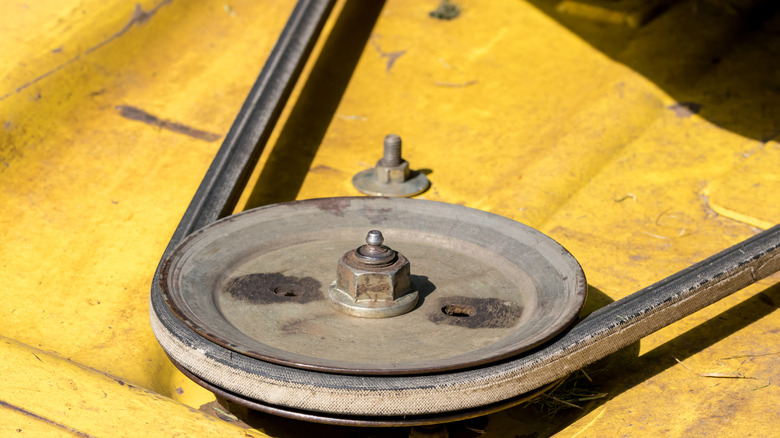
As mowing use can vary by region and individual owner preferences, many manuals use operating hours as the key indicator for belt checks and replacements. For instance, for one mower, Toro notes that belts should be checked after every 100 operating hours. So if you spend two hours mowing your lawn each week for a season (which averages about 25 weeks), you'll log about 50 hours a year and hit the 100-hour mark after two seasons. But like we said, this is all dependent based on your mower model and where you live, as some areas may require less frequent mowing.
It's a good idea to jot down when and how long you spend mowing your lawn every time you use it so you can follow your manual's maintenance schedule as closely as possible. After all, if you're mowing a big yard twice a week, your machine gets a lot more use than someone who only takes a quick spin around the lawn every other Sunday.
Of course, there are some problems that may require you to replace a belt sooner than planned. Things like high-pitched squealing, a burning smell, or vibrations from the mower deck are all signs of a belt issue. Do not continue to mow if you experience any of these issues. Fixing the issue may be as simple as tightening the mower belt, but signs of wear such as cracking, fraying, and other physical flaws mean it's time for a replacement.