

9 Valuable Antiques You Should Never Overlook When Shopping At Estate Sales
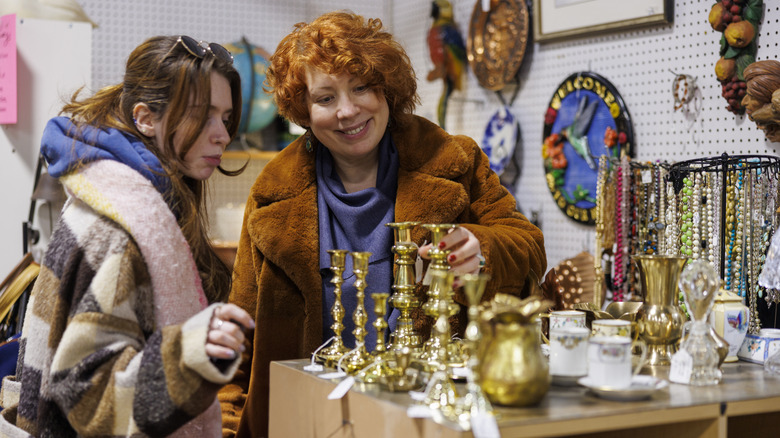
Antiquing is the closest thing to a real treasure hunt people get these days. While finding a beautiful antique armoire may not sound as exciting as uncovering a hidden gold chest, that may change when you learn how much the armoire is worth. Anything over 100 years old is considered an antique, and from Saratoga steamer trunks to centuries old dressers, you never know what you'll find at an estate sale. While not all century-old items are worth picking up, there are some you won't want to overlook or walk past. You might just find an antique with an unbelievable resale value or a valuable addition to your home. (PS: If you plan on keeping the pieces, you'd need to know how to bring together antique and modern decor in your space.)
Just like any item, value can shift up and down for antiques. Some items on an upward trend include mirrors and pottery. Other items tend to stay valuable and resist shifting. For example, solid wood furniture is generally prized due to its durability and beautiful craftsmanship. Whether you're picking up a trending antique or playing it safe, something to keep an eye on is quality. Cracks, missing pieces, and flaking paint can lower an item's value, while a piece in excellent condition is likely to fetch a higher price. However, that doesn't mean that a damaged antique is worthless. Some items are rare enough or so highly prized that they can be valuable even in less than stellar condition.
Saratoga trunks
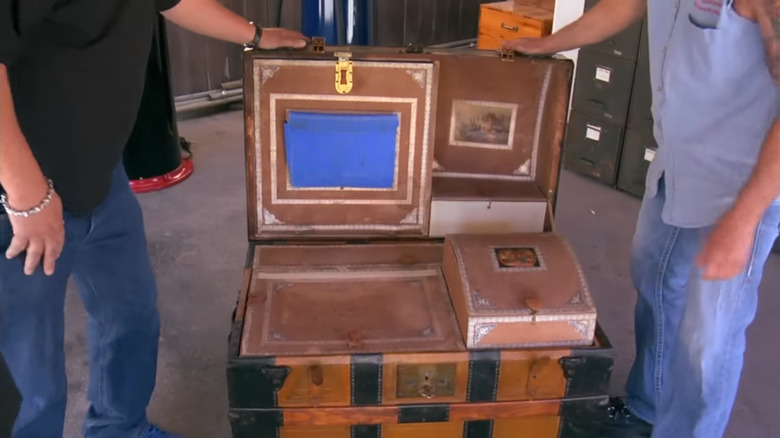
Saratoga trunks are a type of Victorian-era steamer trunk, named after the popular travel destination of Saratoga Springs, New York. They were primarily made in the late 1800's and can be recognized by their distinctive rounded lids. More simple Saratoga trunks are empty and lined with paper, while fancier ones came with a series of boxes that stacked inside it. A trunk in rough shape may sell for a couple hundred dollars, but finding one in good shape or with all the compartments at an estate sale would be ideal. Those can sell at or over $1,000.
Clocks
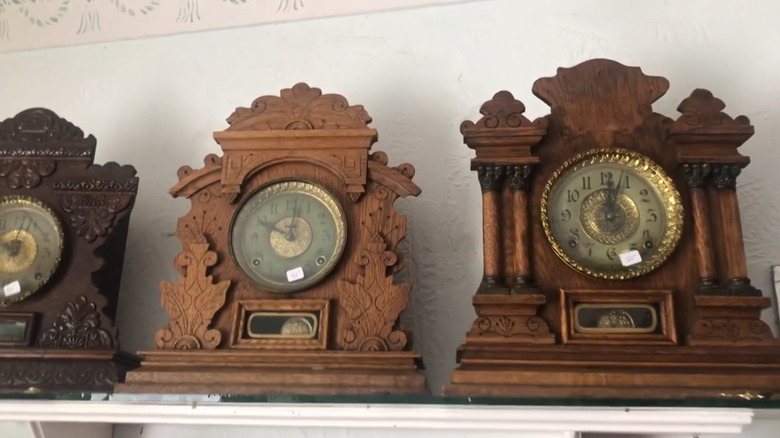
The delicate gears and beautiful designs make antique clocks a marvel of both engineering and art, and they're often priced to match. An interesting factor to be aware of with these clocks is that bigger is not always better. Situating a bulky grandfather clock can be tricky, which is part of why they're less popular than the smaller mantle or wall clocks. Depending on the rarity and who made the clock, you could be looking at a couple hundred to a few thousand dollars. If you're exceptionally lucky, rare antique clocks can sell for several hundred thousand dollars at auction.
Federal mirrors
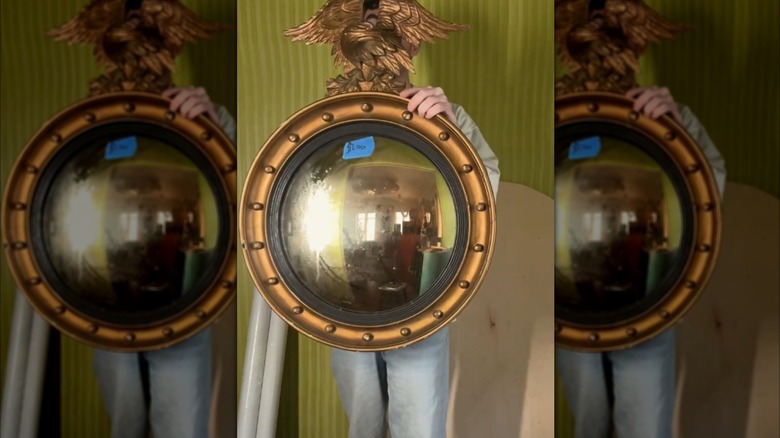
Dating back to the post-Revolutionary War era of American history, federal mirrors are one antique you certainly shouldn't walk past at an estate sale. They come in a range of styles, but the classic version is round with a gilt frame, often topped with a bald eagle. These antique mirrors have been on the rise with the 250th anniversary of American independence, so you may want to clean your mirror and keep it for yourself. If you do decide to sell it, you could get a couple hundred dollars all the way up to nearly $20,000 if you're lucky.
Typewriters
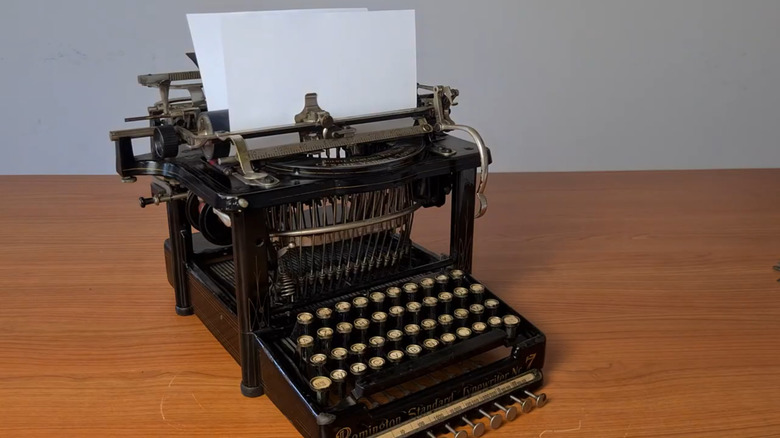
In case you weren't aware, antique typewriters are actually quite collectible and generally valuable. While not all typewriters are antiques, some of the older (and dare we say, more interesting) models date to well over 100 years. They make fascinating home decor, but functional antique typewriters may also appeal to crafters and DIYers as well as history buffs. Look for notable brands like Underwood, Corona, and Remington, and pay attention to the model name or number to date it. Depending on the quality, model, and maker, an antique typewriter might net you a couple hundred dollars to $1,000 or more.
French provincial furniture
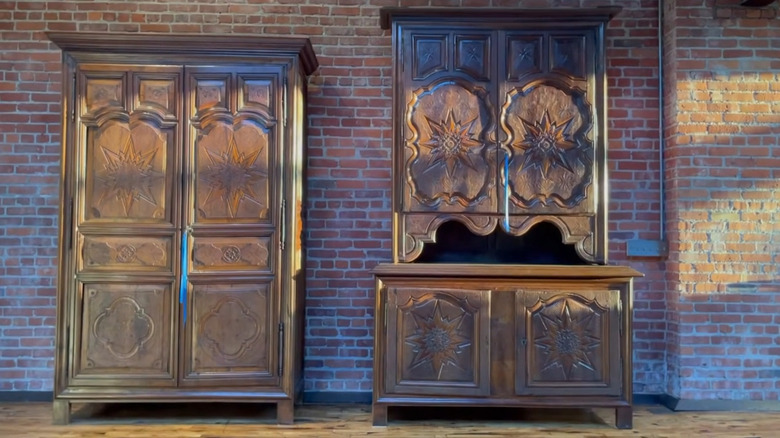
French provincial furniture is admittedly difficult to overlook in any scenario, but you should definitely pay extra attention if you spot some at an estate sale. Characterized by being both sturdy and gorgeous, this furniture type often features unique profiles and subtle yet highly skilled carvings. This style dates to the 17th and 18th centuries and antique pieces are typically made of solid wood. Styles can vary based on where in France the piece originated, with some being more ornate than others. A piece in good condition may sell for thousands or more at auction.
Sewing supplies
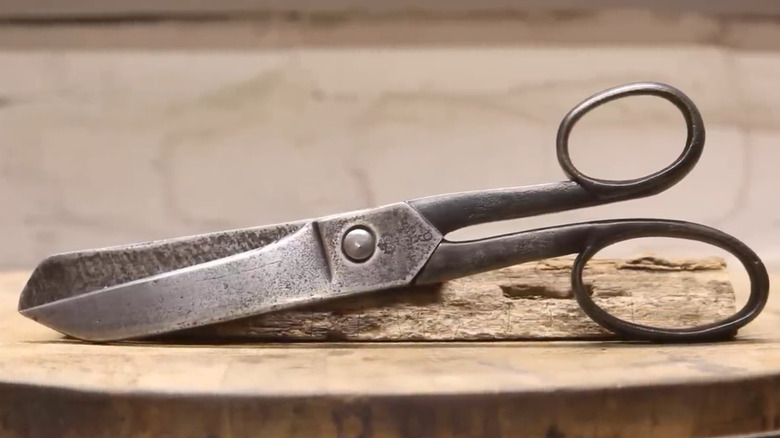
If you find a box of old sewing supplies at an estate sale, stop and take a closer look. Antique pincushions and scissors can be valuable. Not to mention they can make lovely decor. In addition to the fabric bags and balls still commonly used as pincushions today, metal sculptures containing a small cushion were used during the Victorian and Edwardian eras. These took the form of shoes, animals, and boxes, among others. Antique scissors ranged from delicate bird-like embroidery scissors to heavier fabric shears. While not all antique sewing supplies are valuable, some can resell for hundreds.
Mechanical banks
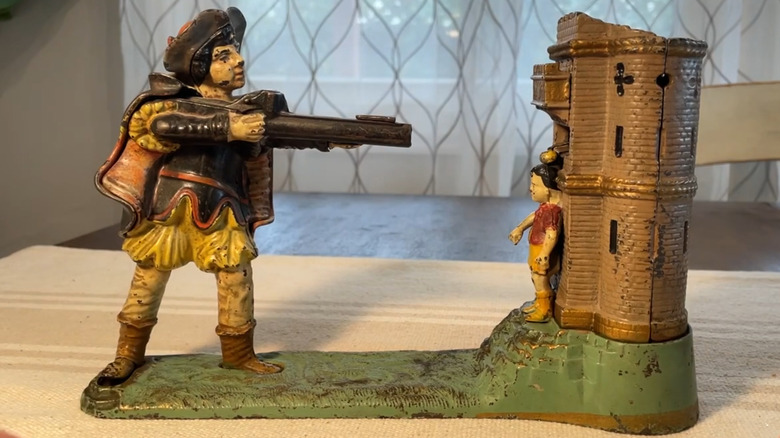
Mechanical banks are another collectible decor item you should watch out for. These metal coin banks featured some type of action triggered by the depositing of a coin, and a working bank is both valuable and delightful. Banks with the original paint are worth more than repainted ones, so don't despair at signs of aging. True antique banks may have been made as early as the 1860's, but you should look out for fakes. While a rare antique mechanical bank in working condition may be worth a few hundred dollars to over $100,000, forgeries are worth far less.
Sheet music cabinets
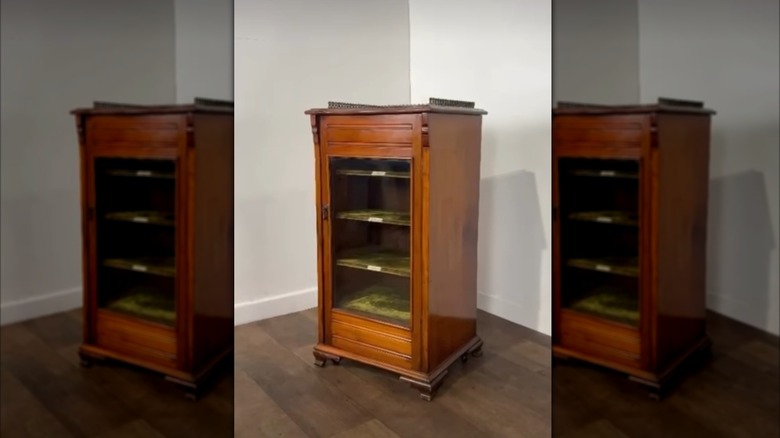
If the estate sale contains musical items, keep your eyes peeled for a sheet music cabinet. These wooden cabinets feature flat drawers or shelves meant for storing sheet music, and antique examples can sometimes date back to the 18th century. Depending on the era and maker, these cabinets may be sleek and simple or beautifully ornate. Any antique wooden sheet music cabinet will be valuable, but older or more intricately decorated pieces tend to be worth more. You may be looking at a few hundred dollars for a simple piece and $1,000 or more for fancier ones.
Vases
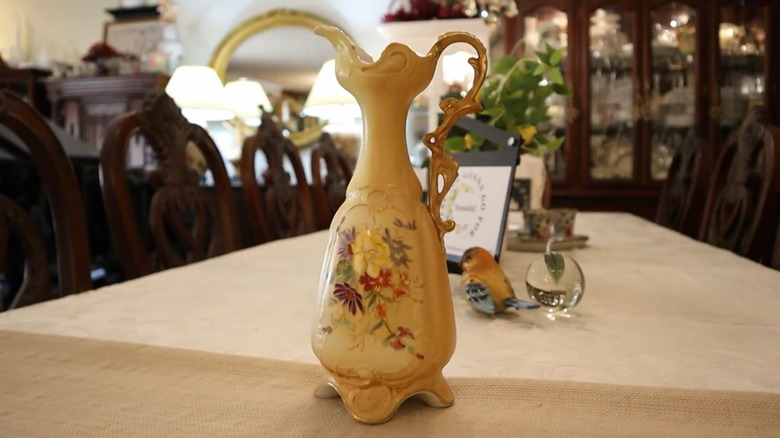
The first vases were made thousands of years ago, and while you aren't likely to find something that old at an estate sale, you may still find some beautiful treasure. Since vases have been around for so long, there are a plethora of materials and styles you might find. Check the bottom or base for a maker's mark and do some quick research into the artist to discover when it was made and how much it may be worth. Depending on the condition, maker, and beauty, you may be able to sell an antique vase for hundreds or thousands.