

You Don't Need A Rake: Use This Tool To Clear Leaves Off Patios Faster
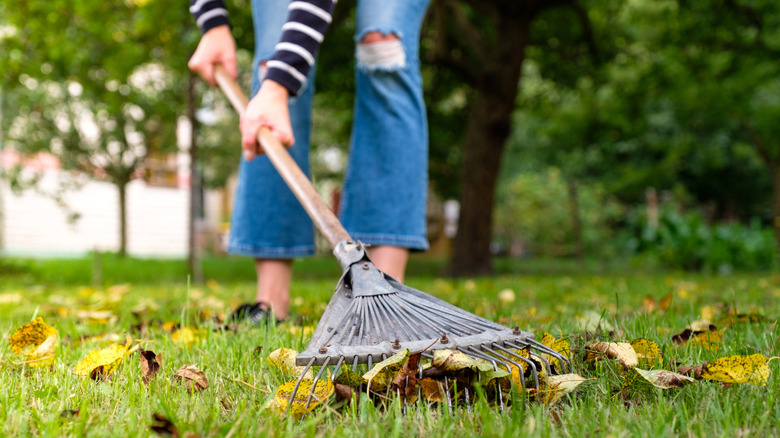
It's autumn, you're designing a fall cottagecore space, and naturally, busy as you are, your yard work is through the roof. That is, unless your trees do not shed their leaves in the fall. With a patio buried in leaves, you can't enjoy those cozy nights in blanket forts. And while raking might be your go-to solution, it can be literally back-breaking, slow, and you could still end up skipping smaller debris. It can be especially difficult on hard surfaces, like natural stone patios. The same goes for cramped spots such as the gaps between deck slats, bottom edge of fence, or crannies around large boulders. Not to mention that if your patio is big, raking can eat up hours. The faster and low-effort alternative is a leaf blower, which can clear up an entire patio in a fraction of the time.
However, keep in mind that a blower will only save time if you use it correctly and pick the correct one for your patio size, but first, safety. Gear up with ear protection, goggles, and dust mask, and wear a full-sleeved shirt and pants, no matter the type of blower you use. Debris and leaves tend to kick up into the air, which can hit your eyes or scrape your legs. Oh, and don't wait for the leaf pile to grow as it's easier to blow smaller piles than the bigger ones.
Tips for using a blower to remove leaves from a patio
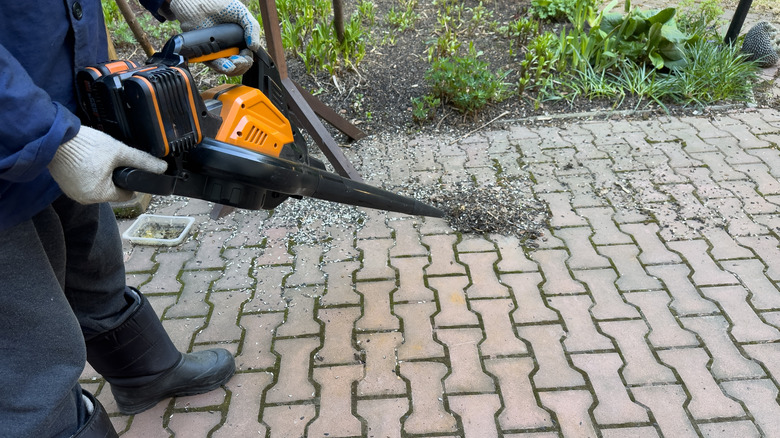
Before you start cleaning your patio, pick a drop spot. Put a sheet or tarp where the leaves will end up, so they're easy to carry to the compost or bag. While you work, set the blower to a low speed if you're working with dry leaves, since high speeds can make the leaves skitter. This setting will also save your fuel or battery. Also avoid blowing wet leaves as these tools work best on dry ones and thin twigs. But, if you must deal with wet leaves, push your equipment up to its highest speed setting, as such leaves and debris tend to be very clingy. Although it's best if you can wait for the overnight dew to evaporate or the rainwater to dry. In any case, morning is not the best time to use a leaf blower if you want to avoid a spat with your neighbors.
With the timing and settings sorted, it's time to get the leaves moving. But before you switch the blower on, figure out which way the wind is blowing because you need to work in that direction to get the natural breeze to do some work for you. Keep the nozzle close to the ground and nudge the leaves in the direction wind is moving, so they pile up in one spot. If the wind is working against you, angle the nozzle and work in zigzag passes instead of fighting it head-on. For best results, keep the blower at your side and sweep it from side to side at a slow, steady pace.
Which leaf blower should you choose for faster cleanup
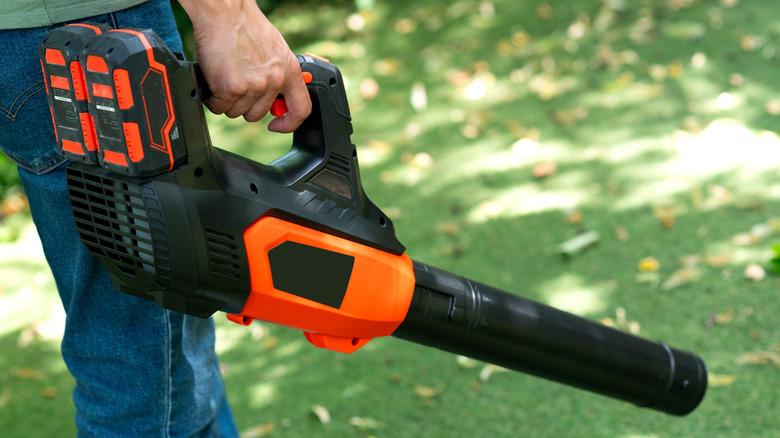
Leaf blowers come in many models, which can be classified by power source: corded electric, cordless battery electric, and gas. A corded electric model is okay a small patio, since length of the cord limits your movement range. For a larger space, a battery-powered blower provides effortless mobility, though its runtime is comparatively limited. Gas powered variants can be more powerful, but they can pollute the air and be bad for your lungs.
Beyond power source, leaf blowers also differ in form: handheld and backpack being the popular ones. Handheld electric blowers, either corded or cordless, are the best pick for most homeowners as they're easy to carry yet pack sufficient punch. At the same time, they are easy to store and comparatively inexpensive. But if you regularly tackle a lot of heavy work, such as frequently moving wet leaves, go with a backpack blower.