

No More Rotting Wood: The Eco-Friendly, Durable Alternative For Raised Garden Beds
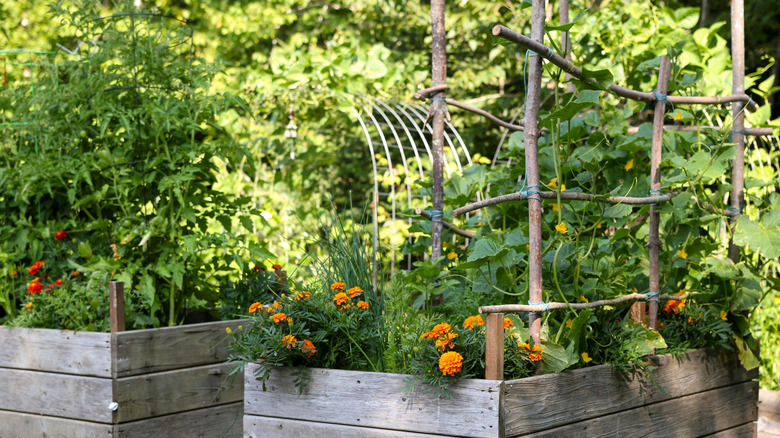
If you're dreaming of a beautiful garden overflowing with flowers or veggies, building a raised garden bed is a great first step to achieving it. Following tips for starting a raised garden bed can help you sort out most of the details, but one thing you should consider carefully is the material you build it out of. Raised beds can be made from a number of different materials, but one of the more durable options is stone. Unlike wood, stone won't rot in wet weather and isn't vulnerable to insects like carpenter bees or termites. Although the quarrying process isn't great for the environment, stone can be reused and recycled many times, making it relatively eco-friendly. Plus, any pieces that break off are natural, so you don't need to worry about the stones causing extra pollution.
Stone blocks are quite hard and durable, which is why they're often used in construction. They can offer the same benefits to your raised garden as they would your home, namely damage resistance and sturdiness. Wood is also durable, to a point, but it requires more maintenance to keep up that durability. It needs to be cleaned and sealed to keep the moisture off of it, and repairs may be necessary to fix pest damage. While stone may need repairs in the case of serious damage, it's largely maintenance-free. This natural longevity also makes it more eco-friendly. Wood only lasts so long before it breaks down and needs to be replaced, meaning you'll use more of it over time.
What to know before building a stone raised garden bed
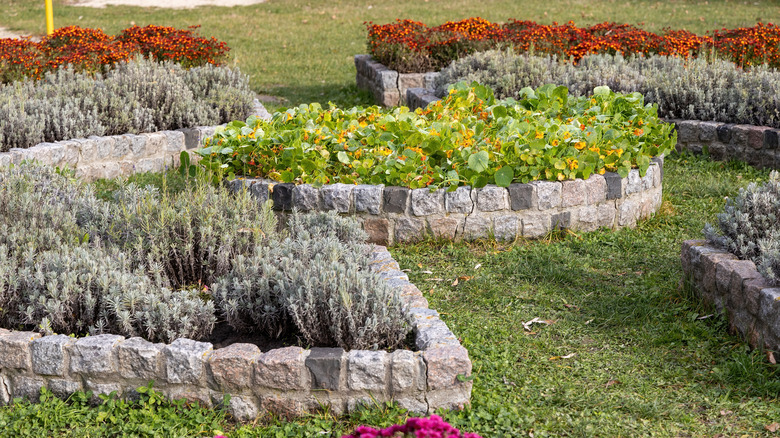
One factor to consider in making this sort of raised bed is the type of stone. Granite is a popular choice, but consider looking online or at local landscaping stores for other options like fieldstone, sandstone, or even limestone for a rustic and durable raised garden bed. Unlike wood, which is mostly limited to boards or logs, stones can come in many shapes. Blocks with flat sides are the easiest to work with. Rougher, more natural shapes have a dynamic appearance, but they're trickier to fit together. You may be able to split the difference with stones that are predominantly naturally shaped, but have a flat top and bottom. If the stones stack neatly, you may not need to use mortar or other adhesives, but they can still make the raised garden bed more structurally sound. If that's something you want, check out this guide to building a mortared stone wall.
One place where wood wins out over stone is short-term cost. The cost of stone depends on the type of stone you get, but you can expect to pay around $40 per square foot on average. Wood may not cost anything if you're willing to upcycle an old pallet, but even buying new wood tends to be much more affordable than stone. You can cut costs and increase eco-friendliness by using reclaimed stone. However, the longevity and durability of stone also means you'll need to spend less on replacing and repairing the walls, allowing you to save money in the long run.