

Skip Wood And Concrete: The Durable Material For Raised Garden Beds With A Rustic Look
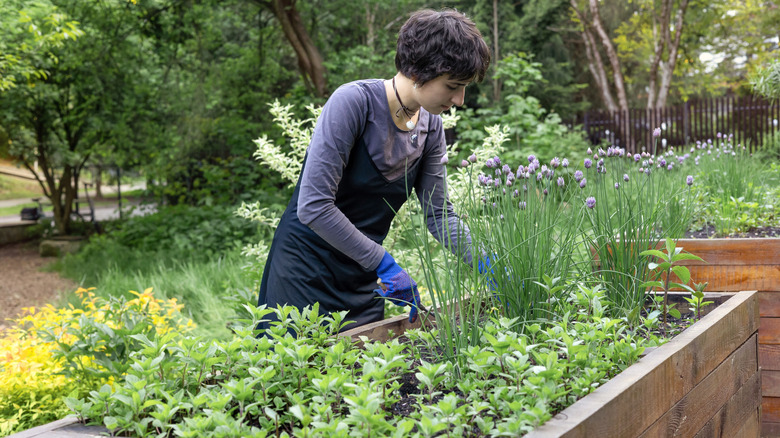
Raised beds can elevate your plants and your garden to a whole new level, but the most common materials for building beds — wood and concrete — leave a lot to be desired. Garden beds crafted out of wood pose problems of longevity due to the potential for pests and rot. Concrete lasts for ages, but unless you're going for industrial style, it's not much to look at.
Enter limestone, a popular rock landscaping option combining the longevity of concrete (just look at the Pyramids in Giza) with the rustic visual appeal that gardeners look for in wood. And, unlike wood, concrete, or most things for that matter, many say that limestone actually looks better with age. Sun, rain, and temperature swings all contribute to limestone's natural weathering, creating a timeworn facade instead of the warping, rotting, or splintering you get with wood. It is significantly more expensive than a wood alternative, but properly installed, a limestone raised garden bed should last 20 to 30 years (or even longer) with little maintenance. While you can always clean outdoor limestone, not doing so will save you some time and let it acquire an aged appeal.
Not only will it last for decades (and look good doing it), limestone can bring a host of other benefits to your raised garden beds, depending on your soil, climate, and plant choices. Limestone is an eco-friendly and naturally alkaline stone, so if you have soil that sits on the acidic side, natural erosion may have a minor and gradual impact on your soil's pH. Limestone blocks also drain well, which helps to avoid waterlogging and root rot if it tends to rain heavily where you live.
Capture limestone's rustic aesthetic in a raised garden bed
You can usually get limestone blocks by visiting a local stone supplier. Look for unpolished and weathered blocks of varying lengths to build a rich rustic aesthetic. You could order limestone blocks from Home Depot, Lowe's, and other home improvement outlets, but these will be often cut to a standard size. To achieve a charmingly unrefined feel for your garden, consider skipping traditional rectangular raised beds in favor of ovals or circular planters.
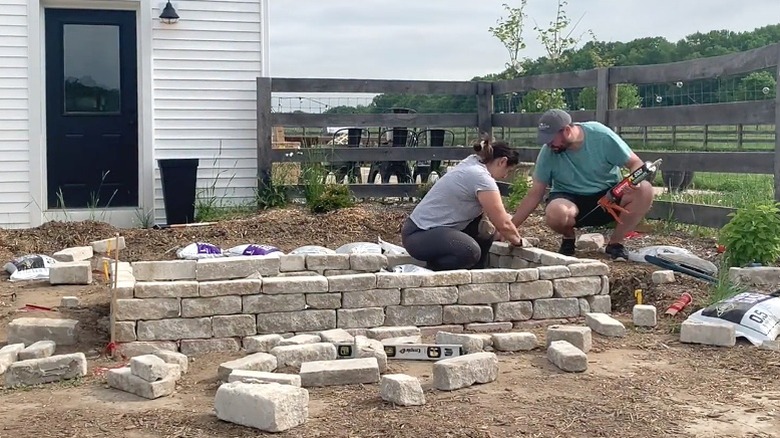
When it comes to building your garden beds, you'll have to level the rough ground to create an even, prepped starting point. Before leveling it though, cut out the first few inches of topsoil: This way the stone will look as if it's coming out of the ground rather than sitting on top of it. You can then start laying your first course of blocks.
To set your limestone blocks in place, you'll need a shovel, a long level, and a rubber mallet, and you may want to get a hammer and chisel to shorten the end pieces to the correct length. Securing the limestone blocks is as easy as running lines of landscaping adhesive over each row of blocks before laying the next row on top. Accentuate the rustic vibes by varying your block sizes and placing them so they don't line up perfectly, which will strengthen the organic, hand-laid impression. If desired, top off the more uniform retaining wall blocks with slabs for sitting and visual contrast.