

Smart DIYer Uses Concrete Blocks To Elevate A Garden Rain Barrel Setup
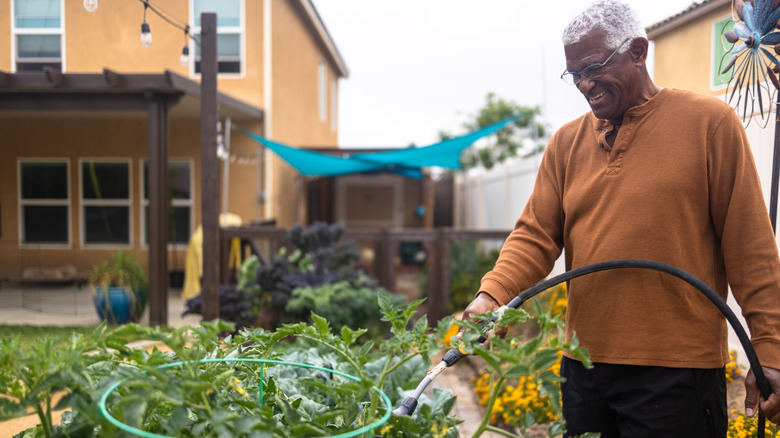
Setting up a rain barrel is a smart move, because rain provides slightly acidic water that plants and lawns need to be healthy. But placing the rain barrel directly on the ground creates a few problems. If the spigot is at ground level, it's very difficult to attach a hose, and you can forget about trying to fill a watering can or bucket. Another problem is maintenance. On the ground, fittings and valves are exposed to mud and debris, creating additional wear and tear while also hiding potential leaks against your foundation — which can lead to even bigger and more costly problems down the road.
Elevating your rain barrel will increase gravity water pressure and make it easier to use it for irrigation, add a hose, or access it to fill a watering can. Emptying the barrel for winterization is also much easier when it's elevated. It will also make the barrel safer, because a sturdy, level base helps prevent tipping. You can purchase a rain barrel stand for between $50 and $100 on Amazon, but this smart DIYer from Gear Know-How shows how easy and inexpensive it is to make your own using concrete blocks.
The only supplies you need for this project are concrete blocks (four are used in the video). You'll also need a flat faced shovel, a level, and a tamper. Optional materials include four 12-by-12-inch pavers, or enough to fit the diameter of your rain barrel, and you may need some small gravel and gravel rake.
How to elevate your rain barrel with concrete blocks
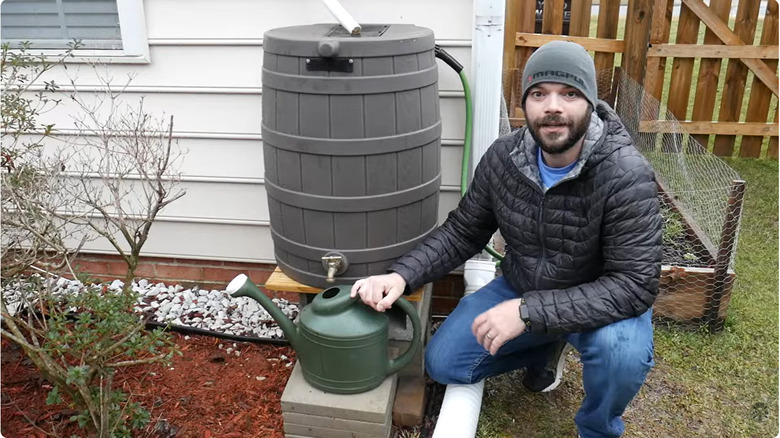
In this DIY, two concrete blocks are stacked across two others to create an elevated rain barrel stand. It doesn't get much simpler than that, but he also encountered some problems with the barrel not being level, even after adding some type of paver sand under the blocks. To ensure the barrel is level, first scoop out a 2-by-2-foot square about 3 to 4 inches deep. The flat shovel is best for scooping soil; you don't want to dig a deep hole, just enough to level the ground. Then, skip the pricey compactor and level the ground with a hand tamper. If necessary, you can add a layer of gravel, using the rake to level the area. Now you can stack your blocks.
For a larger and more stable platform, use eight concrete blocks. Use four on the first level in an interlocking square pattern, making sure they are completely level after they are placed. Then make a second layer of four, cross-stacking them with the first layer. Check again for levelness. Then top the platform with pavers for a flat top to place your rain barrel. You can use one 2-by-2-foot paver or four 12-by-12-inch pavers.
A more decorative idea if the rain barrel is against the house or a wall is to create a three-quarter circle with garden wall blocks, put stacked concrete blocks in the center, and fill the circle with gravel. Top with flat pavers, ensuring the structure is level after each step. Then, place your rain barrel on top as usual. With this setup, your rain barrel will be functional as well as attractive.