

What Happens If You Spray Your Walls With Vinegar (And How Often You Should)
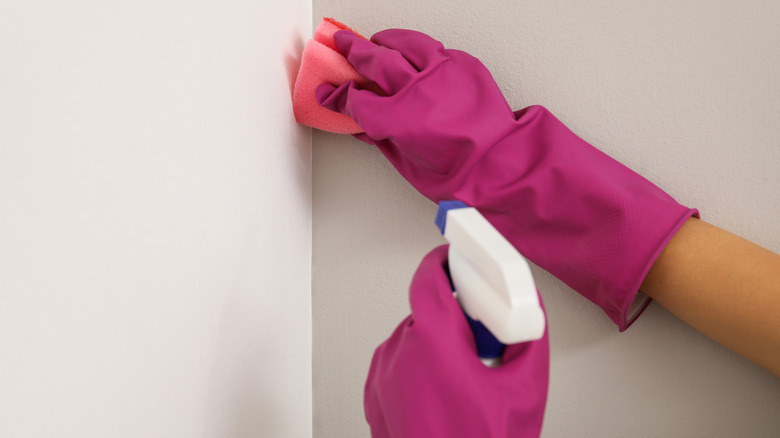
These days, it seems like distilled white vinegar and "green cleaning" are often synonymous thanks to the ubiquity of this common household staple in a variety of cleaning tasks. It turns out that some people might even spray vinegar on their walls — yet you might rightly wonder, to what end? The answer has to do with preventing and destroying harmful microbes. When you spray your walls with vinegar, the solution may help prevent mold accumulation on certain areas exposed to moisture. In some cases, it can also clean small areas of growth. If deemed safe for your particular wall, this method can be used only needed, or perhaps more frequently to control mold growth on a regular basis. For instance, you may want to try it on bathroom walls whenever they get wet.
White vinegar is a coveted tool for general cleaning purposes because its acetic acid content breaks down a variety of substances, such as hard water stains and mineral deposits. The same active ingredient can also kill some germs and other microbes, including mold. You may also be able to spray vinegar on tile walls as an alternative to conventional cleaners, such as those in bathrooms and showers that are regularly exposed to moisture. As a bonus, vinegar can also be sprayed on your walls to clean them before painting as an alternative to traditional methods like dish soap and water.
Tips for using vinegar on walls, and when you should do so
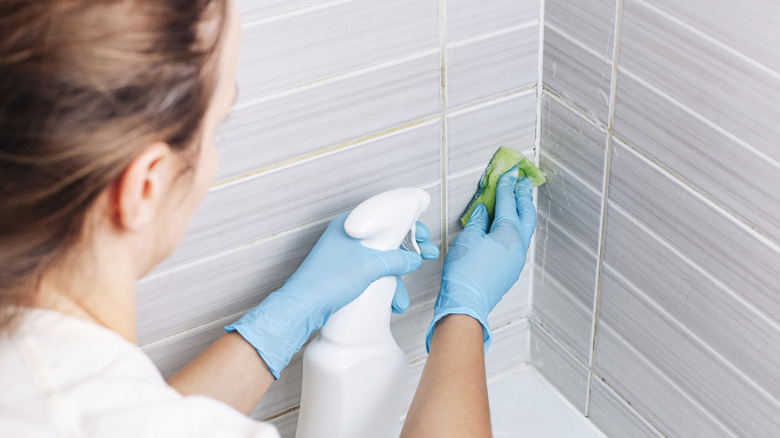
The easiest way to use vinegar on walls is to fill an empty spray bottle with equal parts white vinegar and water. The exact frequency of spraying your walls with vinegar depends on the area as well as your goals. For mold prevention on a shower stall or tiled walls, for example, spraying the area after bathing may help reduce the risk of these types of growths. Painted walls, on the other hand, may only need the assistance of sprayed-on vinegar in extreme cases of excess moisture and mold exposure.
Yet if your goal is to kill mold rather than prevent it, be sure to spray vinegar onto any areas of mold growth as soon as they occur. Merry Maids recommends allowing the vinegar to soak for an hour or longer before letting it dry and moving onto using a baking soda scrub to get rid of the remaining residue. Spraying vinegar on windowsills is also another way some people like to use the product for cleaning dirt and mold. The key here is timeliness so you can stop the mold from growing and spreading further along the affected wall.
Safety concerns and caveats to keep in mind with vinegar and walls
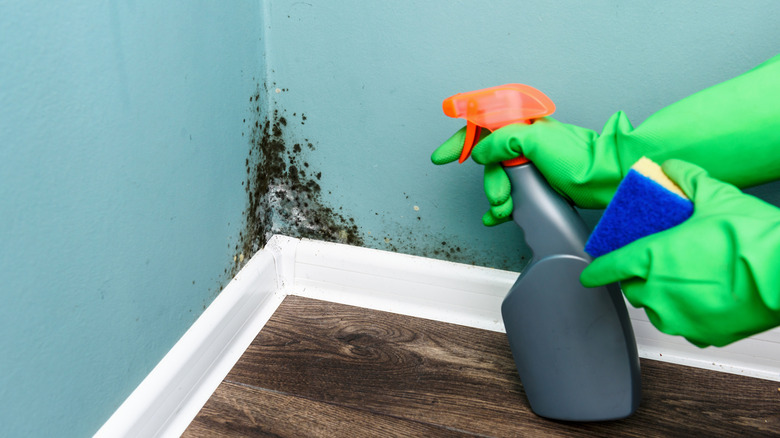
Unsurprisingly, using distilled vinegar for cleaning outside of its intended purposes means there are no official instructions from manufacturers for using this substance on walls. Several university extensions do tout the use of vinegar for greener cleaning, but mold prevention on walls isn't mentioned specifically. This doesn't mean you should skip using vinegar on walls, but you do need to proceed cautiously. With this in mind, you'll want to test a small area of a wall first before spraying the entire area. Doing so can help you assess whether the acid is too strong and might leave behind stains or marks. Never spray vinegar on walls coated in oil-based paints, as the acid can damage these finishes.
Also, only spray vinegar in well-ventilated areas while wearing protective gear such as gloves and a face mask. Opening up any nearby windows or turning on exhaust fans also has the added benefit of helping to keep the area dry and removing some of the strong odor vinegar is known for. Seek professional mold removal assistance in cases where the area of mold growth in your home is 10 square feet or larger, per the Oregon State University Extension Service.