

Out With Plastic Birdbaths: A Unique, More Durable Alternative
We may receive a commission on purchases made from links.
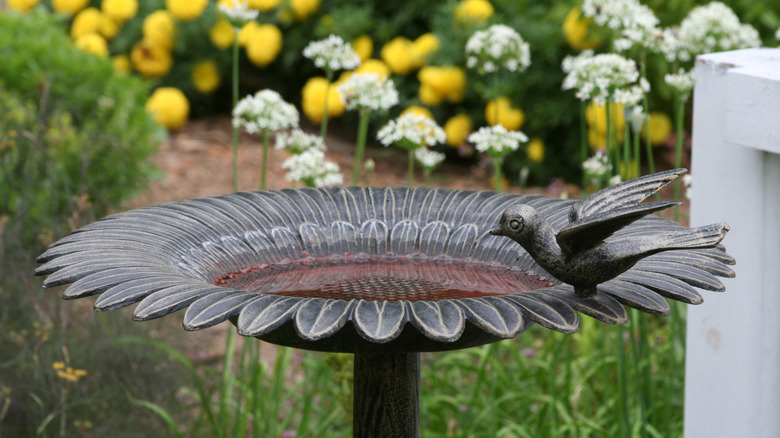
If you're looking to attract birds to your yard, a birdbath is an excellent place to start, and there are many material options from which to choose. A popular choice because of the economy and easy upkeep, plastic birdbaths are well and good for a season or two and make a nice lightweight alternative to bulky, heavy stone options. However, after a while, they tend to fade and may even start to deteriorate from sun exposure. Cast iron birdbaths make a nice happy medium — not as heavy as stone or concrete birdbaths, but more durable than plastic ones. Plus, these baths lend a unique air of elegance to a yard that plastic simply can't replicate.
Cast iron is an excellent material for outdoor furnishings and decoration because it is both easy to clean and, more importantly, extremely strong. In fact, it's one vintage garden find collectors rarely skip because it can last for decades if well-maintained. Being much heavier than plastic birdbaths, a cast iron version will also be less likely to tip over from the wind or minor contact.
Cast iron birdbaths come in a wide variety of stylistic options and price points. Many models lean into the vintage look, featuring ornate designs and motifs of flowers or animals that bring a level of authenticity and charm. It's also worth noting that not all cast iron baths have to be bronze or black. This stylish OGETFUUR Cast Iron Pedestal Birdbath at Home Depot, for example, comes in a soft blue, while the CYIKE Solar Fountain Bird Bath from Lowe's is painted a spring green. And if you really want a specific look, you can always give the cast iron a stylish (and protective) coat of primer and paint.
Caring for your cast iron birdbath
One key downside of a cast iron birdbath as compared to plastic alternatives is the susceptibility to rust. Unlike stainless steel or aluminum, cast iron doesn't have any inherent protection against corrosion from humidity, ice, and rain. If your bath is small enough to move, it's a good idea to drain it and store it in a garage or garden shed until spring to keep your birdbath from freezing this winter and prevent moisture contact that could lead to further rusting. For heavier baths that are too cumbersome to relocate, a fitted cover is the next-best option — just make sure you choose one that's breathable rather than fully sealed, since trapping moisture underneath a cover tends to cause mold growth.
Like plastic birdbaths, cast iron isn't an ideal choice for sunny spots, but for different reasons. While it won't break down like plastic, it can absorb the sun's rays and become unbearably hot for the birds, so be sure you have a shady or partially sunlit area for it. Once you've chosen and installed your metal birdbath, it's important to clean it regularly to prevent the growth of mold or accumulation of rust for hygiene and to help attract birds to your yard. In most cases, cast iron birdbaths only need a simple hose down to remove dirt and a cleaning with soapy water and a scrub brush anywhere a bird might have made contact. If your birdbath does accumulate some rust over time, a good rust inhibitor, such as WD-40 Specialist Corrosion Inhibitor, is your best option for treatment. It will remove any loose rust, giving you a sleek finish that embraces a slightly aged patina.