

Sprinkling Baking Soda On Your Couch: What It's For, Why It's Important, And How To Apply It Correctly
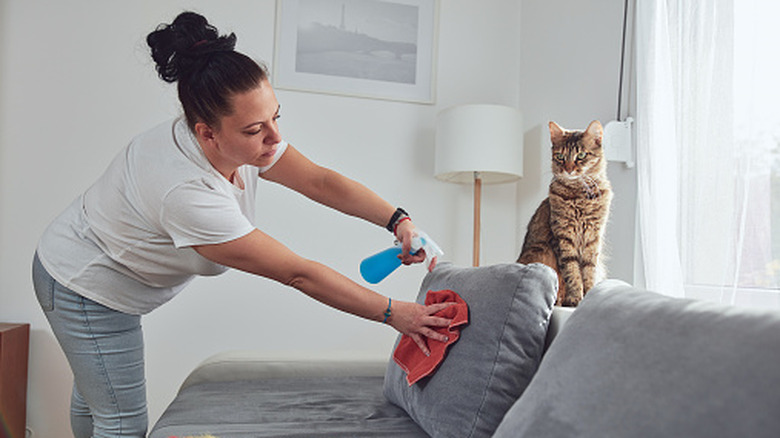
Baking soda is one product that should be included in every household's cleaning supplies. It can be used as a gentle scrub or to absorb spills. And of course, it's a popular way to neutralize odors. Aside from the ubiquitous box of baking soda in the refrigerator, many people use it to get rid of smells in upholstered furniture, including couches. Keep in mind when using this tip that while baking soda can deal with many unpleasant odors, it can't eliminate smells that have already soaked into the fabric. Pet urine, for example, may require professional cleaning to fully get rid of the odor.
Before you start make sure you check your couch's care label. On many couches, this can be found beneath a cushion or, sometimes, on the underside of the furniture. The codes on the label will indicate whether the material can be treated with water, solvent, both, or only vacuuming. A "W" on the label means your sofa can be cleaned with a steam cleaner or a water-based cleaning agent, while an "X" on this label usually means the fabric should only be vacuumed or brushed. It's a good idea to test a concealed area before moving ahead with using baking soda on a visible or wider surface area. Use the same instructions to treat the whole couch, but test a small, unobtrusive area first to make sure baking soda won't discolor the fabric. There are also many surfaces you shouldn't use baking soda to clean, including leather, imitation leather, silk, or delicate vintage furniture because it could dry out, damage, or discolor the material. Baking soda may also be difficult to remove from deep-pile fabrics and seams, too.
How to freshen a fabric couch with baking soda
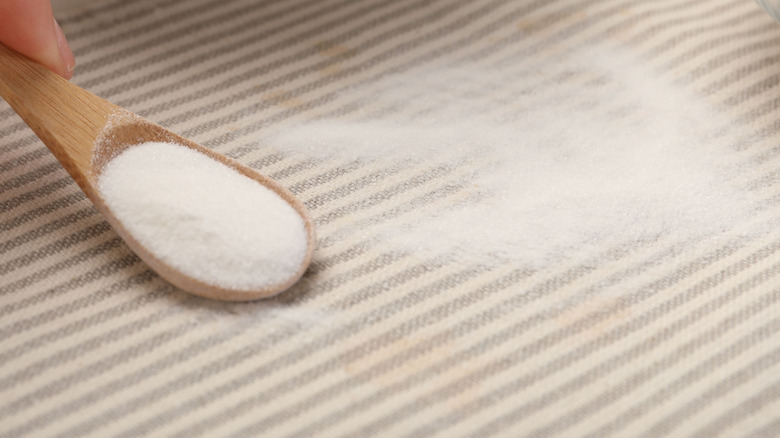
If your couch fabric passes the patch test, you're ready to treat the entire surface. First, remove any throws, pillows, or cushions from the couch. Feel between the seams for coins, straws, and similar small objects, and remove them by hand. Then, vacuum the upholstery, paying particular attention to seams and crevices. An upholstery attachment makes this task easier if you have one.
Make sure the couch is dry, then sprinkle a light, even layer of baking soda over the fabric. Don't work it in aggressively, just leave it undisturbed for at least 20 or 30 minutes. You can extend this to several hours or even leave it overnight for stronger smells as long as you've done a patch test for the same amount of time. If you plan to leave it on overnight, for example, conduct an overnight patch test before treating the whole couch. Keep children and pets away from the treated furniture while the baking soda is doing its work.
When enough time has passed, vacuum up the baking soda. Check the seams and all sides of the cushions and do a second pass with the vacuum if any remains on the fabric. Remember that baking soda addresses odor, but it can't clean the upholstery to remove the cause of the odor, such as stains or spills. A visible spill should be treated with the appropriate fabric cleaner, and some stronger smells may need professional treatment. For less serious odors, baking soda is one of several methods that can help get smells out of a couch, provided it passes the fabric patch test and you've checked the care label instructions.