

Out With Laminate Floors: The Durable, Slip-Resistant Alternative For Your Laundry Room
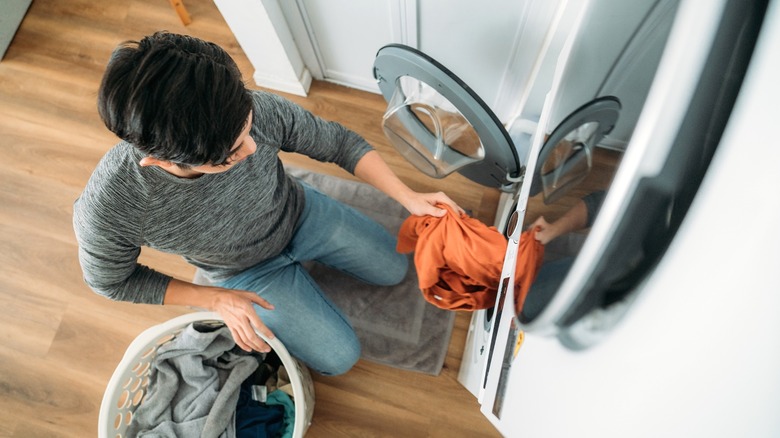
If you don't have the budget to splurge on hardwood, it often seems oh so convenient and sensible to turn to fake wood flooring, such as laminate, to get your laundry room Insta-ready. Unfortunately, though it'll look good in shots, it's not the best option for areas that deal with a lot of moisture. This is because the core of laminate flooring is made up of high-density fiberboard. Although this layer is relatively water resistant, heavy moisture exposure could cause it to distort and swell up. That won't just turn your wood-like floors into an eyesore — it can be especially risky (and potentially lead to falls, particularly if you use carpet or rugs to hide the swells) if moisture seeps in around the edges of a plank in the middle. You may find ways to make laminate flooring less slippery or less prone to water damage, but Paul Henthorn, the president of Slaughterbeck Floors, recommends a durable, grippy alternative: rubber flooring.
"Rubber holds up well to water so it's a good choice for a laundry room. Tough to damage, too. Definitely not as slippery as a lot of hard-surface flooring," Henthorn explained in an exclusive interview with Hunker. "It's also softer underfoot and can absorb some of the rattling and vibration from the washer and dryer." Popular in weight rooms, garages, and other demanding spaces, rubber flooring is a durable and sturdy choice that will handle the weight and movement from your appliances. Plus, the surface provides better traction and is more water resistant than laminate flooring. So, moisture usually can't breach the surface and reach the subfloor. However, that's not the case in all scenarios. Our expert cautioned, "Rubber flooring isn't automatically a waterproof floor. It depends on how it's installed. Sometimes, water can get through the seams if there were a leak."
Reasons rubber flooring is a good choice for laundry rooms
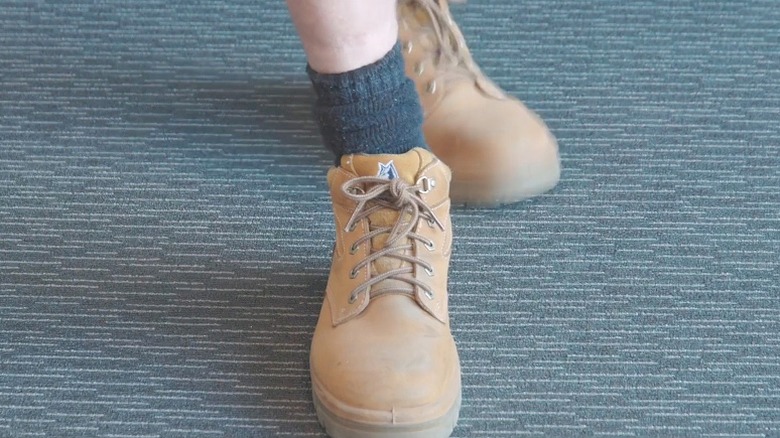
Henthorn shared his top reasons for selecting rubber as a slip-resistant surface in a moisture-prone space like the laundry room. "Mostly the grip," he stated. "It's not like the same smooth, hard surface you get with some other floors, and there are rubber products that add texture so that helps with traction." In the event of an accidental water spill or leak, it's not a given that you will fall upon contact. And this can be a major pro if you have mischievous pets or kids in the house. That being said, Henthorn noted, "Nothing is slip-proof. If you spill laundry liquid or grease, it's going to make any floor slippery. So I'd still check the slip rating of the product you're considering." Many products offer coefficient of friction (COF) ratings for their products, with higher numbers indicating grippier surfaces. Still, no matter your flooring's slip resistance, you should always make it a point to clean up detergent spills immediately to minimize accidents.
Further, Henthorn recommends using rubber flooring in laundry rooms for their ability to handle various stressors with aplomb. Comparing its durability to laminate flooring, he elaborated, "If we're talking about water, heavy traffic, or dropping things, I'd probably give rubber the edge. It definitely has some give." This cushioning property also makes it a more comfortable option, ensuring your back plus knee joints don't feel the strain after you load your dirty laundry or fold dry ones. However, he clarifies that this doesn't automatically make rubber more durable than laminate. Instead, he feels that "they're durable in different ways."
The downsides of using rubber flooring in your home
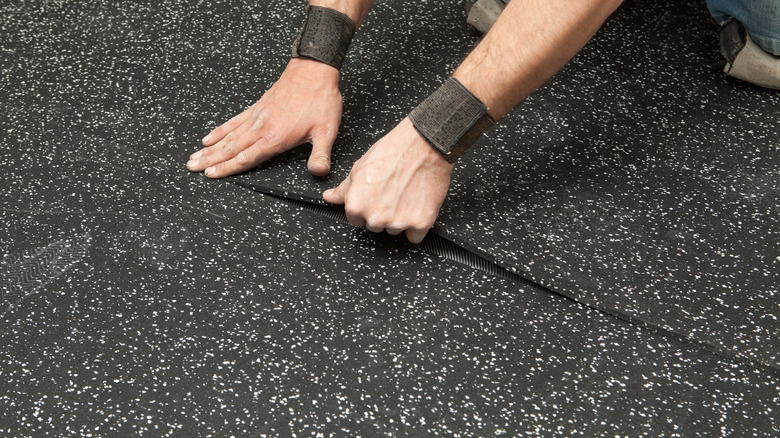
Although they're durable, slip-resistant, and not as prone to water damage as laminate, rubber floors have their fair share of cons. Listing them, Henthorn mentioned, "The look definitely isn't for everybody. It sometimes gives a gym or commercial building vibes." So, if you plan on giving your laundry room a luxurious touch, know you'll probably end up with an industrial finish. "It can sometimes have a distinct oily smell," our expert added. The odor will often emerge as the rubber off-gasses after installation and may be particularly strong if you opt for tiles made from recycled materials or pungent binding agents. And though it isn't considered a health risk, ample ventilation will be critical to air out the room and get rid of the smell permanently.
While some rubber products make a cheap, eco-friendly flooring alternative, there's no guarantee it will be more affordable than laminate flooring. "It can also be surprisingly expensive, especially for better-quality rubber," Henthorn offered. And though rubber floors are considered low maintenance, you can ruin them still if you use the wrong product when you clean your laundry room. As Henthorn warned, "You also have to be careful about what you clean it with. Certain chemicals and oils don't play well with rubber. Just make sure to read the manufacturer's cleaning instructions instead of assuming your regular floor cleaner is fine."