

Sick Of Your Outdoor Trash Cans Sitting On A Slope? This Affordable Hack Fixes It
We may receive a commission on purchases made from links.
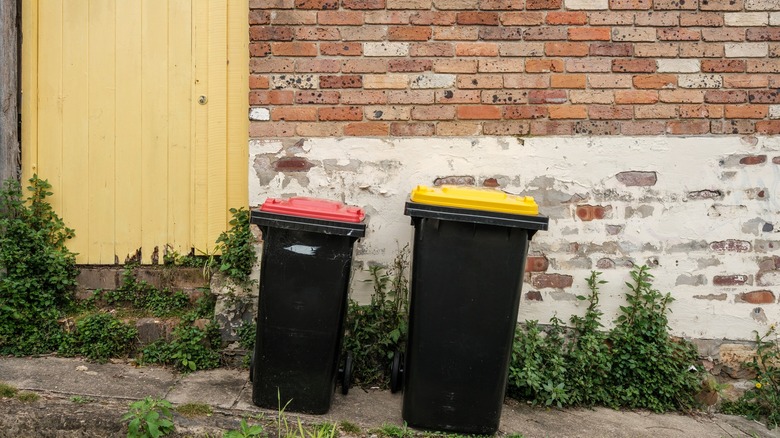
If you don't have a level driveway, placing your trash bins can be a problem, especially if the slope is steep. If you set the bins on the dirt by the side of the driveway to make room for your vehicles, soil settling and erosion can make them slowly creep downhill. You might try to bring the bins to the bottom of the driveway where you can put them on level ground, but TikTok user noblueprintco has an idea that can save you from having to do that back-breaking job every week.
The idea is to build a solid pad under the bins to counter the effects of soil movement, and it's easy to do with a modular grid of empty plastic cells that you fill with the material of your choice. Noblueprintco calls them interlocking pavers, but that gives the impression of solid pavers made of cement or stone. What they actually use is better known as permeable pavers, and while the brand used was TrueGrid, running $208 for a pack of 18 on Amazon, other brands can work just as well.
Permeable paver systems are lightweight and easy to lay out. Once you've staked one to the ground, you can fill the cells with a variety of materials, including gravel, dirt, or even seashells, an eco-friendly and attractive alternative to gravel. Noblueprintco used crushed stone, which is a solid, well-draining material, and that should ensure the base they built will stay put during heavy rains and resist movement during freeze/thaw cycles.
Like building a permeable driveway, but easier
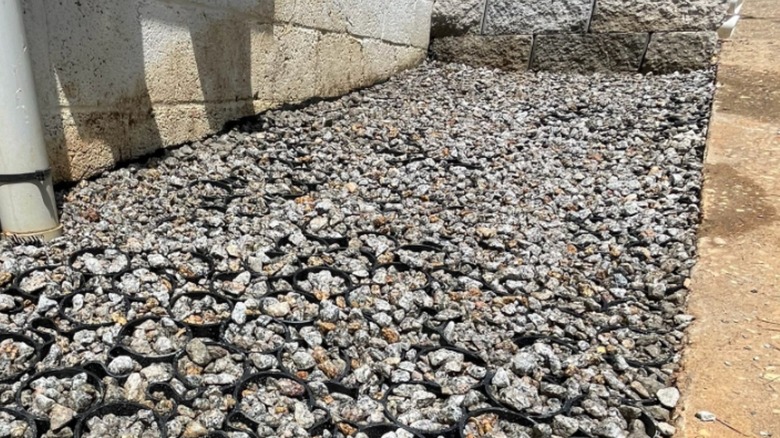
Permeable pavers are a popular choice for driveways because they allow rainwater to soak in, thus preventing runoff from creating drainage issues. That's exactly what this situation calls for, because the bins are on a slope, and drainage is already a problem. Noblueprintco followed the same general procedure you would when making a driveway, and that ensured a solid surface that would last.
They started by digging out a hole for the pad and leveling the bottom, then added crushed stone to make a sub-base. Depending on the slope, you could level the base and correct the problem of leaning bins by adding more rock to one side than the other, but Noblueprintco didn't bother doing this, probably because the main concern was to stop the bins from sinking and slipping downhill. Next, a weed barrier was laid on top of the sub-base. The creator used landscape fabric, but there are a number of organic and recycled alternatives to store-bought landscape fabric you can use that won't fill the soil with microplastics.
TrueGrid paver grids come in a variety of styles, and 1 inch is a typical thickness, so that's how much space you should leave between the top of the base and ground level. After assembling the grid, which comes in 2-square-foot sections, fill it with the substrate of your choosing, and the pad is complete.