

Clever DIYers Use Concrete Blocks To Make A Durable Outdoor Sink
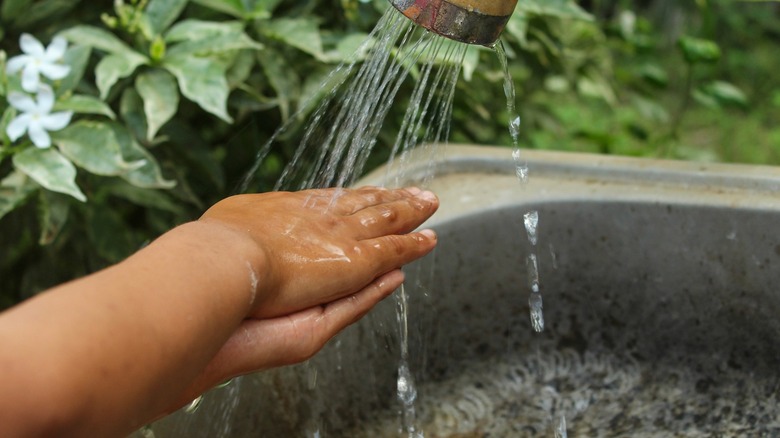
An outdoor sink is an asset that can make life more convenient in a number of ways. It gives you a place to wash your vegetables, garden tools, and also your hands after you've been working outside. You can also make it the centerpiece of an outdoor kitchen that you use for family and social gatherings. A sink needs something to support it, though, and whether that's a pedestal or an actual cabinet, it has to be solid. As far as DIYers from Rock Creek DIY and Facebook's HomeGarden Hackers group are concerned, cinder or concrete blocks are about as solid as you can get, and they also have other qualities that make them ideal for supporting a sink.
One advantage of concrete blocks is their price — they're just $3.10 each at Home Depot. Another is that they are stackable, which makes assembling them into a cabinet a breeze. A third perk is that they have hollow spaces that can be converted into storage for tools and utensils or filled with dirt for planting flowers or herbs.
You could make a permanent sink base by mortaring the blocks together as you stack them, but neither Rock Creek DIY nor HomeGarden Hackers did this. Leaving the blocks loose not only makes assembly easier, but it also makes it easy to remove the entire sink structure should the design of the outdoor space change. It's always good to give yourself that kind of flexibility, especially as the structure doesn't need mortar to be stable, anyway.
Tips for a successful DIY outdoor sink
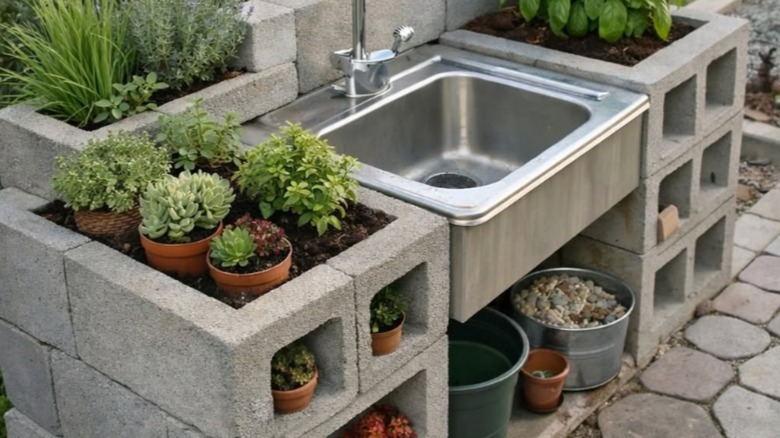
The essential materials for this sink structure are a drop-in (rimmed) sink, enough concrete blocks to support it at a comfortable height, and a faucet. To hook up the plumbing, you'll need water, and that's easier to manage if you place the structure close to an outdoor faucet. For drainage, you can simply let the water run into a bucket below the sink, but HomeGardenHacker suggests creating a gravel or stone pathway and draining the water into the gravel. Don't do this, however, if you're disposing of food waste or toxic chemicals. In that case, you should use the bucket or connect the drain to the sewer system.
If you're interested in undertaking this project, HomeGardenHacker has a few other tips. One is to be sure to build the structure on level ground, because the sink has to be level to drain properly. Another is to arrange the blocks in such a way that you can use the hollow sections as shelves or fill them with dirt for planting. Be sure to seal the hollow spaces with a penetrating concrete sealant before planting to protect the concrete from moisture and prevent mold from growing.
Rock Creek DIY has a tip that will make the space around the sink more useful: Stand an old wooden pallet up behind the sink. You can use the pallet to hang tools and other equipment, and you can even paint it to add color and character to your outdoor sink.