

Not Chemicals Or Traps: How To Keep Mice Out Of Your Garage This Winter
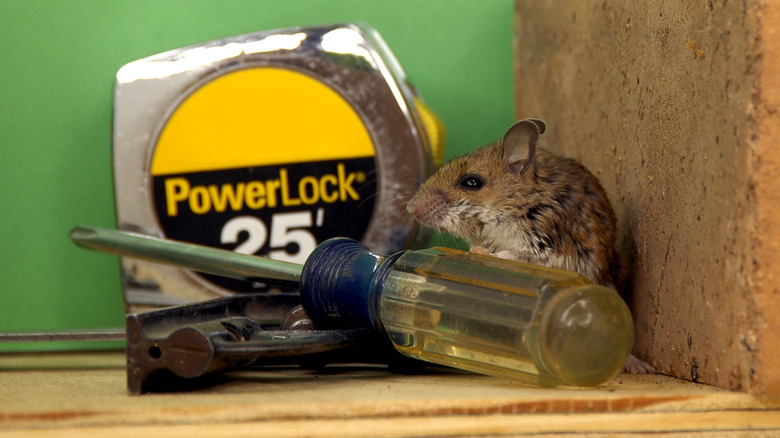
As winter's chill sets in, your garage can start looking like prime real estate for mice. Unfortunately, these rent-free tenants aren't picky about how they get inside, and they're scrappy in figuring out how to do it. All it takes is a tiny opening here, or a crack there, and suddenly your garage (and potentially your home) can experience an infestation. Once mice have infiltrated your space, your belongings, insulation, and other materials can become nesting supplies.
While it's common to get rid of mice with traps and chemicals, preventing these rodents from getting inside in the first place is more proactive. According to the Centers for Disease Control and Prevention (CDC), mice can squeeze through openings just 1/4-inch wide, which is roughly the diameter of a pencil. In other words, gaps that seem too small to worry about or even notice can merit a closer look. The best way to prevent mice from entering your garage is by using metal and sealants.
How to mouse-proof your garage without chemicals or traps
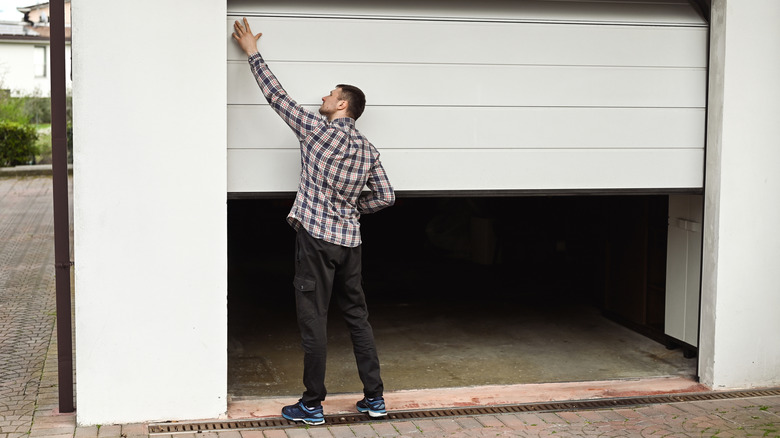
To help prevent mice from entering your garage this winter, start your inspection from the outside. Search for entry points in the foundation, the ground up to the siding, and along any human door frames. Garage doors are another common entry point, so look for gaps between this door's bottom seal and the floor, at its corners, between its vertical sidewall and the door's metal tracks, and along the top frame.
While you're at it, check your garage's window seals, roofline, vents, exhausts, soffits, and spots near pipes and wires. If you have a brick facade, identifying weep holes (intentional vertical openings between bricks) is necessary. Inspecting your garage from the inside with its lights off (and all doors closed) may reveal gaps if daylight enters. Don't forget to check walls shared between your garage and home, if applicable.
Fill any small holes you find with steel wool or copper mesh, and secure them with caulk or expanding foam. Larger openings may need metal sheeting, hardware cloth, or cement to create a more substantial barrier.
Regarding garage door maintenance to prevent mice entry, install reinforced rodent chew-proof bottom door seals, plug seal corner gaps with stainless steel shields, and consider repairing or replacing your garage door if it's past its prime. Stainless steel shields can also cover vertical sidewall gaps between the door and its metal tracks, along with top seal openings.
Finally, focus on making your garage less appealing to mice in winter. Keep pet food, birdseed, and other potential food sources in sealed containers, and clear away cardboard, paper, fabrics, and other soft items that can provide nesting materials. While these steps won't replace properly sealing the garage, they can make the space less inviting if a mouse does get in.