

Man Uses Concrete Blocks As A Savvy Alternative To An End Table
We may receive a commission on purchases made from links.
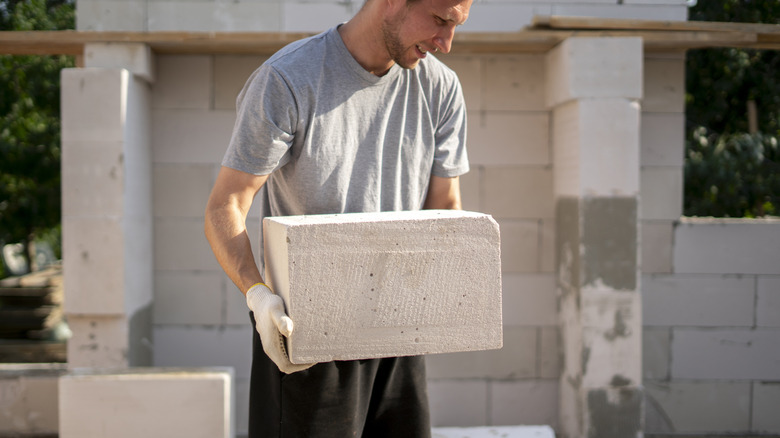
End tables can truly finish the form and function of a living space, which might explain why they often seem so unreasonably pricey. Even budget retailers can charge over $100. And why spend so much on such a simple piece? With just a glass tabletop and concrete blocks, it's possible to make your own version that's just as classy and just as sturdy but for well under retail prices.
YouTuber _ianmcintyre offered one of many clever spins on this practical DIY. The finished project might not look as artistic as some store-bought versions (it just uses typical concrete blocks), but it's incredibly simple and very affordable. You can try to find blocks for free: neighborhood groups and Facebook marketplace can help connect you with people who may be getting rid of cinder blocks or concrete blocks. If you want to get them new, an 8-inch by 16-inch Concrete Block from Home Depot costs just a few dollars. Glass tabletops will set you back more, with products like the Fab Glass and Mirror 24-Inch Clear Square Glass Table Top costing around $60. Repurposing a glass tabletop from a secondhand or thrifted piece may be a lower-cost option.
The concrete blocks provide a sturdy table base, as the material is durable and heavy. Fasteners may not even be needed. In between the concrete and glass, the components are typically heavy enough to stay in place. As-is, the concrete and glass combination lends an industrial look that is modern and sculptural, but also relaxed. Decorating with concrete blocks is appealing to those who want a contemporary industrial space on a budget. This DIY suits minimalist, urban home styles, and you can use it anywhere you want an end table: next to a sofa, bed, or between seats in a casual living room layout.
Concrete blocks are a sturdy, affordable base for an end table
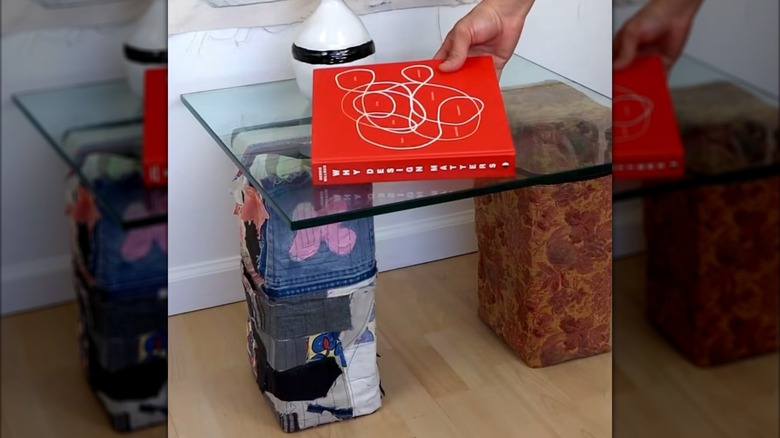
For this project, the designer stood two cinder blocks vertically, placed patterned fabric slipcovers over them, and put a glass tabletop on top. Though exposed concrete has a unique look, adding a fabric cover really lets you make the end table yours with your choice of color, texture, or pattern. The slipcovers are custom-made, and the designer doesn't share his process, so you may have to do some experimenting to create your own. Regardless of how you fashion your cover, ensure you have a flat, stable surface on each end so it can work as a table leg.
One option is creating two covers that slide over the end of each block (like the left-side slipcover in the video). You can do so by sewing panels together to create a boxy shape. If you don't mind having the concrete ends exposed, you can sew a simple sleeve that just covers the sides of the blocks. In this case, you'll want a layer of protection between the bare concrete and the tabletop. Adhesive pads like the Amazon Basics Cabinet Bumpers can help.
Can't sew? There are some no-sew ways to make a boxy cushion cover. Following the same steps, use a thin piece of fabric to wrap the concrete block like a present. Then, use Velcro fastenings to make the cover removable. If you don't mind a more permanent bond, you can use an iron-on adhesive like HeatnBond UltraHold, or even a hot glue gun.