

How Long Do The Batteries In Riding Lawn Mowers Usually Last?
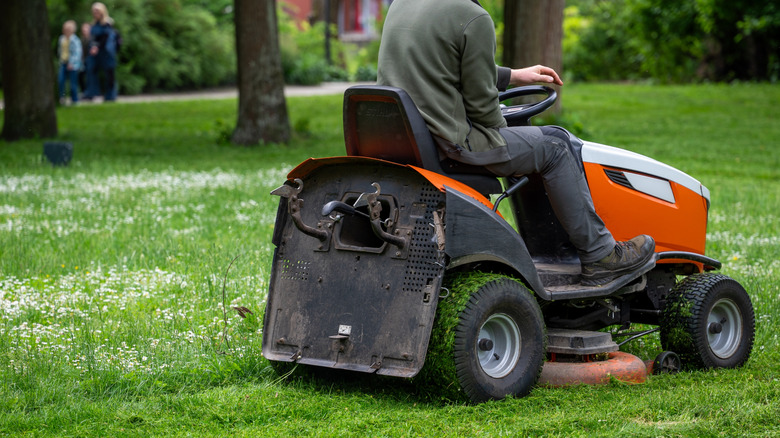
Few things are more annoying than climbing onto your riding mower, turning the key, and getting nothing but a weak click. Now, there are various reasons why your lawn mower won't start, but the most likely reason in such scenarios is a dead battery. And if you charged your equipment recently, this scenario might make you wonder whether the battery has reached the end of its rope. But before you make plans to replace it, know that the life expectancy of a lawn mower, specifically the one with a 12-volt battery in the gas variant, is about two to five years, whereas electric ones usually last longer.
So, if yours is within or past its expected lifespan, the battery is the likely culprit for your mower not cranking up. Need confirmation? A sure-shot sign that it needs to be replaced is when it drains quickly, or is not holding the charge even when stored properly. Moreover, if you can crank it up, but it still struggles to cut the grass even at a normal height, you might have a bad battery on your hands.
Lead-acid batteries last for up to five years, but sitting idle kills them prematurely
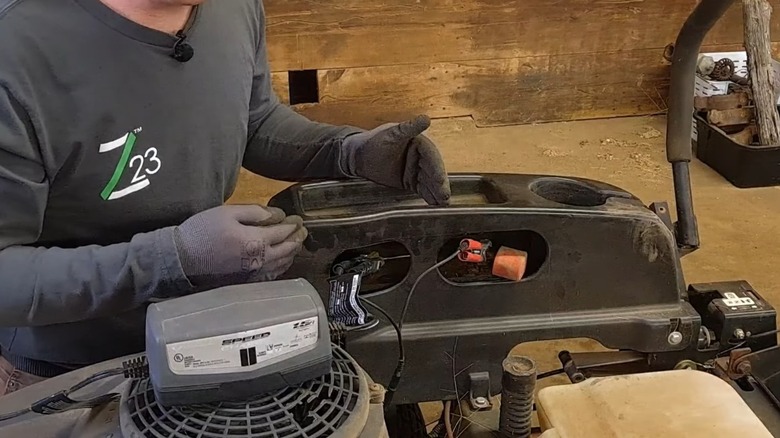
A dead battery is one of the biggest problems with riding lawn mowers, because most gas-powered riding mowers use a lead-acid battery, mainly to start the engine. However, if left unused and you don't plug it in for too long, these batteries can fail prematurely because even idle, they keep losing their charge, also known as self-discharge. This is why a battery that worked fine at the end of a season can be dead by spring. You can prevent this by ensuring it's fully charged when you're storing it and charging it once a month in the off-season.
That being said, electric riding mowers work differently, so their batteries need different care. Their lithium-ion batteries last about three to seven years. On the contrary, its cousin, lithium-ion batteries with phosphates, used in premium electric mower systems, can last somewhere between five and 10 years. Since they power both movement and cutting, their lifespan depends on the battery's size, the size of your lawn, and your charging habits. To increase their lifespan, avoid storing them in areas that receive direct sunlight, such as a garage or shed, as heat tends to age them faster, reducing their capacity to hold charge over time. Additionally, unlike lead-acid batteries, they shouldn't be stored fully charged for months, but they shouldn't be stored completely empty, either.