

Forget Traditional Curtain Rods: Copper Pipe Is A Unique Way To Add Character For Less
We may receive a commission on purchases made from links.
You can spend ages choosing curtains, only to hang them on the same basic rod you (and everyone else) has had for decades. While there's nothing wrong with old reliable, the hardware is another opportunity to give your windows some character. If you've been shopping around and you can't find what you like, the perfect curtain rod could be hiding in the plumbing aisle.
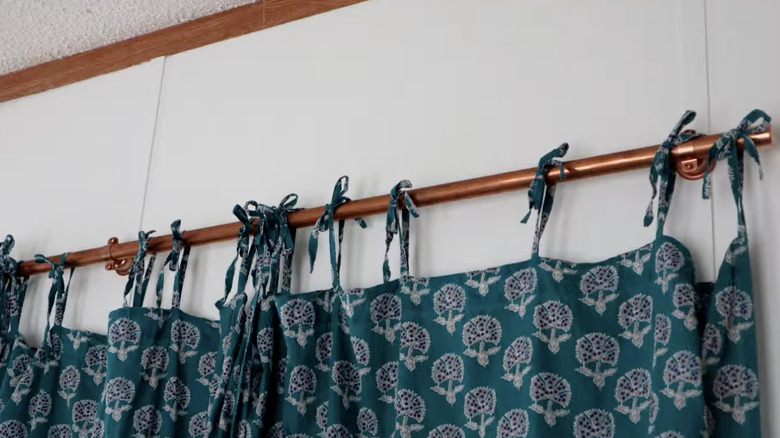
It might sound weird at first, but one unexpected use for copper pipes in your home decor is turning it into a curtain rod. You could pair it with white curtains and weathered wood for a farmhouse-inspired room, or let the exposed pipe complement brick in an industrial space. You might think that because it's copper, the pipe will cost you an arm and a leg, but it actually doesn't require a huge investment and might even cost less than a curtain rod at the store. Home Depot lists Cerro's ½-inch-by-5-foot copper Type M pipe for $16.54, but prices can vary by store or region. You'll also need to add two flanges, two copper male adapters, two elbows for the corners, a copper tee for potential support, and copper spray paint to your shopping list.
For this brilliant curtain rod hack, make sure you have a tape measure, level, deburring tool (or sandpaper), pencil, drill, and a tubing cutter if the pipe needs shortening. Curtain rings are optional, depending on the style of panels you have on hand. Just measure your window before buying the pipe — unlike an adjustable rod, it won't extend to make up for a few missing inches.
How to turn copper pipe into a curtain rod
Start by breaking out the measuring tape to determine how long the copper pipe should be, and make sure to leave enough room for the supports and for the curtains. Hold the pipe against your planned layout before cutting — this is one of those moments when measuring twice really pays off.
Chances are the rod might need shortening, and for that, you'll need a tubing cutter. Secure the pipe and cut the copper to the appropriate length, removing any burrs from the ends with a deburring tool or sandpaper so you don't snag your nice curtains on a rough edge. Most flanges only come in silver, so first spray paint them copper to match the pipe, then screw one to the wall next to the window once the paint is dry. Screw the male adapter into the flange, and insert the pipe with its elbows to mark where the next flange should go. Remove the pipe and screw in the second flange and adapter. Now you can install your pipe with the curtains, making sure the weight of both can be supported — no one likes to be awoken by a loud crash in the middle of the night. If you need support, add a copper tee in the center.
If you're using curtain rings, use coordinating copper ones for consistency, then let the warm metal do all the talking. Copper is known to tarnish over time, but you can clean it by using a lemon and kosher salt. Dip a cut lemon into the salt. Gently rub the trouble areas and watch that tarnish magically disappear, then wipe away the lemon and salt with a damp cloth and dry the copper thoroughly.