

Not A Conversation Pit: This Modern Spin On Living Room Design Brings The Cozy Vibes
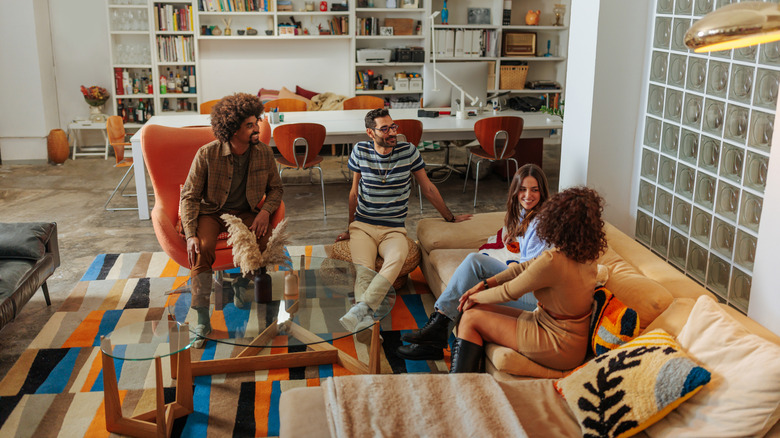
The rise of human-centered interior design has affected living rooms in a major way. Today's trends focus much more on engaging with people than with screens. As a result, conversation pits, the decades-old, once trendy living room feature, have been making a comeback. First widely used in the 1950s, conversation pits are sunken areas of a living room lined with cushions, usually with some kind of central table. These create intimate spaces that encourage connection and (hint-hint) actual conversation. However, you don't need to tear up your floors to create this kind of space in your living room. You just need to swap around the furniture.
Conversation-first living room design is a modern spin on the conversation pit that brings the same cozy vibes without the hassle of sinking the floor. In an interview with House Beautiful, furniture expert Monika Puccio said, "Conversation-first living rooms are all about designing a space that encourages people to connect with one another, rather than focusing everything around a screen."
On a practical level, this means turning your furniture away from the television and facing it inwards towards one another. This imitates the conversation pit's intentionally intimate design. The furniture facing inwards facilitates connection by creating a relaxing, convivial environment. This design choice makes socializing even easier because it literally turns you away from any distractions. Plus, reorienting your furniture to be conversation-first is a quick task you can complete in an afternoon.
How to design your own conversation-first living room
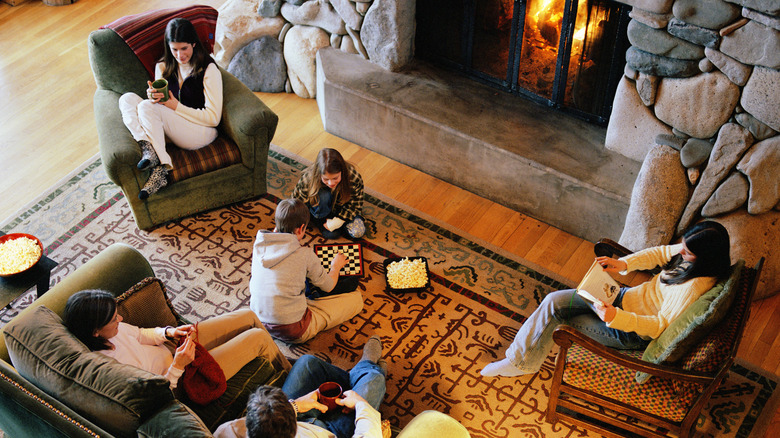
One reason why conversation pits have almost disappeared from living room design is that they require you to sink the floor. This has numerous disadvantages, including that it's a permanent fixture that significantly limits how you can design or rearrange a space. Plus, the pits aren't always safe and can create tripping hazards. Conversation-first living rooms, on the other hand, are easier to adapt because they are furniture-based designs.
That said, you still want to make sure you arrange your furniture for function and fun. One recommended rule is to add a focal point, like a table or rug, and build the design around it. For example, you could use a large coffee table to center the space. It will serve as a place to gather around to play games, place drinks, and enjoy snacks. After you have your focal point, it's time to choose furniture.
Armchairs and small sofas can easily be angled inwards to create a definite, square shape. U-shaped couches or curved sectionals easily lend themselves to this inward-facing shape, while adding softer curvature. You can also create definitive zones by adding other furniture elements as borders, such as bookshelves, library tables, or a sideboard to create a natural boundary. This closeness amps up the room's coziness and strengthens the connection between guests.