

Gravel Vs. Chip Seal: Which Driveway Is Easier To Live With?
Before you undertake a major driveway overhaul, it's important to know the pros and cons of all your options. Choosing a driveway material is an expensive decision (ranging anywhere from $1 to over $50 per square foot) that you ideally live with for many years, on full display in front of your house. Concrete and asphalt are among the most common driveway materials, but there are plenty of other paths to explore, including less expensive options like gravel and chip seal. If you're looking for a cost-effective driveway, you may end up deciding between these two materials.
Gravel driveways consist of layers of crushed stone and a surface of loose gravel. While there are different types of gravel driveways, they are generally inexpensive, low-maintenance, and viable for many homes. Chip seal driveways, on the other hand, start with a layer of liquid asphalt and are covered in stone chips; as a result, they're also referred to as "tar-and-chip driveways." Although it's slightly more expensive than gravel on average, chip seal has a relatively low upfront cost of $1 to $5 per square foot. Of course, there's far more to dig into than cost alone when it comes to these two driveway materials. Durability, drainage maintenance, climate compatibility, and appearance are all major factors when deciding which driveway will be easiest to live with for years to come.
Differences in maintaining a gravel vs. chip-seal driveway
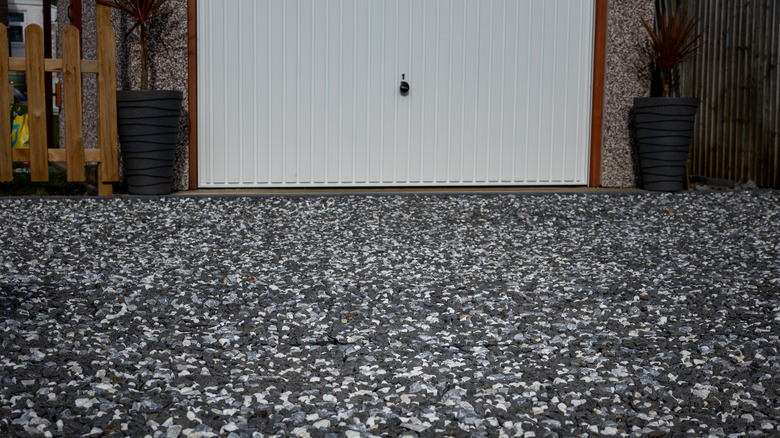
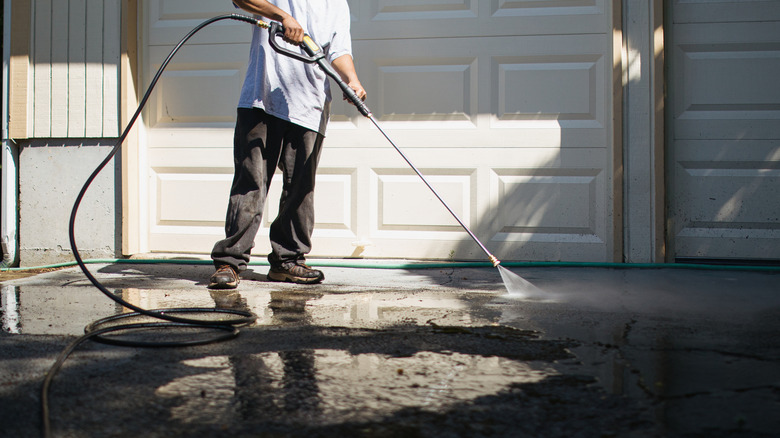
Regarding maintenance, gravel driveways generally require more upkeep than chip seal, since the loose stones thin out and become compacted or uneven due to routine factors like weather and vehicle traffic. Not only does this diminish the aesthetic of a gravel driveway, but it also hinders its drainage and traction. Subsequently, you may need to regularly fill ruts, remove driveway weeds, and rake gravel back into place, along with regrading the whole driveway every one to three years. In contrast, chip seal driveways aren't as susceptible to erosion because the stone chips are bonded to the asphalt base. The primary maintenance tasks for chip seal driveways include repairing cracks, power-washing the surface, and keeping drainage areas clear. Chip seal driveways typically need to be resealed every three to five years.
Over time, the look and performance of each option largely depends on the care and upkeep put into it. In theory, gravel driveways last a lifetime, but without small tasks like raking, weeding, and regrading, they'll become overgrown, unsightly, and rutted to the point that it could damage your vehicle. Chip seal driveways may require less frequent maintenance, but some of the upkeep is elaborate. Neglecting a chip seal driveway will similarly result in difficult driving conditions, poor drainage, and a less appealing look. The easiest driveway to live with isn't necessarily set in stone but largely depends on whether you're open to ongoing small-scale maintenance or would prefer to only deal with occasional spot repairs and intermittent resurfacing.