

Common Mistakes Homeowners Make When Using Lawn Aerators
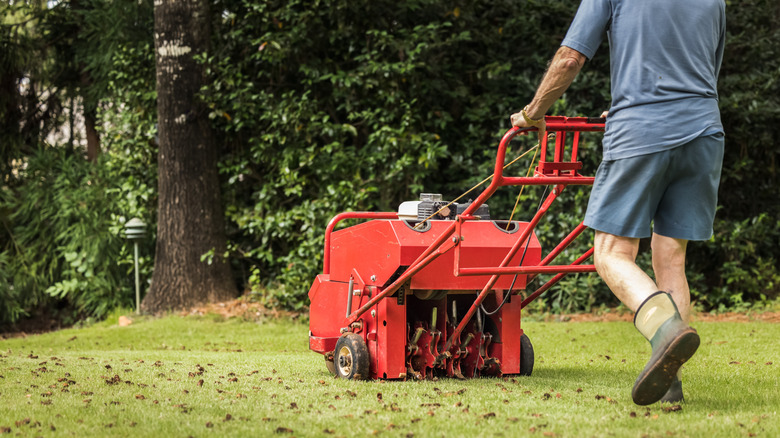
Using a lawn aerator sounds simple enough. You push it across the grass and wait for a healthier lawn — easy, right? But the machine isn't going to glide around easily. Walk-behind core aerators can be heavy and awkward to turn, and the hollow tines repeatedly dig into the ground as you move, creating resistance in the process. There's a learning curve, and if you rent one without familiarizing yourself with the controls first, the machine may end up steering you instead of the other way around.
One of the most common mistakes when using a lawn aerator is trying to navigate a slope or tight spot without learning how to use the equipment. Another frequent one is making one quick pass and assuming the job is finished. In reality, most machines require several passes to create enough evenly-distributed holes. The soil also has to be the right consistency, which is why knowing how and when to aerate your lawn matters just as much as knowing how to operate the machine. It's a delicate balance — dry, compacted ground may prevent the tines from getting in there properly, but soggy soil can easily turn the project into a mess.
A more serious error is failing to check what lies beneath the grass before aerating it. Things like sprinkler heads, shallow irrigation lines, and cables can all succumb to a walk-behind aerator if they're not properly marked first. Contact 811 before disturbing the ground so participating utility companies can mark their buried lines. That might sound overly cautious, but some cables are placed less than 6 inches into the ground. And striking one could not only damage the system, but also potentially injure the operator.
How to avoid the most common aerator mistakes
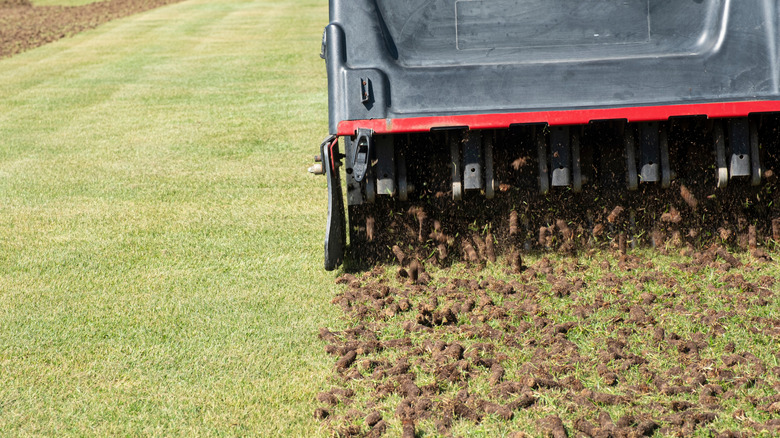
It doesn't matter if you're renting or just purchased on your own lawn aerator — always read the manual on how to operate it. Just because you used one model once before doesn't mean this one will handle the same way. Traditional drum aerators will most likely require you to disengage and lift the tines before turning so they don't tear up the turf, but other, newer designs are easier to maneuver. Do your research, and remember that practice makes perfect, especially before moving near slopes or hardscaping.
If you're wondering what number of passes you should make with lawn aerators, the answer will vary depending on your lawn size. But the University of Illinois Urbana-Champaign states that "removing 15 to 20 cores per square foot of lawn is suggested; this usually requires more than one pass over the lawn." When you make those additional passes, start from a different direction rather than repeatedly retracing your steps. And, as we mentioned before, make sure the ground is moist (but not too moist).
There's absolutely no shame in leaving the task to the professionals; not everything is meant to be DIYed. Uneven terrain, obstacles, or simply feeling uncomfortable handling a heavy aerator can all make the job more trouble than it's worth. Hire a lawn care company to determine where and how to aerate your particular yard while working around known sprinkler lines or other underground obstacles. That means you won't have to spend the entire job worrying about accidentally running the machine over something you shouldn't. And if a practice run leaves you fighting for your life, that's probably a good sign that the task is not for you.