

Not Hydrangeas: The Low-Maintenance Alternative That Smells Incredible
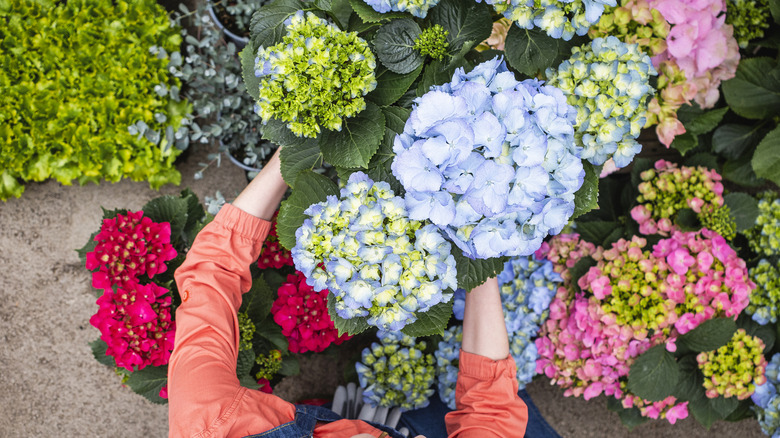
Hydrangeas are a garden classic, but that doesn't mean they're the best fit for every space. Not all hydrangea species are native to the U.S., which might be an issue if you're trying to only grow native plants. Hydrangeas also aren't a good fit if you have a boggy spot in your yard or garden where water tends to gather after storms. No matter your reasoning, a good alternative to consider is bog labrador tea (Rhododendron groenlandicum, formerly Ledum groenlandicum), sometimes just called labrador tea. This beautiful perennial flowering shrub requires little attention after planting and has fragrant, herbal-smelling leaves.
Rhododendrons are one of the best evergreen shrubs for landscapes, and bog labrador tea is no different. It has glossy green leaves with bronze undersides that don't fade or change in winter, which may give it another point over hydrangeas, as most hydrangeas are deciduous. In late spring to early summer, bog labrador tea grows clusters of white flowers that attract a variety of pollinators and have a light, pleasant scent. It appeals to butterflies, bees, and even hummingbirds, making this a great shrub to add to your garden if you want to follow the 2026 gardening trend of starting a pollinator garden. One potential downside, particularly in comparison with hydrangeas, is that bog labrador tea isn't as easy to find. It is commercially available online, but may be harder to find at your local nurseries and garden centers.
Growing bog labrador tea
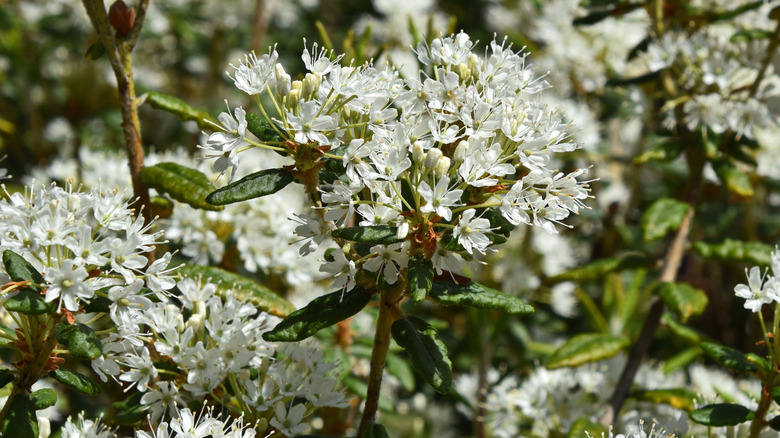
Bog labrador tea is native throughout parts of Canada and the northern U.S., so it's no surprise that this shrub is cold hardy. It can be grown in zones 2 through 6, and you might be able to grow it further south if you can provide shade. The shrub thrives in wet, acidic soil, similar to what you might find in a bog. If you have any areas where hydrangeas or other plants that prefer drier soil struggle to grow, that may be a good spot. You may need to adjust the soil pH first if it isn't naturally acidic. Bog labrador tea is fairly tolerant of soil types and doesn't need particularly rich soil to grow. Ideally, it should be planted in full sun to partial shade.
Once it's in the ground, bog labrador tea doesn't need much tending to. Mostly, you can enjoy the flowers and pick a few leaves to crush and smell. They're generally smaller than hydrangea shrubs, only growing a few feet tall. The plant usually doesn't need pruning unless you notice damaged branches. You can deadhead the flowers or leave them.
If one plant isn't enough, you can propagate it through cuttings. You may not need to, though, as each flower can produce more than 50 seeds. The seeds are carried by the wind, so it may spread farther than expected. It's rare in some areas of its native habitat, so that may actually be a good thing.