

Easily Fill Potholes In Asphalt Driveways With A Crack-Resistant Lowe's Find
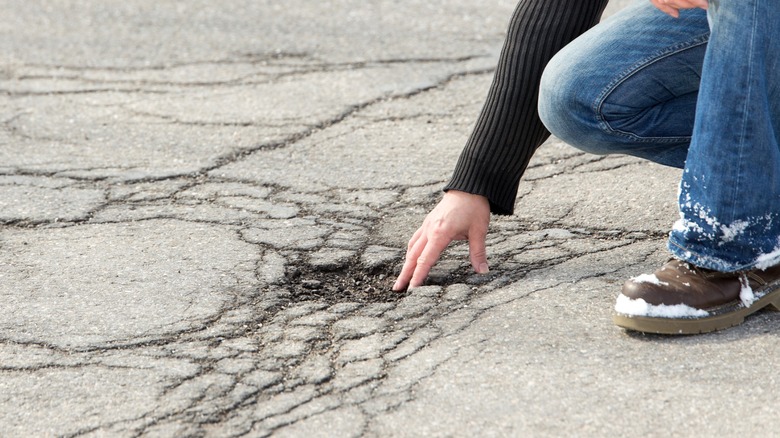
The ubiquitous asphalt driveway is so popular because it does the job and does it well. Asphalt stands up to everyday use, is a non-slip surface, and washes clean easily, and for those of us in northern climes, its dark color encourages snow melt. While these driveways don't require a significant amount of maintenance, you'll eventually have to address common asphalt repairs like cracks, pitting, or potholes to keep the overall structure strong and usable. There are a few ways to patch asphalt, with the hot-mix method being the most effective and longest-lasting. But it is also the most expensive by a good bit, and the preparation process requires more than a typical homeowner can do on their own. That's where Liquid Rubber Asphalt Patch, a liquid rubber-style cold patch compound available at Lowe's, comes in handy. Running $39.95, an 11-pound bucket is enough to fix a 1-square-foot pothole (at 1 ½ inches deep), while the 44-pound bucket at $89.95 will fill a 4-square-foot hole.
Cold patching asphalt damage and wear with products like Liquid Rubber is a practical repair process that will extend your driveway's longevity. Asphalt Patch is a flexible combo of aggregate and an adhesive binder designed to resist cracks and maintain a watertight surface repair even through temperature changes and freeze-thaw cycles. While hot mixes are the top-performing fix, potentially working for several decades, cold patch compounds like Liquid Rubber offer a DIYer-friendly formula that will get you by for a year or two until you can repair or resurface your asphalt driveway. All you need is a trowel or putty knife to scoop and smooth the mix, a tamper (or 4-by-4 post or other flat-bottomed tool) for compacting it, and some rubber gloves to stay safe while using it.
Repairing asphalt breaks with Liquid Rubber Asphalt Patch
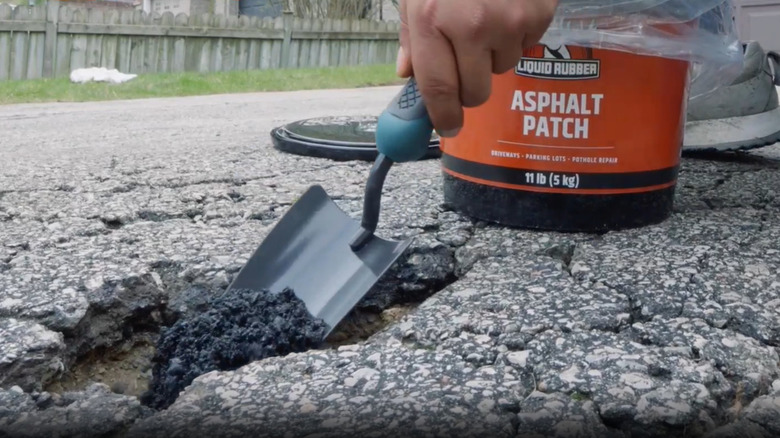
Using the Liquid Rubber Asphalt Patch product to repair an asphalt driveway is quick and easy. First, you need some preparation, which is arguably the hardest part of the asphalt repair process. Clean out the crack or pothole you're fixing. Remove dirt, vegetation, and loose debris completely, making sure the edge of the pothole is firm. Get rid of standing water, and let it dry. One tip that can be helpful is to do the patching on a hot day, as the asphalt will be more receptive to the cold patch compound. However, Liquid Rubber advertises that you can apply the patch in all weather conditions.
After the crack or hole is prepared, fill it with the patch compound in layers. Do not apply any layer thicker than 2 inches. If you have to use additional layers, stop at 2 inches thick and allow the compound to cure for at least 24 hours. Fill the crack or hole until the cold patch is just proud of the surface of the driveway. Then, you can tamp the patch flat and even with the driveway's surface. Again, allow at least 24 hours for the patch to cure before driving over it.
Liquid rubber patching compounds will be even more effective if you seal the edges of the pothole or the surface of the crack with a sealing compound designed for asphalt after your patch cures. That additional bit of protection from water seepage will reduce the potential erosion of the driveway's aggregate base. In general, regularly seal coating your asphalt driveway will extend its life.