

Skip The Hostas: Another Beautiful Weed-Resistant Ground Cover You Can Grow
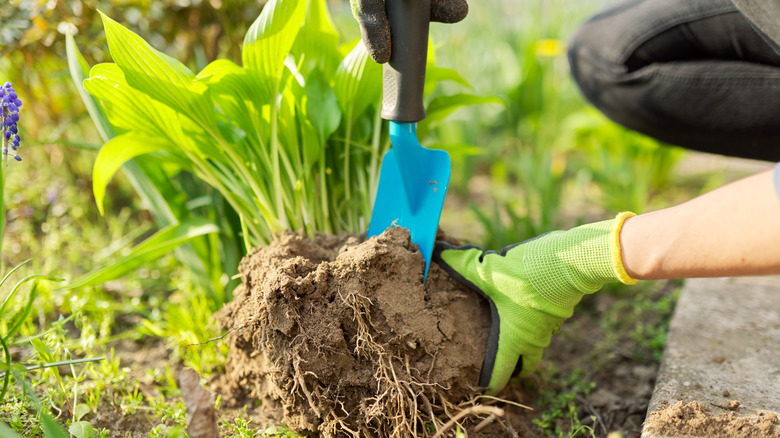
When it comes to planting ground cover, many people choose hostas (Hosta spp.). With their wide, green foliage and shade tolerance, they are one of the few groundcovers you can plant beneath trees or along wooded paths. However, the vast majority of hosta varieties cannot tolerate full sun. So, if you're in need of a beautiful, weed-resistant ground cover you can grow in sunny areas, skip hosta and check out Emerald Blue moss phlox (Phlox subulata 'Emerald Blue') instead.
Hardy between USDA zones 3 through 9, Emerald Blue is a perennial phlox cultivar that grows in thick mats of dark green foliage, hence its name. These flowers are a favorite of butterflies and honeybees, making them a good choice for a butterfly/pollinator garden. The reason this phlox makes a great ground cover is because of its tendency to spread. It grows under the ground via stolons and will reach a maximum width of between 8 to 18 inches. It also doesn't grow more than 6 inches high. This low growing and spreading nature means that Emerald Blue will successfully block sunlight from reaching weed seeds in the soil, thereby preventing them from growing up through the phlox leaves.
How to plant and care for Emerald Blue moss phlox
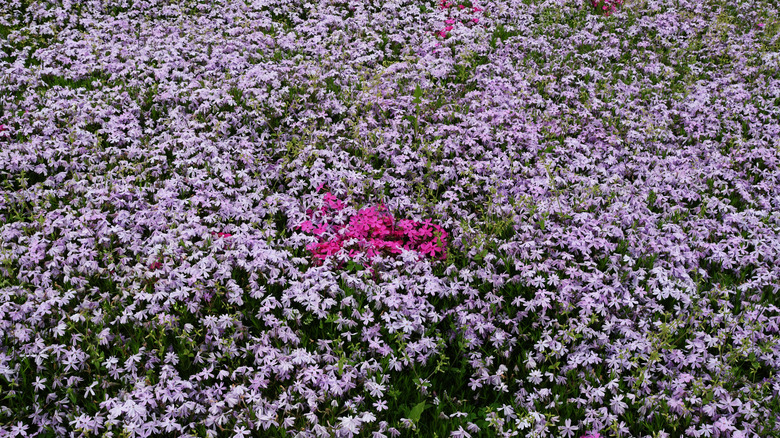
Like hostas, Emerald Blue moss phlox is incredibly easy to grow as a ground cover. Thanks to its relatively wide climate range, it can grow well in both cold and hot climates. Unlike hostas, Emerald Blue does best in full sun and is incredibly tolerant of drought and poor soil. In fact, one of phlox's favorite places to grow is in rocky soil along embankments or retaining walls.
If you want to grow this phlox for ground cover, take some established plugs and plant them at 12 to 18 inch intervals. This allows space for the phlox to spread to its full width and create, in appearance, the look of a single mat with no gaps between plants. While it's getting established, water the plants every other day for 3 weeks after planting then adjust to once per week depending on the weather.
Once matured, the only real maintenance you should perform is seasonal cutting back of the flowers. The plants bloom from March through May, but you can get a second blooming in early summer by cutting back the phlox when it's finished flowering. This will help prevent the stems from becoming too woody, and keep edges trim and neat. Phlox does have a tendency to spill over borders, but it will not grow past its maximum width. If you live in a warmer climate zone, expect the phlox to stay evergreen all year long.