

Sand Or Soil: Which Is The Better Pick To Smooth Out A Bumpy Lawn
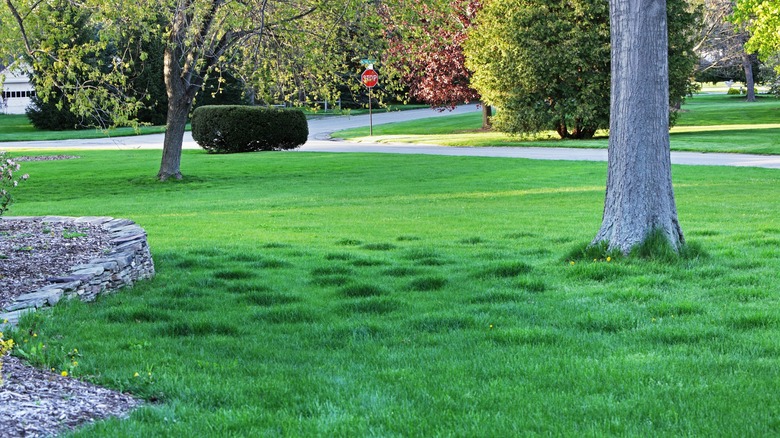
One of the trickiest problems I faced as the co-owner of a landscape company in the 1980s and 90s was smoothing out a bumpy lawn. In colder climates, the natural freeze/thaw cycle is often responsible for bumps, but in California, where I worked, the cause was usually gophers, erosion, or soil shifting. These issues typically create deep depressions that require a lot of fill material, and in my experience, neither soil nor sand was suitable by itself. In most cases — but not always — we found the ideal material to be a mixture that included native or commercial topsoil, sand, and a small amount of compost.
As a fill material, sand has many advantages over topsoil. It drains well and forms a hard layer that you can build on year after year. You need the coarse type of sand you'd use in a vegetable garden, however, and not playbox sand, which is too fine to drain well. Sand is the preferred fill material for greenskeepers at many golf courses, but they seldom have to deal with the extensive damage that we did.
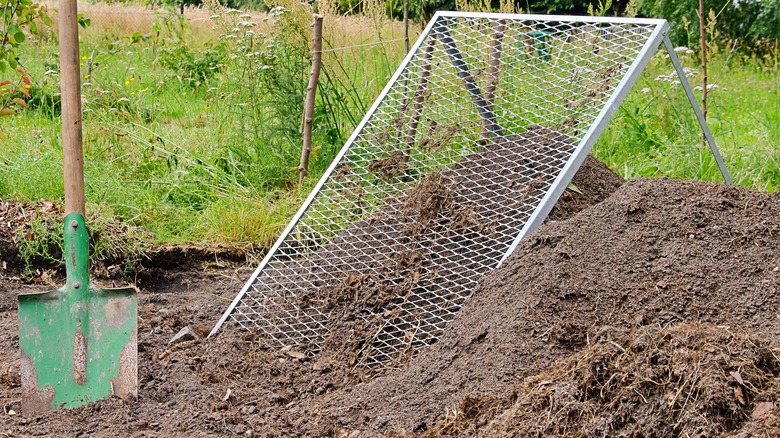
When you've got 2-inch or deeper depressions in a lawn, you have to replace some of the missing soil, and the best way to do that is with more soil. Soil tends to clump, however, so to prevent that, we sifted it and added an equal amount of builder's sand. We topped off the mixture with sifted compost (about 20% by volume) to add nutrients.
Fixing a bumpy lawn with a mixture of sand, topsoil, and compost
The first step in leveling a bumpy lawn is to measure and mark the bumps and depressions. After first mowing the lawn fairly short (about 2½ inches) and clearing the cuttings, we measured the depressions using a straight 2x4 and a ruler. Any depressions deeper than an inch needed special treatment: We'd cut into the turf on three sides, fold it back, add fill directly underneath it, replace the turf, and water fairly deeply. Other areas were candidates for topdressing with a soil/sand/compost mixture.
My preference was to sift all three components of the fill mixture separately before mixing them. The resulting mixture had body, but it was light enough to settle into a shallow depression. We added fill in ¼- to ½-inch increments, making sure not to cover the grass blades completely, then worked it in with a rake and watered lightly to help the fill settle. A few weeks later, we'd return to that spot, and if a depression still showed, we repeated the process.
The mixture we used isn't necessarily the best for all situations. Most of the lawns we serviced had deep depressions and benefitted from the nutrients in topsoil and compost. A mixture with a higher sand concentration fills more smoothly and is probably a better choice for a lawn in good condition with moderate bumpiness. Some people even use pure sand for minor lawn leveling, with good results. In short, the best material for lawn leveling depends on factors like the condition of the lawn, the soil type, and the climate.