

3 Of The Biggest Reasons You Have A Bumpy Lawn
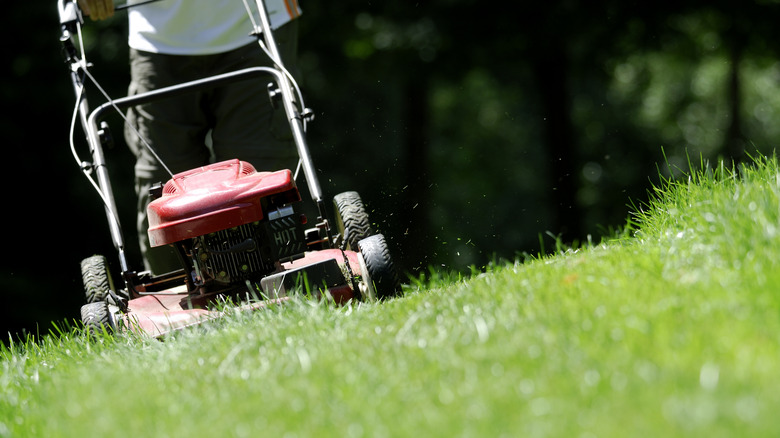
There is something in all of us that loves the sight of a smooth, green lawn. It's something we tend to strive for, especially if we're dealing with a bumpy, uneven lawn that puts strain on our feet and mowing equipment. But before you try to figure out how to make your bumpy lawn smooth, it's important to understand exactly why it is uneven in the first place. Four of the biggest reasons include damage caused by frost heaves, insect or disease damage, tree roots, and traffic from people, animals, or machines.
Let's start with frost heaves, which mostly affect those who live in climates where the freeze-thaw cycle in late winter or early spring is particularly intense, such as New England. Frost heaves occur when ice grows inside of wet soil, causing the ground to swell. These raised areas can push up shallow rooted plants and leave you with a permanently bumpy surface. Now, if you live somewhere where frost heaves are not a thing, your lawn could still be set upon by insects and diseases that can cause important thatch layers to deteriorate in the affected areas, resulting in lawn sinking.
The solution in both cases is to top dress with new soil, seed, and compost. Attempting to roll out any bumps or divots could actually leave you with more compacted soil, which could prevent future grass growth. If you do opt for a roller, you will need to follow with some kind of aeration to release the compaction.
Tree roots cause uneven terrain
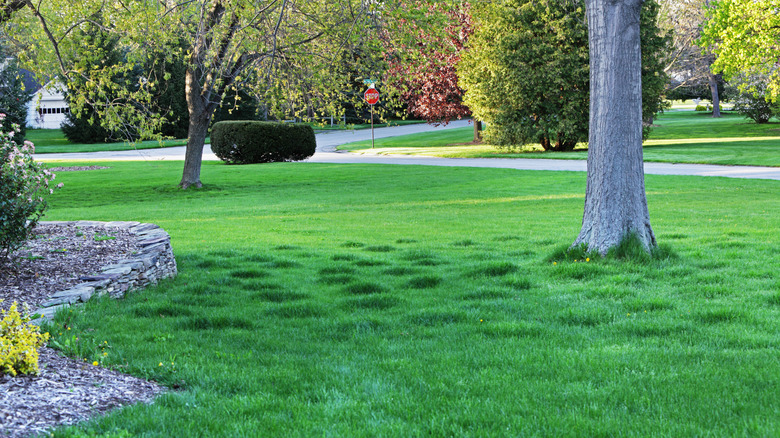
Just as tree roots can do damage to house foundations, driveways, and sidewalks, so too can they cause unevenness in your yard. The most common reason this happens is simply that trees, like your lawn, are natural growers. As the tree grows, its roots grow as well. In some cases, the roots can push the grass and soil upwards, creating unsightly lumps in the lawn.
The other way that tree roots can cause uneven lawns is when they die off. So, even if that problem stump in your yard finally rotted away, you're not out of the woods entirely. Unless you've gone through the trouble of grinding down the stump and digging out the roots, you may experience some unevenness as the roots decompose. The soil will settle in the areas where it was once held up by those roots. As with insect or disease damage, you'll have bumps caused by depressions as opposed to swelling.
For depressions from old tree roots, you could use the top dressing method we mentioned earlier, but things are a little different for the bumps. Rather than adding small amounts of top soil every year, a better alternative is to remove the grass around the tree roots and replace it with mulch. Not only does this eliminate the unevenness and make mowing easier, but it benefits the tree by feeding it and keeping the soil moist and protected.
Traffic from people, animals, and machines create bumpy surfaces
Traffic caused by people, animals, and machinery can also create a bumpy lawn. Burrowing animals like moles will create ridges and mounds from where they tunnel, which can also weaken areas of your lawn and cause it to collapse. Both mounds and tunnels can be fixed by flattening them and reseeding the area.
Consistent foot traffic, maybe from kids playing or from pets running through the yard, can cause the soil to become compacted and the grass to thin. You can also cause a similar issue by mowing in the exact same pattern every week. The wheels of your mower going over the same spot week after week will eventually leave long rut lines, which makes things bumpy. In all these cases, aerating and reseeding your lawn in the best way to fix the issue and prevent it from happening again.
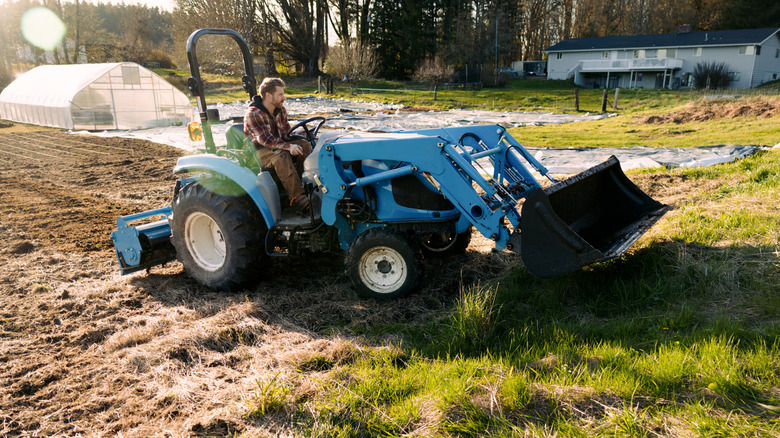
You can also absolutely wreck your lawn if you bring heavy equipment, like tractors, onto it at the wrong time. When the ground is soft after a thaw or a heavy rain, the heavy equipment can create deep ruts, even tear up sod to leave a muddy mess. That mess will then harden when it turns dry, meaning you're more likely to feel the ruts and bumps when you walk or mow. To prevent this from happening, restrict using machinery on your lawn to only when its dry and the turf is strong, or using specialty turf tires.