

Trade In Wood Mulch: The Durable, Weed-Resistant Alternative
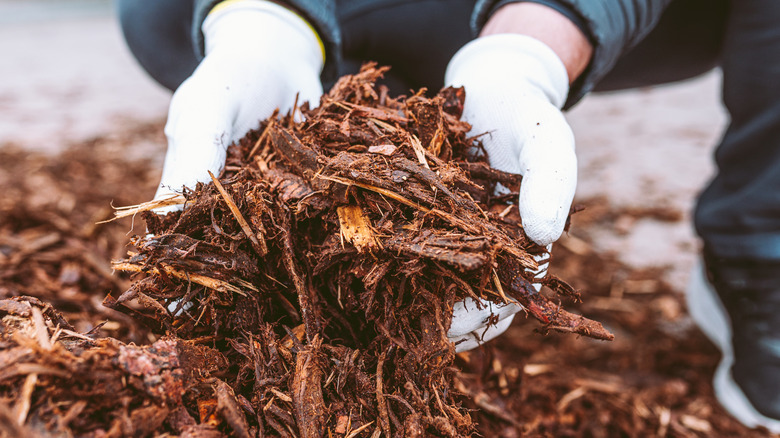
Wood chips may be the typical go-to type of mulch for garden beds, but they're far from your only option — especially if weed control is your main goal. A good mulch generally does a lot of heavy lifting in the garden, whether it's preventing weeds, reducing erosion and compaction, or regulating soil temperatures. Wood mulch provides no shortage of these benefits, but it breaks down relatively quickly, so it calls for frequent replenishment if you're looking to use mulch for continuous weed control.
If your patience is withering away alongside your wood mulch, consider trading it in for pumice stone mulch. This lightweight, porous volcanic rock provides long-lasting ground coverage while helping keep weeds at bay, making it an alternative well worth considering when durability and minimal maintenance are top priorities. While pumice stone does come with higher upfront costs and won't add nutrients to the soil, its longevity can be well worth it if constantly topping off mulch has become one garden chore too many.
The benefits of pumice stone mulch
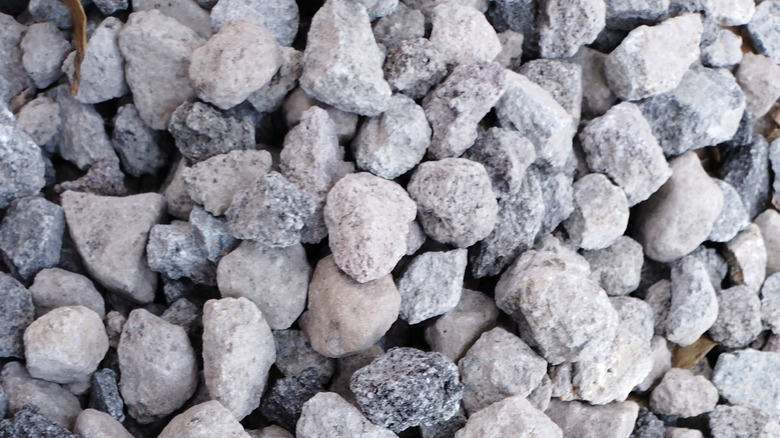
Aside from weed control and a superior lifespan, there are a number of other reasons to switch to pumice stone mulch. For starters, it's exceptionally lightweight, making it easier to haul and spread when mulching your landscape. Also, thanks to the many pockets of air formed during volcanic eruptions, pumice stone is filled with small pores, giving it a sponge-like structure that allows water and air to pass through to the soil, helping keep mold and fungi at bay. These pores also trap moisture, helping soil stay hydrated for longer.
Along with that, pumice stone can help insulate soil against heat, and its pale, textured appearance creates an interesting pop of contrast not offered by traditional bark or wood chips. Plus, as it creates an inorganic barrier over soil, it can help protect your garden beds from pests.
All that considered, soil, organic debris, and weed seeds can settle into the spaces between the pumice stones over time, creating opportunities for weeds to sprout. So, you'll still have some occasional weeding on your hands, albeit far less than with wood mulch. In any case, since you opted for an inorganic mulch that won't decompose, you can at least cross the constant replenishment off your to-do list.