

Not Concrete Or Brick: The Retaining Wall Idea To Add Visual Interest & Boost Home Value
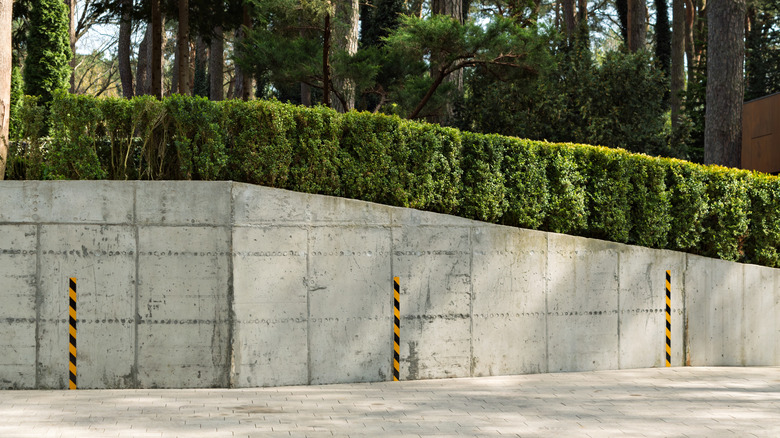
Retaining walls are a reliable way to reduce soil erosion and add some depth to your yard or garden, but what material should you build it out of? Concrete and brick might come to mind if you're building a DIY retaining wall, but they're not always the most attractive options. Plain gray concrete looks dull next to flowers, and red bricks can stick out amidst your green grass. Luckily, there's another option that's stylish, natural, and incredibly durable. Sandstone can be used as a concrete alternative for patios, but works just as nicely for retaining walls.
Sandstone comes in a range of earth tones with a unique texture and variations that add a bit of extra visual interest. It doesn't stand out harshly against the natural landscape, but it doesn't completely disappear, either. Since sandstone is aesthetically pleasing, works well with a variety of styles, and can withstand the elements, using it outside your home can even increase your property's resale value. Generally, sandstone has a reputation as being long-lasting, so real estate agents and potential buyers are likely to view it as an investment.
What to know about sandstone retaining walls
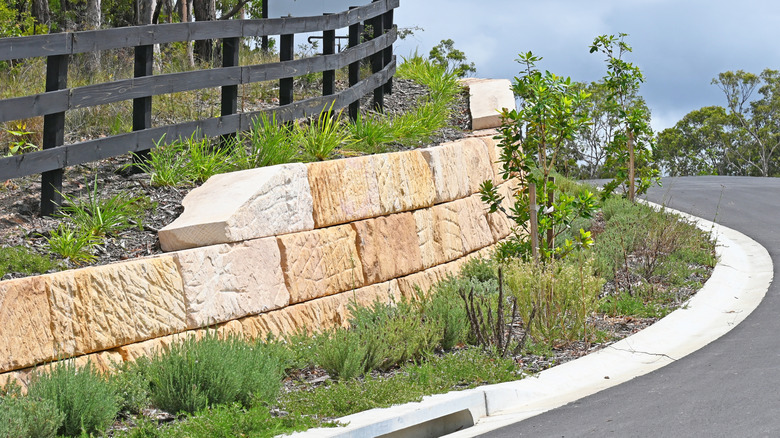
Before you start ordering sandstone blocks, there are a few other details to be aware of. First, sandstone is generally more expensive than concrete, bricks, or wood. It can be more affordable than some other types of stone, such as granite, but it depends on the quality and color of the sandstone you choose. You may be able to save on installation costs for larger projects if you opt for sandstone logs over blocks.
You should also consider the size of your retaining wall and the effort needed to install it. Professional installations are often the better choice, particularly if you have a larger project. Sandstone logs are easy to install if you have professional equipment but difficult to move otherwise due to their size and weight.
Smaller sandstone blocks are easier to DIY, and you can even cut sandstone yourself if you need to adjust their size or shape. However, they can still be relatively heavy compared to bricks or wood, and their smaller size means it takes more sandstone blocks to cover a larger area. Ask yourself if the aesthetic value is worth the personal effort, or if you'd prefer to look at local contractors.
One final consideration: Sandstone is naturally porous, meaning excess water can drain through it. However, it should still be installed with a proper drainage system to prevent water from building up in the soil behind the wall, which can cause the wall to fail. Sandstone retaining walls frequently use geotechnical fabric, agricultural pipe, and weep holes for a reliable drainage system. The geotechnical fabric serves as a filter to prevent soil and fine silt from clogging drainage aggregate. Water runs through agricultural pipe to weep hole outlets.