

Not Concrete, Not Epoxy: The Durable Solution For Driveways That Won't Fade In The Sun

Choosing a driveway material is about more than just picking something that looks good on the installation day. It needs to be durable, too. That is why concrete and epoxy are popular choices. These materials look good, and they are also known for their sturdiness and ability to withstand everyday wear and tear. The problem, however, is that both concrete and epoxy can fade in the sun, and if you want something that maintains its appearance, they are not ideal. That is where polyurethane resin comes in. It is not only durable, but it also resists fading caused by sunlight.
The better resistance of polyurethane resin against fading in the sun comes down to its chemistry. It contains aliphatic molecules that do not absorb UV wavelengths, and as a result, driveways made of polyurethane resin do not fade even after years of sunlight exposure. In comparison, epoxy resin contains aromatic molecules. These, unlike aliphatic molecules, absorb ultraviolet (UV) light, which kicks off a breakdown process called chalking, leading to fading. Concrete has a similar problem. It is often porous, so it soaks up oil, tire marks, and other stains. Plus, any color coating or sealer used to coat concrete can absorb UV and fade over time.
Just keep in mind that not all polyurethane resins are UV-resistant. So, when planning a driveway, make sure you choose an aliphatic polyurethane resin. Also, keep in mind that polyurethane resin driveways cost more to build when compared to standard epoxy and concrete driveways. So, if you are looking for a cheap driveway material, you might want to consider something else.
Consider this when building a polyurethane resin driveway
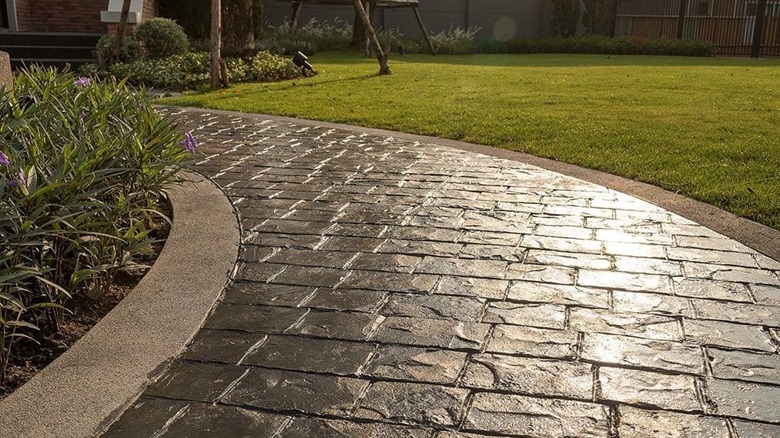
Once you have decided that you want a polyurethane resin driveway, paying attention to a few practical details can make or break how well your new driveway holds up. First of all, focus on the base. That is because a polyurethane resin driveway needs a solid, well-compacted sub-base; if anything under it shifts or cracks, it will show up on its surface as well. You can lay it over an existing driveway as well. Just make sure that the surface you are building it on is free of damage, as well as clean and dry, so it does not face adhesion problems later on.
When installing, pay attention to the weather conditions, too. Temperature, humidity, and moisture can affect how polyurethane cures, and it is often recommended that you should not apply polyurethane resin when there is too much humidity. Likewise, pay attention to the temperature. Resin-bound systems like polyurethane generally need to be installed within a specific temperature window; if it is too warm, they can cure too fast, which won't give the installer enough time to smooth the driveway out. If, however, it is too cold, they will cure slowly.
Lastly, follow the specified mixing and application instructions of polyurethane resin driveway products carefully. The resin and the hardener need to be mixed in the correct proportions, and you should not just add extra hardener because you think it will make the driveway cure faster. Similarly, you need to apply the polyurethane resin at the recommended thickness. If, however, all of this sounds too confusing, hire a contractor. Just make sure you know how to interview a contractor before giving them the job.