

Trade In Landscape Fabric: The Biodegradable Weed Barrier That's Plastic-Free
We may receive a commission on purchases made from links.
Landscape fabric might seem appealing when the most noxious and invasive weeds start taking over, but covering your garden in sheets of synthetic material isn't a great choice when you're trying to cultivate healthier soil. Fortunately, you don't need to spend too much time weighing the pros and cons of landscape fabric, since it turns out that plastic-free paper weed barriers can also be highly effective.
When installed correctly, the biodegradable option smothers weeds by cutting off their access to sunlight. Unlike synthetic landscape fabric, which is typically made from fossil fuel-derived materials that are the opposite of environmentally friendly, paper naturally decomposes over time. This means that although it's a shorter-term solution to suppressing the most annoying weeds, paper weed barriers can actually help improve your soil quality.
That doesn't mean you can use just any old paper. Skip glossy or heavily coated paper and stick with plain cardboard, newspaper, or paper intended for use as a landscape barrier. You can purchase heavy-duty rolls of landscape paper weed barrier, which come in a variety of widths and lengths. Since many commercially available options are similar in price to landscape fabric, if you're looking for a budget-friendly option use cardboard or newspaper you already have on hand instead. Contractor or craft paper rolls may also be an inexpensive alternative, provided they're plain and free of coatings that aren't intended for garden use.
How to use paper weed barrier
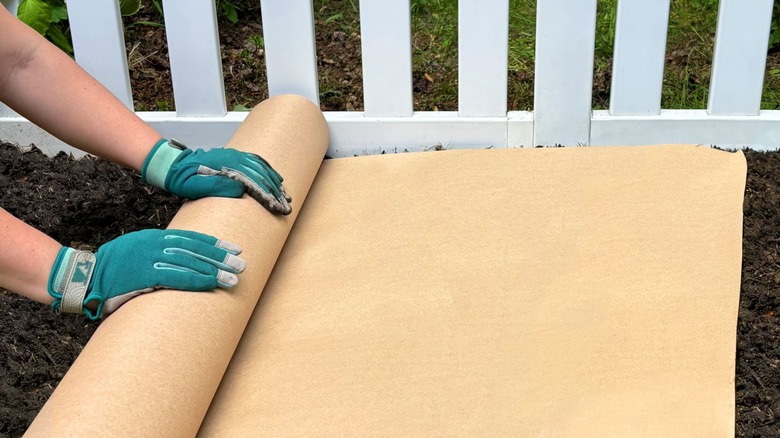
Rolls of landscape paper are a smart solution for keeping weeds out of your flower beds, but there are some important things to consider before installing it. You'll need to start by measuring the area you want to tackle just as carefully as you would when installing landscape fabric. Because this method works by blocking the sunlight weeds need to grow, it's essential that you overlap your paper wherever necessary. Weeds can grow through gaps or openings, so using several layers of paper is also smart especially if you're opting for thin sheets of newspaper instead of a thick, heavy-duty material.
After cutting back or removing particularly persistent weeds, begin laying down your paper barrier. Landscape fabric is typically held down with U-shaped spikes, but these will quickly tear up landscape paper. Instead, slightly moisten it with a garden hose so it sticks to the ground during installation, followed by a generous layer of mulch to keep it from blowing away in strong winds or harsh weather.
Landscape fabric can become difficult to manage over time as its pores clog, weeds root through or above it, and plant roots become entangled in the material, making eventual removal difficult. Paper weed barriers are a biodegradable alternative that can help retain soil moisture and contribute organic matter as the sheet-mulching materials decompose. Another benefit is that plain paper and cardboard can decompose in place rather than requiring removal like synthetic landscape fabric. How quickly the barrier breaks down depends on the material and conditions; thinner paper layers can usually last a season or two, while thicker layers or cardboard can last for several years.