

Noxious Weeds Vs. Invasive Weeds: What's The Difference?
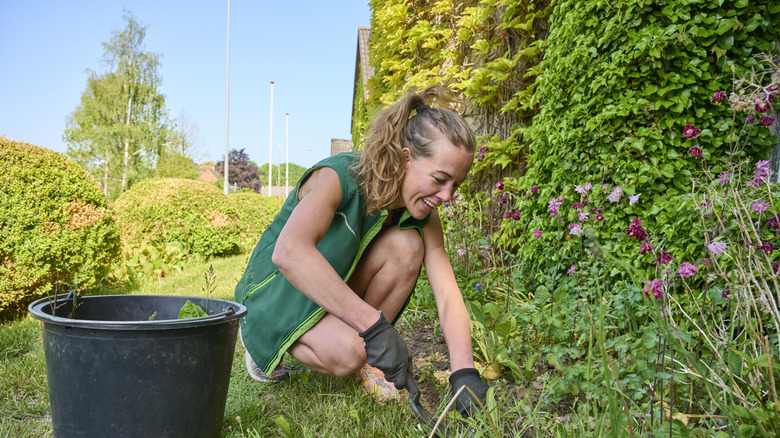
Weeds are a nuisance, but some are worse than others. You may have heard the terms noxious and invasive weeds. Both are more harmful than typical weeds. They differ in how they interact with people, animals, and the environment. Invasive weeds are not native to the areas where they grow and can spread out of control. Noxious weeds are harmful to humans or animals. The risk could be direct, such as with a toxic plant, or it could pose a risk to a person's property or farm.
The primary problem with invasive weeds is that they can outcompete native plants and decrease biodiversity in the local area. They have no natural predators, making it much easier for them to outcompete desirable plants for resources like nutrients and water. Lower biodiversity makes the environment less healthy overall, as the plants that insects and animals need to thrive are replaced by weeds they cannot eat. Not all invasive weeds look like weeds. Beautiful garden plants such as yellow archangel (Lamium galeobdolon) is an invasive weed you don't want in your yard.
Noxious weeds can include invasive plants such as yellow starthistle (Centaurea solstitialis), which spreads aggressively and is harmful to livestock. Many other weeds can be classified as either noxious or invasive; however, the specific species are determined on a state-by-state basis, so what may be an invasive or noxious weed in one area may not be listed as such in another. And some plants can be listed as both invasive and noxious. Water hemlock is one of the most poisonous plants in the U.S., which earned the title of a noxious weed. Non-toxic plants can also be noxious weeds if they cause other problems, such as kudzu (Pueraria montana var. lobata), which can smother trees and cover structures. Even some native plants like spotted water hemlock (Cicuta maculata) can be considered noxious weeds. It releases a poison that affects the central nervous system and can be fatal to people.
What to do with invasive weeds vs noxious weeds
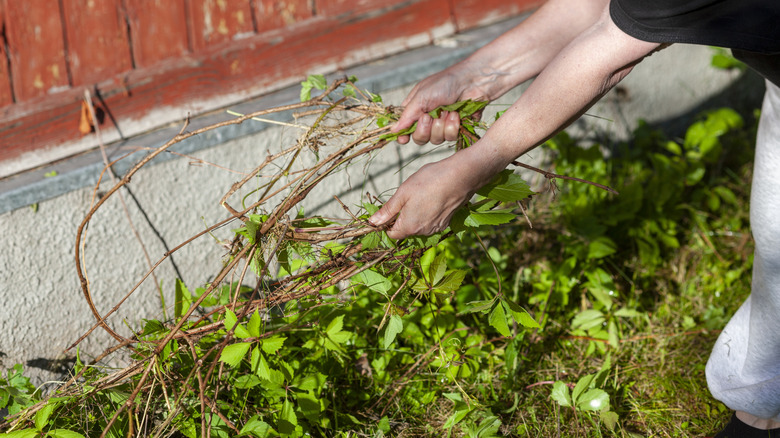
If a plant is listed by your state as invasive or noxious, avoid planting it. Your state's Department of Agriculture should have a full list of noxious and invasive plants for your reference. If a plant from the list is in your yard or garden, you can report it to your state's Department of Conservation or to the U.S. Department of Agriculture. Additionally, some plants are easier to identify than others. If you aren't certain what plant you're dealing with, you may wish to contact your local Cooperative Extension service for the correct identification. It's probably a good idea to wait for more information or handle it with caution until you have an identification to avoid coming into contact with a potentially harmful weed. Some noxious weeds can irritate the skin, for example, and should only be handled with protective clothing. Finally, keep in mind that you can only remove plants from your own property or with the property owner's permission.
If a plant is only invasive, you can often control it with safe, natural weed-control methods. Since the main concern is its spread, control typically involves cutting off flowers before they can develop seeds or digging up plants that spread by their roots. If the plant is noxious, you may need to take greater care when removing it. Some noxious weeds may have thorns, spines, or sap that can be harmful or irritating to the skin. For example, itchgrass (Rottboellia cochinchinensis) has hairs that can cause skin irritation. Wear gloves and clothing that limit skin contact with these plants, and bag them before disposing of them in the trash.