

21 Clever Uses For WD-40 That Your Lawn Mower Needs
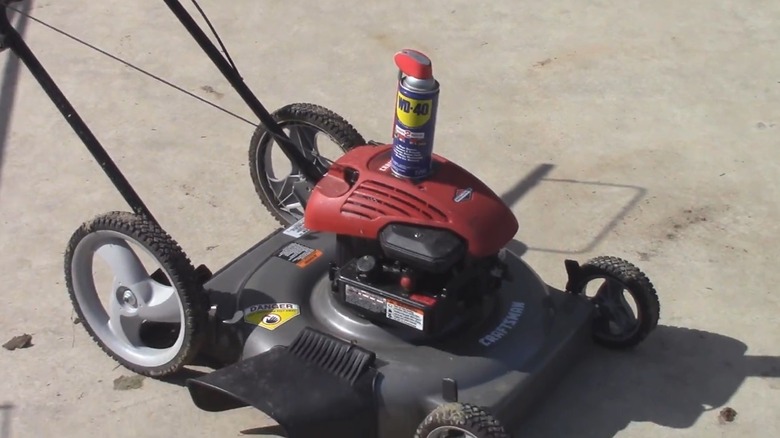
There's a war raging today within the DIY community, and it's not a pretty fight. One starry-eyed faction, mostly Boomers and traditionalist Gen Xers, thinks you can do just about anything with WD-40. The other, a cabal of literal-minded younger heretics, smugly point out that WD-40 is merely a water dispersant, and does everything else poorly or counter-productively. When it comes to mowers, at least, we think they're both right. Sure, you can use the water dispersant qualities to dry electrical contacts, but it can also clean, lubricate, and protect almost any part of a mower.
Almost. There are still certain things you shouldn't do with WD-40, like seating the bead of a tubeless tire. Oh, it works. And, like getting rid of yellow jackets with gasoline, it's fun every time you survive it. But you may not always survive it.
Another thing you can't do with old-school WD-40 is lubricate your mower's belts. Sure, it might superficially condition the belt's rubber. But there's enough lubricant left behind by WD-40 that it occasionally gets used as a lubricant, and that's exactly the opposite of what you want on your belts, which work by friction. But here's the WD-40 magic trick, explained: There's more than one WD-40. In fact, there's a lot of them. And one of them is a belt dressing in the WD-40 Specialist line made specifically for dressing belts. Not everyone's a fan, but it does the job. So, can WD-40 do the nearly two dozen jobs we describe below? The common WD-40 can do most of them, and there's plenty of specialized WD-40s to do the rest.
Protect your mower deck and blades
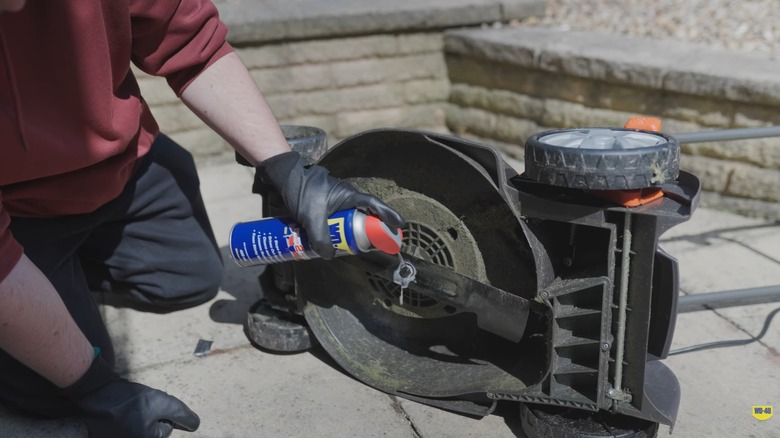
The popular WD-40 trick that keeps grass from sticking to your lawn mower's underside is the most common way to improve your mowing life with the spray. It makes grass clippings easier to wash off your mower's deck and blades. It also prevents rust by getting rid of those moist clippings and leaving a film of oil that protects against water, thus extending the life of your mower deck. If a film of oil isn't what you're going for, there's a WD-40 silicone made especially for lawn and garden use.
Lubricate your mower's pivot points
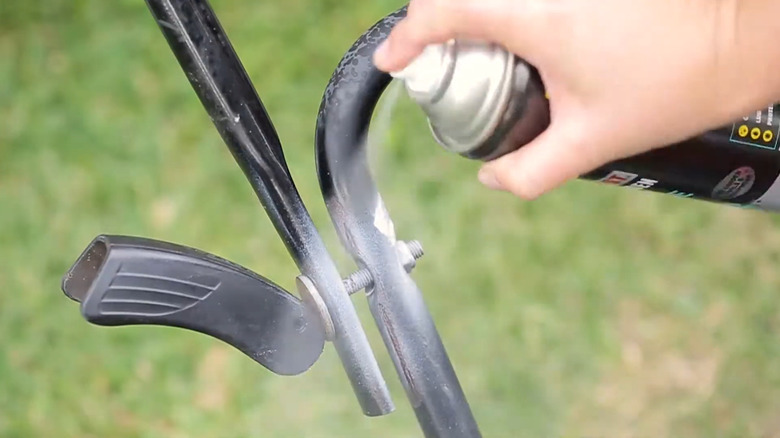
You're probably thinking something like "What is a mower pivot point?" Those are the points along the handle of a push mower where the handle either folds or moves up and down in relation to the mower deck. These pivots get a surprising amount of use over the course of a mowing season, particularly the joint with the deck. Keep everything moving freely and corrosion-free with a quick blast of WD-40 at every use. Obviously, WD-40 Specialist grease for the lawn and garden will also do the trick.
Lubricate (some) mower wheels
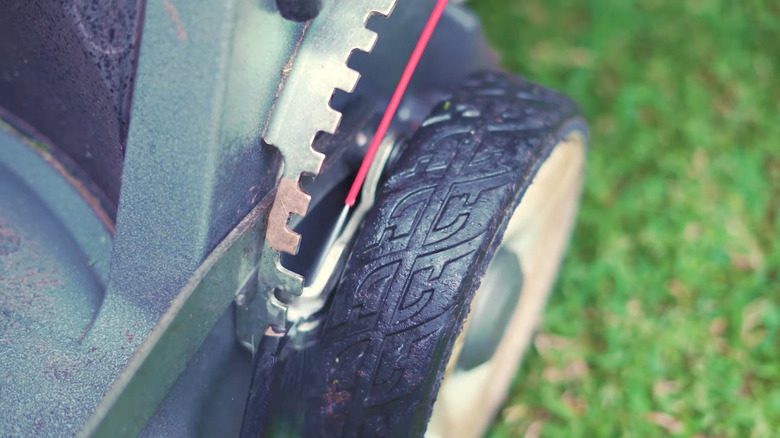
It's obviously a good thing if you mower's wheels turn freely, right? Usually it is, and WD-40 is surprisingly useful in keeping the wheels of push mowers spinning smoothly. Just an occasional spritz where the axle enters the wheel should do the trick. But note that you should be careful of applying any lubricant to the drive wheels on self-propelled mowers, since they typically rely on some sort of friction to convert the engine's rotation into turning wheels. And don't neglect to check your wheel bearings, if you have those, for a longer-term fix.
Lubricate control levers
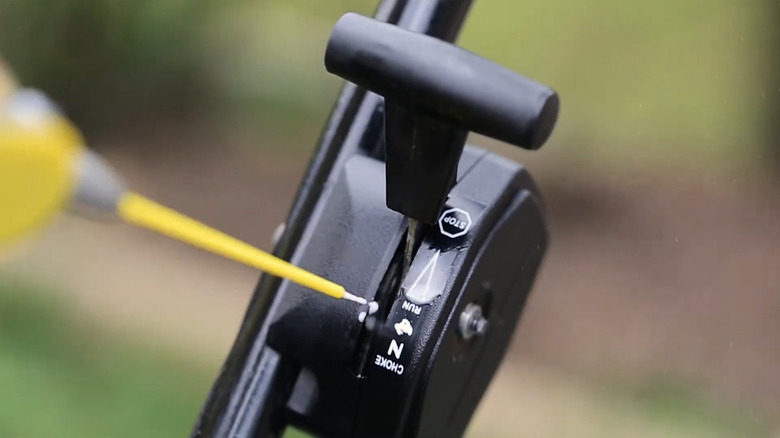
Close your eyes and imagine yourself moving a push mower's throttle lever. It wasn't as easy as it should have been, was it? We can't do much about your negative imagination, but back in the real world all you need is a bit of WD-40 in the joints and pivots of any control assembly, and using those levers should be easier than ever. Since traditional WD-40 can theoretically collect grime over time, you might choose to use WD-40's lawn and garden silicone for a drier, cleaner experience.
Lubricate your cables
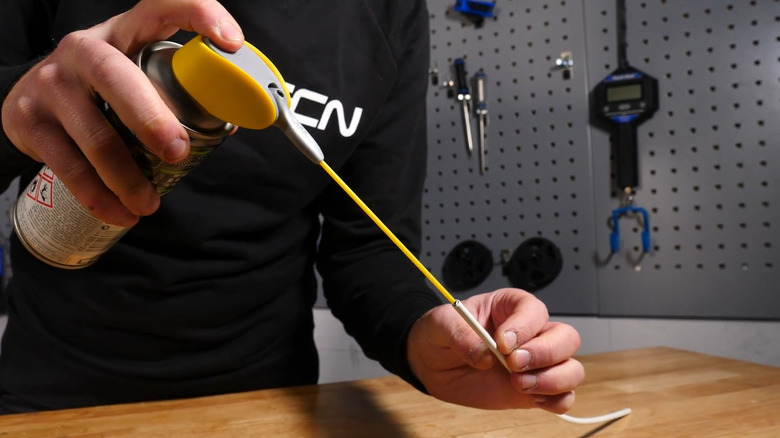
Most mower cables are essentially bicycle cables that run through a protective housing for most of the cable's length. But, unlike riding most bikes, a mower can find itself in a dirty, windy, wet environment with stuff flying all around and working its way into that housing. Keep your throttle, choke, speed control, and any other cables slipping in and out easily with a shot of WD-40 into any housing opening now and then. You can remove the cable from its housing before spraying, or simply spray WD-40 into the housing alongside the cable.
Lubricate throttle and choke linkage
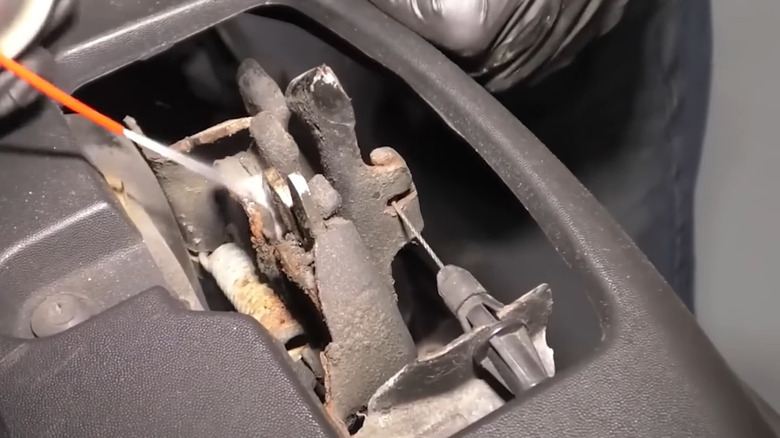
It will only do you so much good to lubricate the throttle and choke levers and cables if you don't make sure the actual throttle and choke assemblies on your mower's engine, which tend to rust over time, are moving as well as possible. Using the straw to contain your spray, carefully place a quick shot of WD-40 into every joint and pivot point of these mechanisms, work them back and forth (with the engine off, of course) and you should be good for a few weeks at least.
Remove rusty bolts
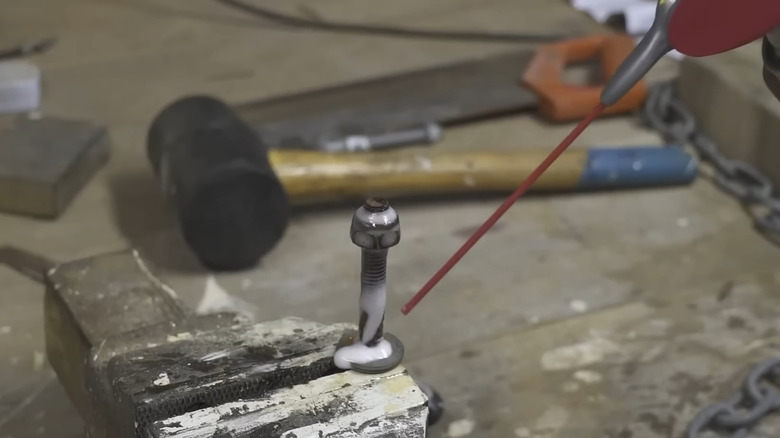
The rust removal, water dispersant, and lubricating qualities of original WD-40 make it well-suited to the task of loosening and removing old corroded bolts. Spray where the bolt enters its nut or some threaded housing, and give it a few minutes to an hour or more, depending on the severity of the corrosion. Then try to remove the bolt. If it's not quite there, a second application might be helpful. WD-40 should penetrate along the threads and unstick the bolt in no time. WD-40 also makes a Specialist penetrating spray that might be even more effective.
Protect bolts from corrosion
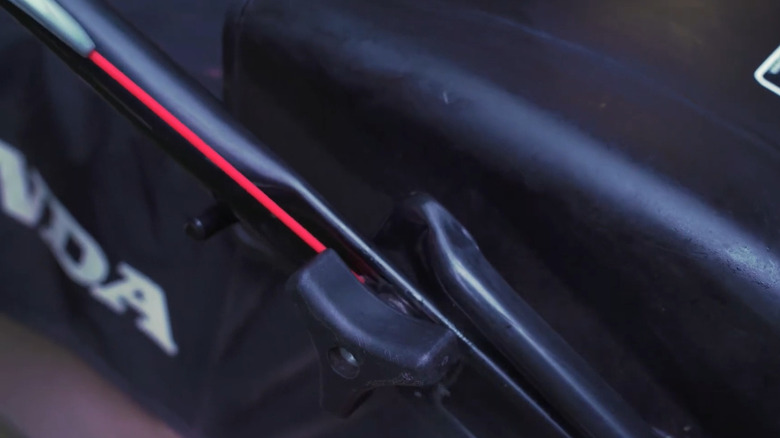
Obviously, loosening and removing rusty bolts with WD-40 is different from protecting a new bolt from corrosion. This sort of protection is one of the things that original WD-40 is good at and several newer WD-40 Specialist products are great at. So good, in fact, that it sometimes makes sense to add a split locking washer where there wasn't one before, to prevent the newly lubed bolt from unscrewing itself and either becoming lost or becoming a projectile while you're mowing.
Clean your riding mower's battery contacts
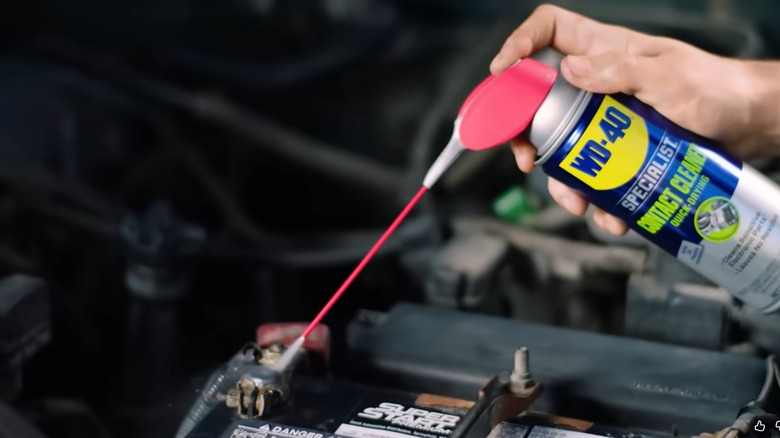
In the same way that old-school WD-40 helps clean up corrosion on a bolt, it can make cleaning a battery terminal a bit easier. But if you're determined to get those contacts sparkling clean, your best bet might be WD-40's fast-drying contact cleaner, a product specifically designed for removing the sorts of corrosion and buildup that are common on battery terminals. Neither WD-40 contact cleaner or the original WD-40 spray are conductive, but it still pays to be careful to get any cleaner only where you need it when dealing with battery terminals.
Clean your carburetor
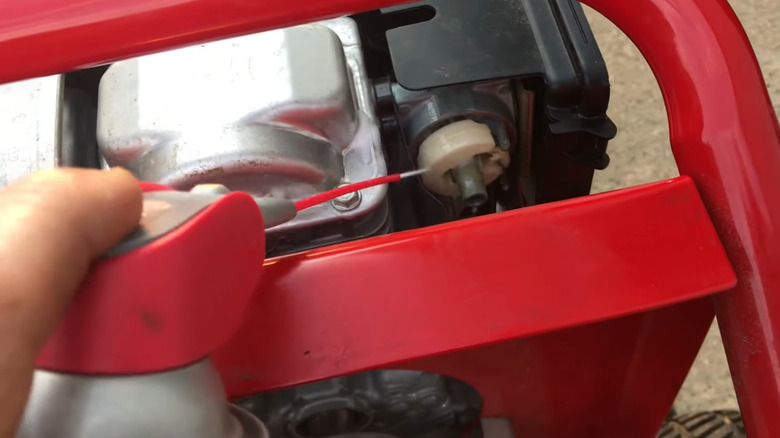
If you deal with a gas-powered small engine long enough, eventually the specter of carburetor trouble will raise its ugly head. This usually means a good cleaning and occasionally a carburetor replacement. While carburetors are often very affordable, the ordering process can be very slow, so if you can speed everything up by giving your disassembled carburetor parts a quick WD-40 bath and a thorough cleaning, why wouldn't you? Just be sure to clean everything up well, since some objections to WD-40 deposits are out there. Rinse with gasoline to get rid of most of the residue.
Clean your spark plug and its connectors
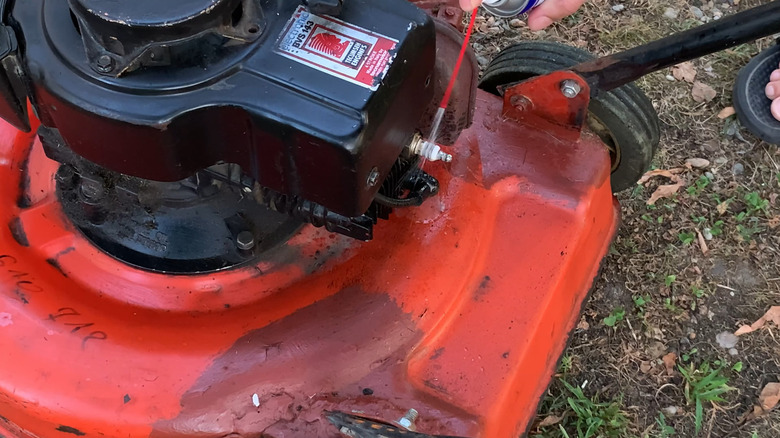
Unlike carburetor cleaner, which dries suspiciously clean, WD-40 does leave lubricant deposits behind by design. This problem also causes some to object that cleaning spark plugs and plug wires with WD-40 isn't the best idea, as it might turn a poor-performing spark plug into a fouled, non-functioning plug. But the trick, as ever, is to use the product for the cleaning it's good at, then make sure you remove all residue as you finish cleaning plugs and wires.
Clean the mower itself
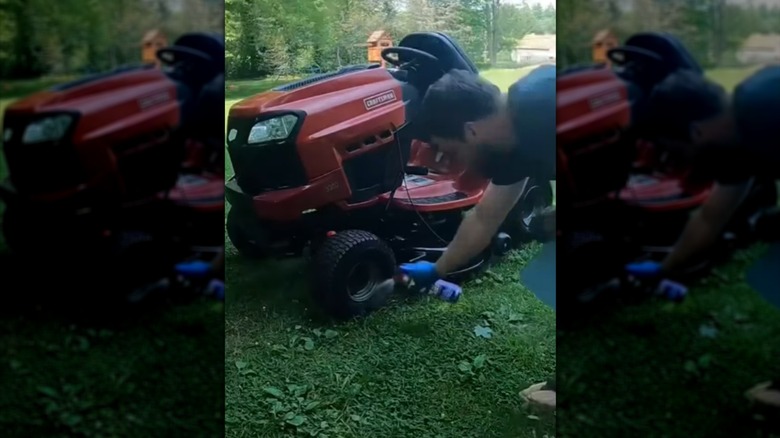
While you're cleaning and lubricating all the mechanical parts of your mower, why not give the various painted surfaces, colored plastic shrouds, and black plastic guards a spray and a rub-down? This should restore a lot of your mower's factory shine, while adding at least a little protection along the way. Even if you don't personally care what your mower looks like, a good shine-up can be a boon when selling an older mower.
Protect your mower when you're not using it
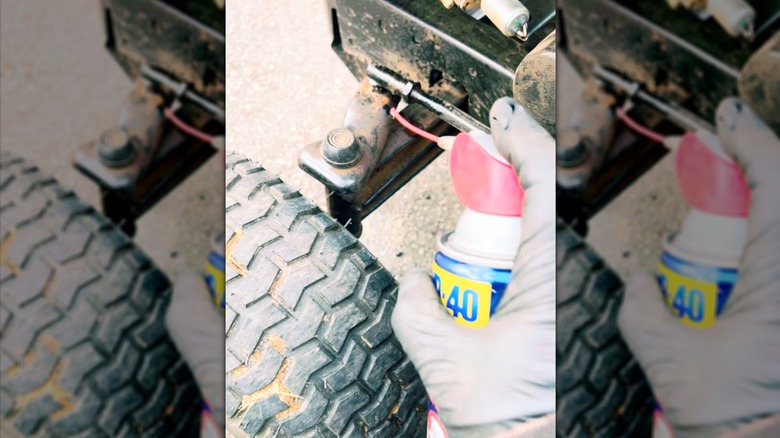
Garages and sheds aren't the most watertight, cleanest places, so your mower can probably use a little WD-40 (or WD-40 lawn and garden grease) protection during storage, even if it's only a week or two. And when it's time to put your mower away after the season, WD-40 is indispensable for winterizing. Spray it everywhere you would during normal maintenance, then work it in. Because humidity can cause rust inside your mower's cylinders, remove the spark plug and spray a shot of WD-40 into the cylinder, then reinstall the plug.
Dry electrical contacts
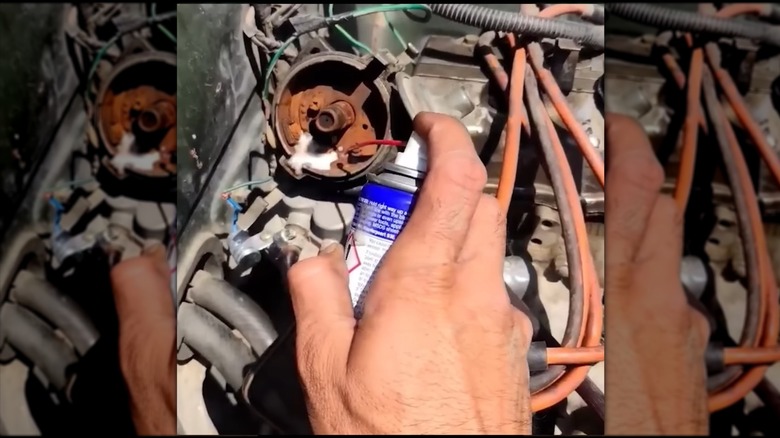
We've finally come to it. Yes, the "WD" in WD-40 was originally for "water displacement," and obviously that's something the original spray excels at. This can be useful in dealing with your lawn mower because few things are as frustrating or needlessly expensive to deal with than electrical problems caused by moisture, which is sometimes transient and always annoying. It's a good habit both as part of your regular maintenance regimen and, particularly, as your prepare for end-of-season storage.
Loosen wheel height adjusters
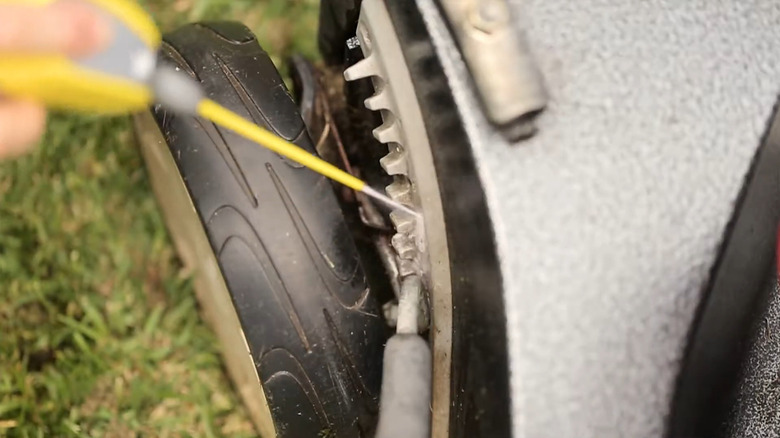
There comes a point in every push mower's useful life when it's willing and able to keep mowing, but there won't be any more adjusting of the mower's height ... without, that is, the intervention of WD-40. The height-adjustment mechanisms often involve two closely-fitted, notched plates with more than enough opportunity to rub against each other, to say nothing of collecting debris that further gums up the works. An occasional cleaning and lubrication with WD-40 is probably all you need to get things working right again.
Lubricate your riding mower's steering mechanism
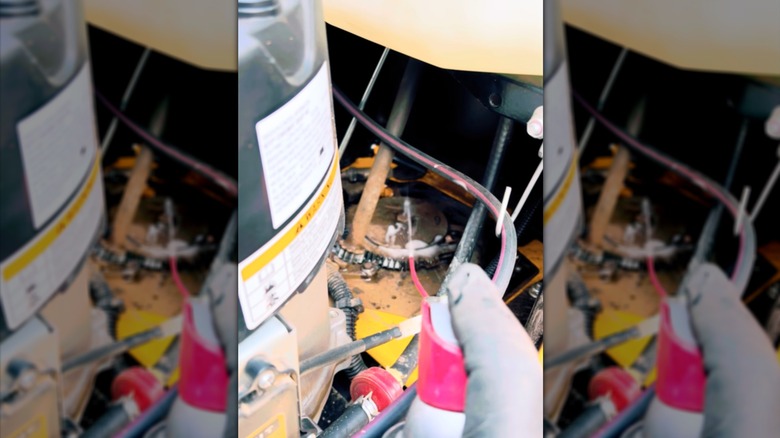
The steering on older riding mowers can be positively chaotic, but even new mowers can experience the ill effects of catching up dirt, grass clippings, rust, small toys, twigs, and other unwanted debris in the open-geared steering mechanisms. There's more to maintaining steering, like applying grease to the grease fittings, but you'll see a marked improvement if you only clean and lubricate the gears with some WD-40. And you're likely to have even better results with WD-40 lawn and garden silicone spray.
Restore your riding mower's headlight lenses
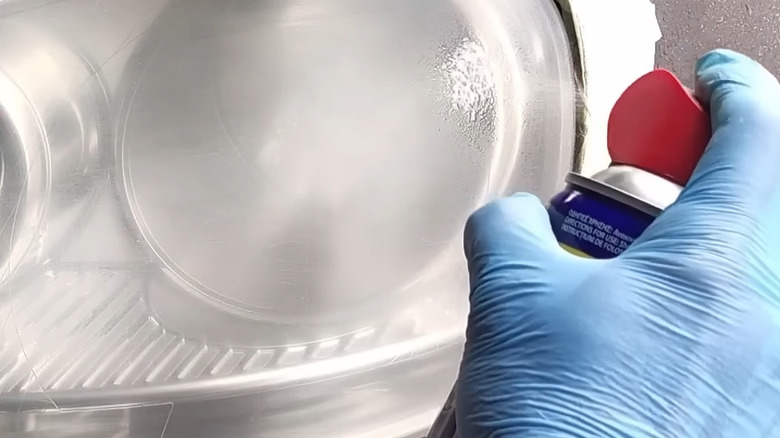
The routine is something like this: To beat the summer heat, you push mowing time as deep into late afternoon as possible. And, as often as not, you end up picking your way back to the shed in the dark with headlights so dim even moths don't bother with them. This is usually the fault of hazy plastic headlight lenses. You can correct this with a good coating of WD-40. It's only temporary, but the permanent fix is buying new lenses, so you're going to stick with the temporary fix. Almost everyone does.
Fix a seized spindle pulley
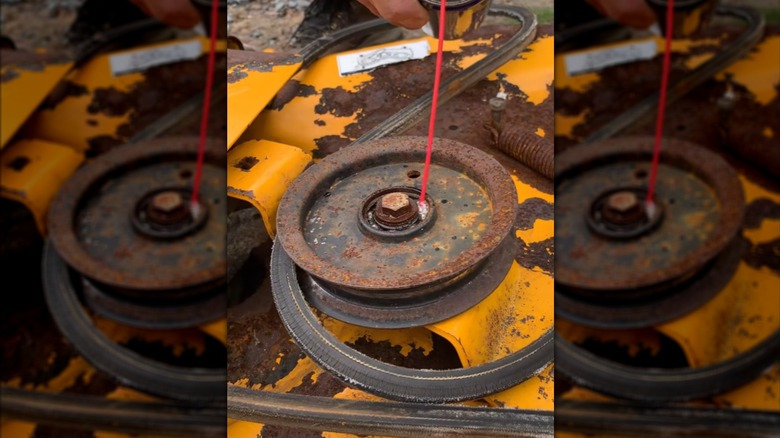
In an ideal society, you can easily replace a riding mower's deck. However, it can cost a shocking amount to replace a worn, rusted deck... even a used one. When yours suddenly becomes unusable because of a seized spindle pulley, you can replace the deck, replace the spindle and a bunch of parts with a repair kit, or simply pop the cover off the stuck spindle's bearing and loosen things up with a shot of WD-40. Once it's spinning freely again, be sure to properly re-grease the bearing and re-seal it.
Free up key locks
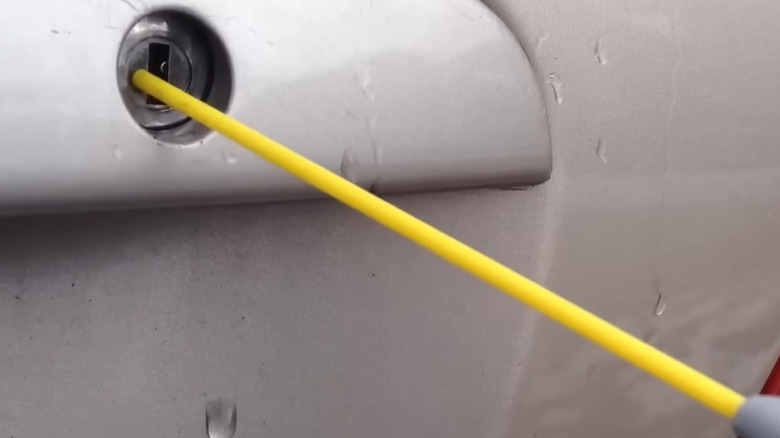
Lawn mower keys are mostly a ruse to keep kids from borrowing them to go visit a friend or attempt submarine exercises in a local pond. But, bogus or not, these keys and their cylinders are exposed to the elements a bit more than your car keys, and occasionally you'll get a stuck key that permanently makes your mower available for hijinks. A quick spray of WD-40 is usually enough to loosen up the key, lubricate the cylinder, and help prevent future corrosion.
Rustproof your engine's exterior
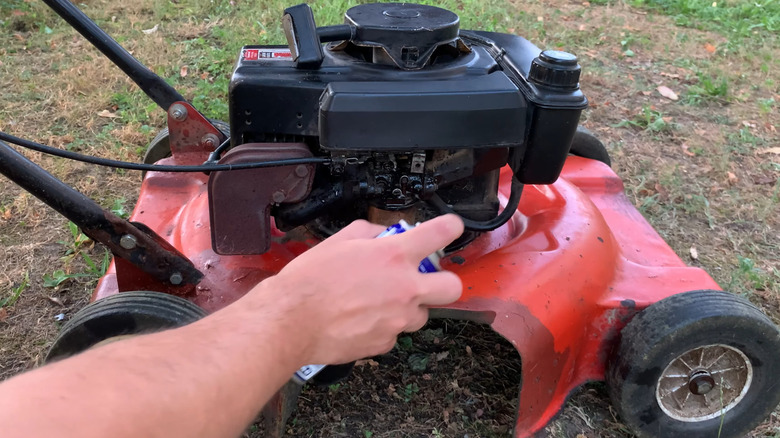
Assailed as they are by flying gravel, dirty work boots, and the indignities of petroleum products and UV exposure, the painted parts of your mower will eventually start to show some unwillingness to remain painted. They were painted for a reason, though... often to keep rust at bay... and short of repainting, you could do worse than to rub on some WD-40 as a protective film against moisture and further rust.
Use it (cautiously) inside the engine
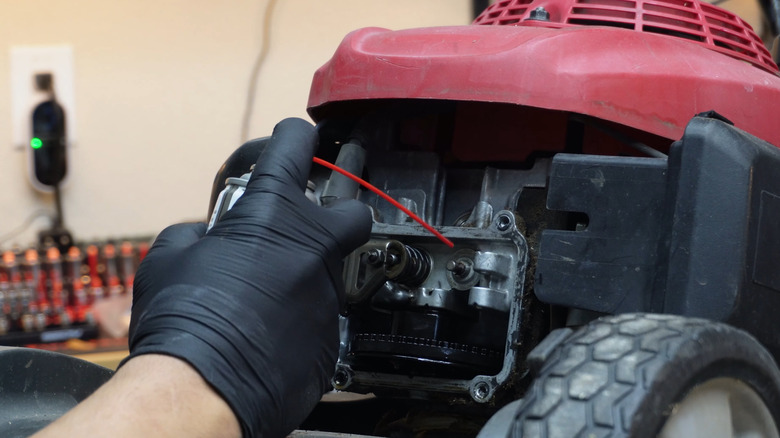
YouTube and other mad places seem to be overrun with people who want to try various things, including WD-40, in place of starting fluid. As this is pointless and risks leaving deposits in your carburetor, we don't recommend it. But if you're going to allow WD-40 into your engine, two good reasons might be winterizing, as we mentioned above, and unsticking the valves that can (often on Honda mower engines) get stuck after some moisture intrusion. Since the alternative is rebuilding or buying a new engine, why not try it?