

The Fabric Pattern That Was Once Banned Overseas — Now We Want It In Our Homes

We may receive a commission on purchases made from links.
One of the most popular fabrics in the world was temporarily banned in France and England in the 17th and 18th centuries. Domestic textile manufacturers were losing profits to chintz importers, so the floral fabric from India was outlawed to protect them. European factories didn't have access to the same natural dyes, like indigo, that the Indians fabric makers used to create the intense hues. So, while they could make floral patterns, they weren't as vivid as the imported chintz. Then, colorfast dyes were developed and European makers were able to produce more comparable colors. The fabric was later popularized by both the Jackie Kennedy White House of the early '60s and Princess Diana in the '80s.
By the 2010s, patterns like chintz started to feel dated. Scandinavian design and minimalism were surging, including lots of white and grey interior design. However, the 2020s have now re-embraced the nostalgia-heavy maximalism of cottagecore, and many are loving granny chic trends. Pattern-heavy floral prints like chintz have not only been a reaction to the cold starkness of minimalism, but also to the pandemic itself. Once we were stuck inside for months, people wanted their homes to be more than just functional, streamlined boxes. They wanted them to reflect comfort and warmth. So, out went clean lines and geometry as layering and vintage patterns began coming back.
Chintz was once banned overseas, but now it's a home decor staple
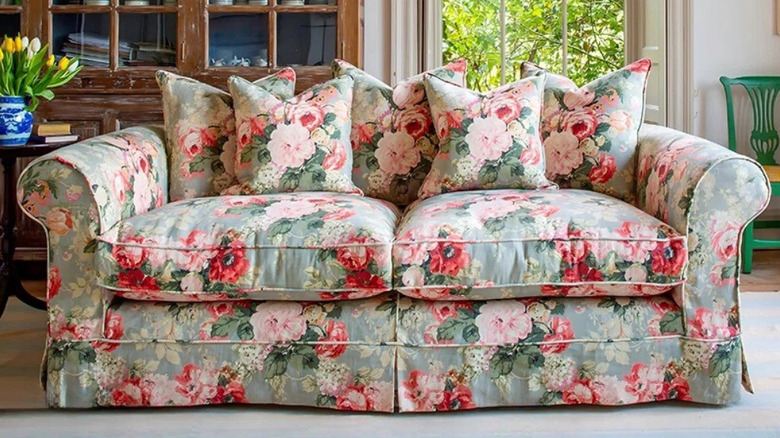
While the 1980s were all about country cottage maximalism, with textiles, furniture, and wallpaper exploding in chintz, the 2020s are all about balance. For example, instead of pairing a chintz sofa with matching curtains and busy wallpaper, keep the other elements simple so the sofa can shine. Similarly, a chintz cushion or pouffe could be used as a retro accent to add a pop of color and pattern to a neutral space.
The specific fabric also impacts the refinement of the look. Interior designer Jessica Buckley told House and Garden, "The type of chintz you select is crucial to the making or breaking of a scheme. Choose a classic chintz such as Colefax and Fowler's Bowood, or perhaps something a little less well-known, but always look for a fineness in the printing and a beautiful soft glazing, rather than the stiff chintzes of the past, which can be tricky to work with."
There are many modern chintz accessories to add the look to your space. For example, accents like Yangest Store's Floral Pillow Covers provide a low-cost way to play with the pattern. For those looking to make more of a statement, furniture like Hulala Home's Floral Accent Chair can make a bigger impact. You might also have luck hunting for vintage accessories at thrift stores. Whatever you find, though, the goal is to complement your home's existing palette. Look for patterns that contain your current wall or rug color for a cohesive look. Or, for darker, moodier rooms, a richer, more saturated chintz design elevates dramatic vibes.