

What Happens If You Mix Baking Soda And Concrete?
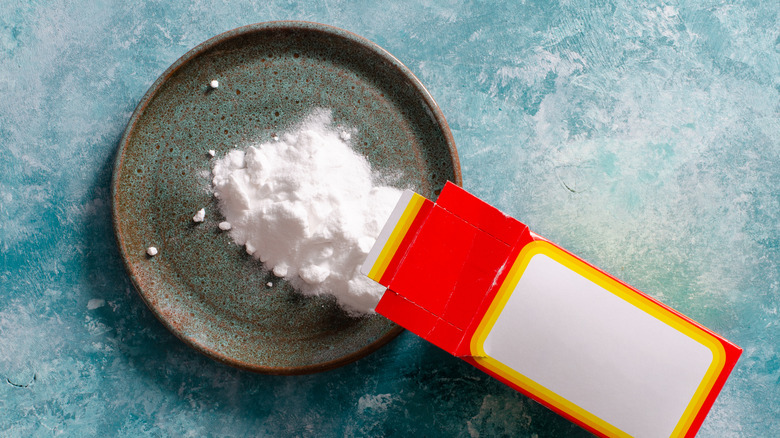
Baking soda is a trusty ingredient in a lot of DIY projects. Beyond its obvious cleaning and baking capabilities, the powder is often mixed into paint, with many using it as a cheap way to give vases and other thrifted finds a textured, pottery-like finish. Adding it to concrete may be one way you never thought to use baking soda, and while the result is different from the paint trick, it's still impressive. When baking soda is placed inside a mold before wet concrete is poured, the areas that touch it stiffen. This creates a crust that wrinkles and cracks as the concrete settles, leaving behind a rough finish resembling weathered limestone or coral.
That textured effect is the product of a chemical reaction. As cement begins to hydrate, sodium bicarbonate (the chemical name for baking soda) produces calcium carbonate, which provides nucleation sites for the cement's binding material. This results in the concrete stiffening quicker than normal. With all this science talk, you might be wondering if combining the two is a good idea. In an experiment carried out by a team of researchers at the Massachusetts Institute of Technology (MIT), introducing the powder while the cement was still a wet slurry helped lock carbon into newly formed mineral compounds. Not only did the samples harden sooner, but researchers estimated that the process could offset up to 15% of cement-production emissions without a significant loss of strength. That being said, researchers called the work preliminary and are still determining how the formula behaves in more complex mixtures. So for now, baking soda makes the most sense as a controlled texturing tool for decorative DIYs, not an ingredient to casually measure into concrete used for, say, a driveway or foundation.
When mixing baking soda and concrete may be worth trying
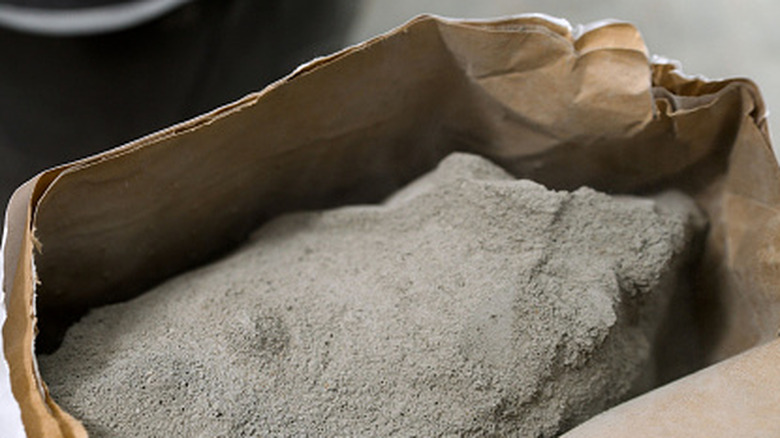
If you're searching for awesome concrete DIY projects, small, non-weight-bearing pieces are the best place to experiment with this combo. Think projects like candle holders, bookends, decorative trays, or wall tiles. You could also combine several finished tiles to create textured wall art using this secret ingredient. Since baking soda can shorten the setting time of concrete, avoid the scramble and make sure all the objects are close by before combining anything. And don't add extra water if the concrete begins stiffening too soon — Quikrete warns that excess liquid can weaken both bond and compressive strength, potentially leading to a crumbly mess.
The best way to use this method is in a mold rather than applying it directly on a surface. Start by applying the dry baking soda and pouring the wet concrete on top. Use a light dusting of baking soda for faint roughness and note that the more you add, the more nooks and crannies your project will have. After the concrete has fully cured, you can rinse away the leftover baking soda dust and scrub any caked-on residue with a stiff-bristled brush.
Whenever you're working with concrete, you'll want to protect yourself. Always mix the dry concrete outdoors or in a well-ventilated area. Wear safety goggles and waterproof gloves to protect your skin, and a respiratory mask isn't a bad idea to avoid inhaling harmful dust particles. Wet concrete can also cause chemical burns, so remove any contaminated clothing and hit the shower immediately if any gets on your skin.