

Turn Old Pot Lids Into A Rustic, Tiered Bird Feeder That Keeps Seed Dry
We may receive a commission on purchases made from links.
It's exciting to see a new bird in your yard and know that it considers your home a safe space to rest. Putting out a feeder is an easy way to encourage more visits from our flying friends, but traditional bird feeders can get pricey and can be rather unattractive. If you're in the market for a new feeder, check the back of your kitchen cabinets before you head to the store. As Practical_DIY shows on TikTok, old pot lids can become charming DIY bird feeders with a few simple changes. By using two lids, with the larger of the two on top, the feeder will provide shelter from rain, helping to keep your birdseed dry.
For this project, you'll need two pot lids with one removable knob in the center, and one wider than the other. If you don't have extra lids on hand, this is a great excuse to hit the thrift store. The feeder comes together with a few additional inexpensive items from the hardware store. If you don't already have them, add a threaded rod, two hex nuts, a coupling nut, an eye bolt, a carabiner, and a wrench for tightening the hardware to your shopping list.
This feeder adds a rustic look to your garden and looks beautiful amongst wildflowers or herbs. Pairing it with plants that provide additional food and shelter is another way to create a bird-friendly garden at home, and bright colored lids can help attract birds and butterflies too. If you don't have something to hang it from already, a shepherd's hook is a great solution. Don't be surprised if some squirrels give it a visit, though. While it's difficult to get rid of the cute but unwelcome pests completely, you can take a few steps to discourage them.
How to assemble and squirrel-proof the feeder
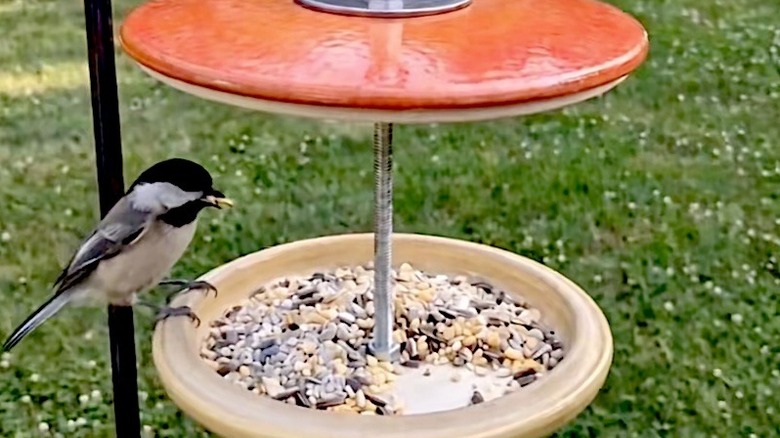
Assembling the eco–friendly bird feeder takes less time than picking one out at a store. First, remove the knobs from both lids and set them aside, as you'll use them later. Place the smaller lid hollow-side-up to form a bowl. Insert the rod through its center hole where the handle was, then attach one of the original knobs beneath it. Tighten a hex nut against the opposite side to secure what is now the seed tray. Then thread the second, larger lid farther up the rod, leaving enough room between the two levels for birds to land. The larger lid goes over the rod with its dome, or top, facing upward to act as a roof. Secure everything with the coupling nut and thread the eye bolt into the coupling's open end before attaching the carabiner. If the spacing isn't quite right, you can adjust the upper nut to change the distance between the two lids.
Squirrels may inevitably see your DIY as the area's hottest new buffet, so hanging the feeder from a freestanding pole with a baffle can help deter unwanted guests. Also, place feeders far from trees and buildings the critters could use to launch off to reach the bird feeder. Check your feeder for damp seed frequently, and wash the lids with boiling water and dish soap every two weeks, or more frequently if your feeder attracts a high volume of feathered guests.