

11 Common Mistakes Everyone Makes With Gravel Driveways
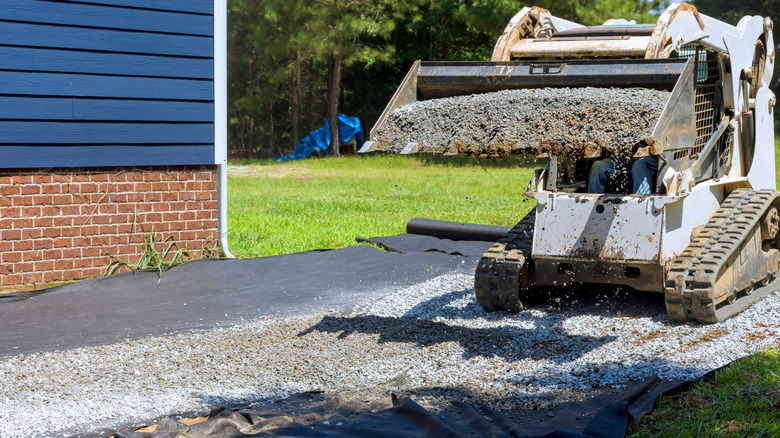
Gravel driveways seem simple enough — pour some rocks on the ground and drive over them. But difficulties arise in the details. What rocks do you pour on the ground? How big, and how many? And what ground, for that matter? How do you prevent pooling water or, worse, water running in the wrong places? And is there anything you need to be putting on the ground besides rocks and sweat? All of these questions have good answers and bad answers, and you might not be able to rely on your intuition to figure out which is which.
A long-lasting, less expensive gravel driveway hinges on avoiding all of these pitfalls and potholes. A properly installed gravel driveway can last 20-30 years and look great doing it, if you take the right approach to each step along the way. Like pretty much everything else, the key to success is in careful planning. This starts with a good, hard look at your driveway area — maybe with a gravel or grading professional in tow. You're looking for how steep the grade is, how water is likely to move through and around the area, and what the ground looks like down below the topsoil. Also think about what you're planning to drive on the driveway and how often; what you expect it to look like when you're done; what will be on each side of the driveway; and whether you'll be walking on it barefoot to retrieve mail. The answers to these questions will help you avoid the following common mistakes people make when installing gravel driveways.
Choosing the wrong gravel type
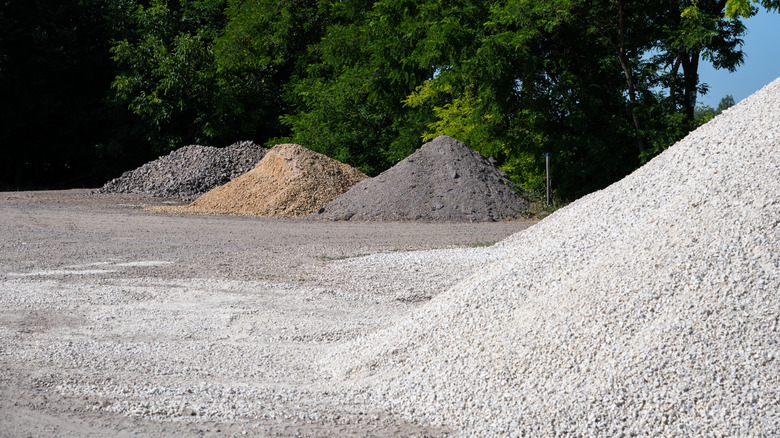
There are many types of driveway gravel, and picking the best gravel for your purposes — driving, walking, chasing pets or frisbees — requires an understanding of the basic options. The top layer of your driveway (and there will likely be more than one!) might be ¾-inch crushed stone, possibly washed clean. Or it might be pea gravel or another natural, rounded stone, which is great for aesthetic or comfort purposes but less stable than angular crushed stone because its smoother surfaces slide against each other. It could also be something less refined, such as quarry process stone, which is often messy-looking but low-maintenance.
Choosing the wrong size and shape of your gravel
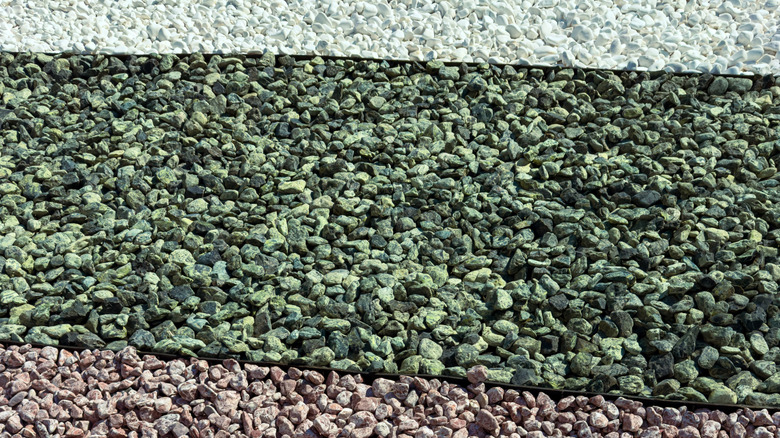
When you're selecting gravel sizes for a driveway, you'll likely end up choosing at least two grades of gravel – for example, a base layer of 2-inch angular stone and a top layer of smaller rock. You might also add an intermediate level of gravel that includes medium-sized stones for improved stability, such as when you're building up a crown for water runoff. Keep in mind while planning that you need enough of each type of stone you choose, and that the penalty for mixing sizes incorrectly might be an expensive driveway that doesn't last long.
Incorrectly structuring your gravel
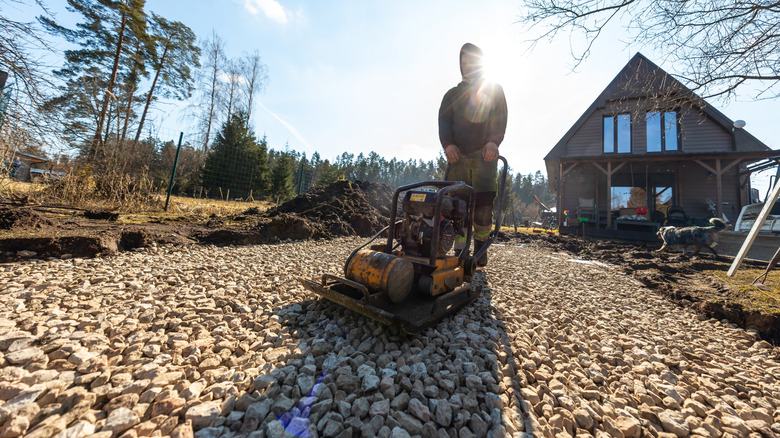
Gravel driveway structure is more complicated than the sum of its parts, to say the least. A driveway might be two layers or six, might be all gravel, or could include geotextile fabrics, sand, and a plastic stability grid. The requirements always include a properly graded area, a compacted base layer, and a finished top layer. It's often a good idea to add a layer that includes fine particles to help hold larger rocks in place. It's important to design a structure that takes into account vehicle load, drainage, soil type, and any other factors.
Poor site preparation
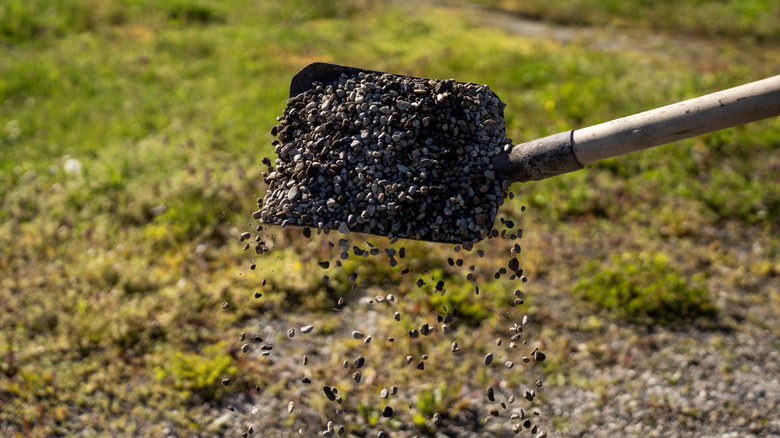
Without properly preparing the site of your new gravel driveway, you might not have a gravel driveway for long. Site prep includes a couple of steps that, informed by proper planning, will make all the difference in the longevity and usefulness of your gravel driveway. The first of these is excavation down to a solid subgrade surface — ideally rock, but at least stable subsoil, without which your driveway will almost certainly fail. The second is a properly sloped grade, which is the first line of defense against your driveway's worst enemy — poor drainage.
Ignoring drainage
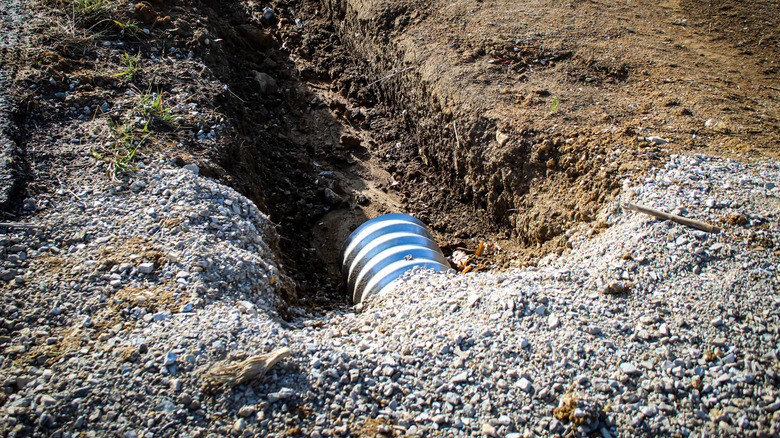
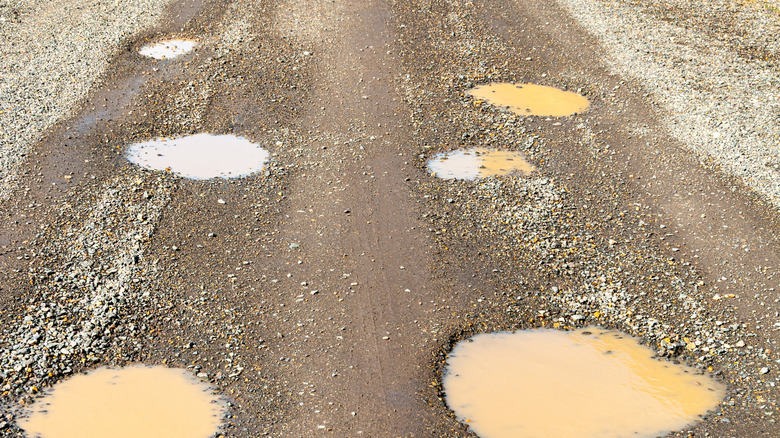
If you have a bad experience with a gravel driveway or road, odds are that the culprit is water. Water that isn't routed properly around and under a driveway can cause potholes and erosion, which, in turn, causes ruts. Insufficient drainage can also cause silt to migrate upwards into the gravel, creating a mudhole unless prevented by a geotextile fabric layer. Flat driveways or those with dips, concavity (rather than a proper crown), poorly designed slopes, improper culvert installation, and undersized drainage pipes will tend to collect water.
Forgetting the edging
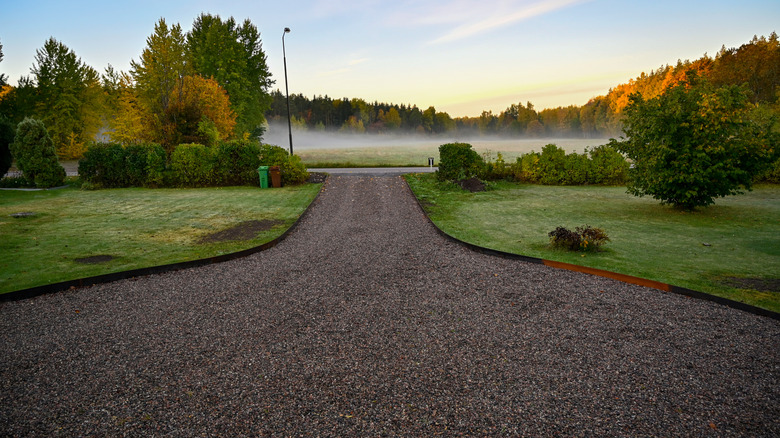
If water creates the worst problems for gravel driveways, entropy creates the most annoying ones. Without proper edge restraints, gravel tends to spill away from the driveway as vehicles apply weight to the stones, leading to material loss, lessened curb appeal, frequent repairs, and even safety issues. Safety becomes a problem when stray rock that has migrated from a driveway onto a lawn becomes a projectile flung at high speed by a mower blade into your home, your car, or your body. Stone, concrete, and brick edging are some of the most long-lasting options.
Not crowning your driveway
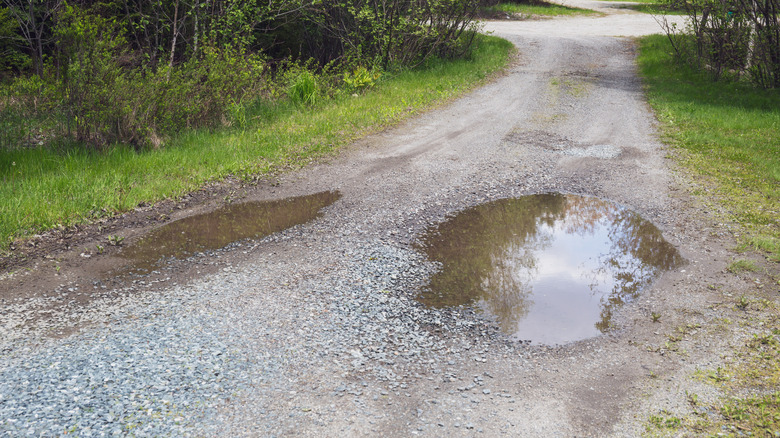
Crowning a driveway creates a convex arch so that the center of the driveway is the highest point and the surface slopes away to each side. This generally improves drainage, reduces the number of potholes, and helps keep gravel in the driveway. While the specifics of any grading and crowning are highly site-dependent, crowning in general is a universal best practice because of the pooling and erosion problems created by a cupped (concave) driveway surface. The standard slope is half an inch per foot from the high point in the center of the driveway to the edge.
Insufficient gravel depth
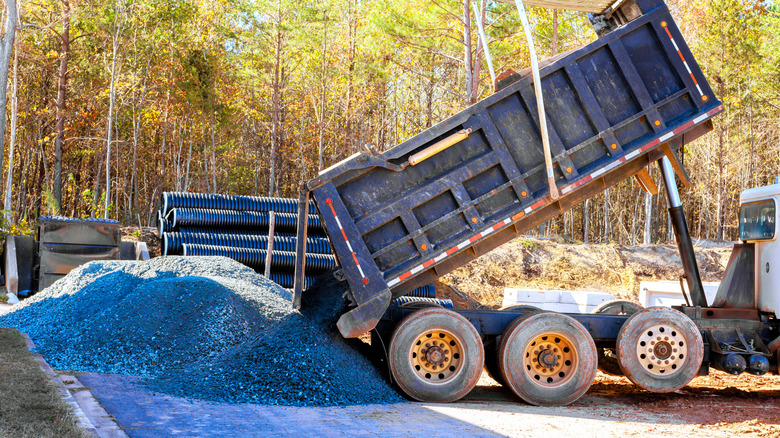
In an undertaking beset with variables, nothing is more variable than the amount of gravel required for any particular driveway. The minimum recommended depth could be anywhere from 4 inches to a foot or more, depending on soil type, types of vehicle traffic expected, and other factors. Since overly thin gravel installations are proven to fail prematurely, it's a good idea to do your homework and determine how much gravel thickness you need, including any base layer. Also, be sure to order gravel according to the eventual compacted depth of your driveway's layers, and not the initial loose gravel depth.
Not topping off your gravel driveway
Because driveway gravel has a habit of migrating out of the driveway, especially where there's insufficient edging, peculiarities of grade and drainage, and other reasons, it's important to replace any lost stone or restore any diminished gravel depth periodically to keep your driveway in good working order. For a properly installed driveway without too much slope, you can generally do this replacement every three to five years. Order top-up gravel in the fall or winter when prices are lowest, for delivery in spring when prices are higher.
Neglecting weeds
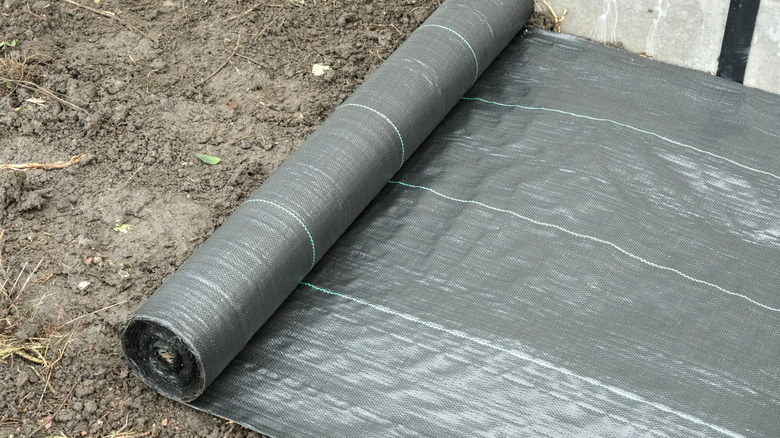
Weeds will find a way to grow just anywhere, but it's important to do what you can to prevent an overly weed-friendly gravel driveway and to remove weeds when they do pop up. The two key strategies are excavating for your driveway down deep enough, and using a weed-prevention textile. Even with this, over time, introduced dirt, eroded gravel, and decomposed matter can actually create suitable soil for a healthy crop of weeds to grow in your driveway — so periodic weeding is still needed. And finally, hammer-in edging can help keep grass out of a gravel driveway.
Too little maintenance
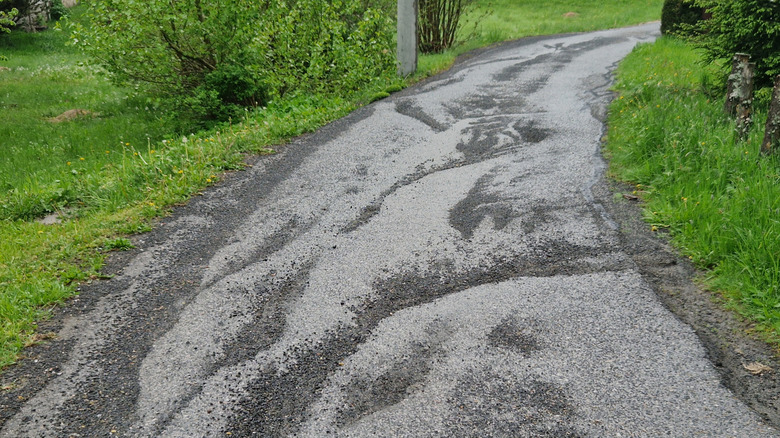
Weeding and topping off isn't the only maintenance you need to do for your gravel driveway. You also need to maintain proper drainage by making sure any culverts, pipes, ditches, and the like remain free of obstructions. Don't forget to keep potholes filled. It's also a good idea to level your driveway periodically, so long as you can maintain the proper crown. And of course, keep your edging in working order, so it can properly contain the gravel.