

How Do Solar Farms Affect Property Values?
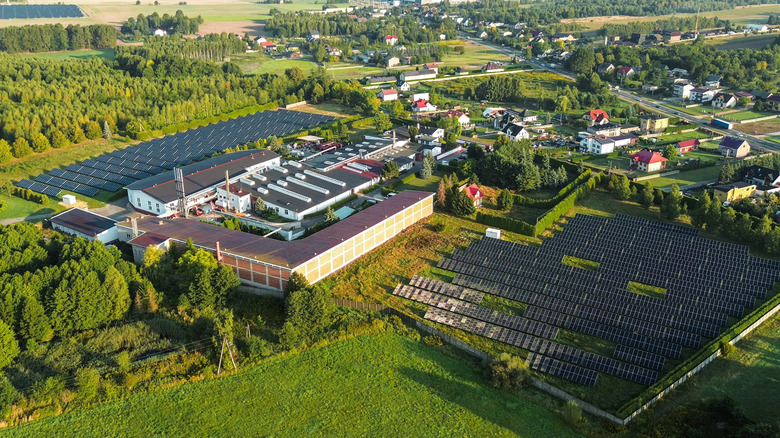
Solar farms are popping up across the United States, leaving many homeowners wondering how they affect property values. While you may not need that many solar panels to fully power your home, utility-scale developments have thousands or even millions of the shiny glass panels stretched across deserts and open fields. According to Cleanview, there are currently 7,591 solar farms in America as of September 2026. While California and Texas lead the pack, thousands more are currently in development across the country. To learn how all this solar farm development is affecting property values, Hunker interviewed several Compass Real Estate experts. Although potential buyers have concerns about traffic, noise, and aesthetics, they agreed that solar farms generally have little impact on home prices when they're screened by trees or distance.
"Solar farms are one of the few land uses where the perception hits harder than the reality," explained Jeremy Olsher, Real Estate Advisor with the Mizner Residential Group in an exclusive interview with Hunker. "In practice, the effect on home values is mostly limited to properties with direct sightlines, homes that share a fence line or look straight out at panel arrays. Once you're a half-mile out, or there's mature tree cover and a berm between the array and the house, buyers stop caring," he explained.
Olsher went on to tell us that most concerns revolve around the industrial look of solar farms and the construction-related hassles that come with building them. While the process certainly involves a period of heavy trucks and earthmoving dust, both are temporary. They're also better than losing rural land to noisy data centers or new subdivisions full of busybodies. As Olsher explained, "Solar farms are quiet neighbors. No traffic, no odor, no lights at night, no shift changes."
Visibility matters most when it comes to solar farms and real estate prices
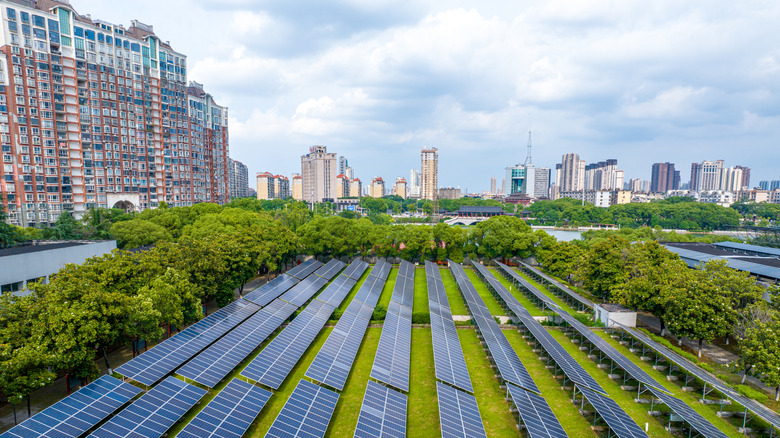
Real estate expert Marilyn Comiskey, founder of the The Comiskey Group, has a similar take on how solar farms affect property values. "The honest answer is that it depends almost entirely on what the buyer can see from the property," she explained in an exclusive interview with Hunker. "A solar array tucked behind a tree line and set well back from the road rarely comes up in negotiations. One that dominates the view from a back patio does, and buyers will use it as a talking point every time," she said.
According to Comiskey, a solar farm that's visible from your property doesn't necessarily mean you'll never be able to sell it. It also doesn't guarantee sellers will need to offer deep discounts. Instead, she explained that it creates a smaller pool of interested buyers. "Homes near solar farms still sell. They just sell to a buyer who has already made peace with the view, and they need to be priced for the buyer who exists, not the one you wish existed," she added.
In another exclusive interview, Chris Murphy, founder of Waterfront Homes, LLC, agrees that solar farms are one of the neighborhood factors that affect home prices. But he told Hunker that views and sightlines are always an issue for buyers, whether they're looking out of their kitchen window at a solar farm or at another view. "A neighbor's new dock, a moored barge, a utility structure ... The value shift tracks visibility and distance, not the existence of the thing itself. Once it's out of sight, it's out of the pricing discussion," he said. Murphy added that buyers may be overlooking the pros of having a solar farm nearby, explaining that "A solar farm doesn't add traffic, doesn't add noise once it's running, and doesn't crowd schools."
Buyers and sellers also need to consider local regulations impacting future solar farm development
According to realtor Joy Aumman, founding partner of LuxurySocalRealty.com, proximity to a solar farm matters more than anything else. "Homes sharing a fence line or within roughly a half-mile with an unobstructed view are the ones where buyers ask for concessions. Beyond a mile, I rarely see it come up in negotiations at all," she explained in an exclusive interview. Aumman agreed with the consensus that buyers are mainly worried about the changes to rural landscapes, construction traffic, and noise. She added that some are also worried about glare or heat. But because solar panels are designed to absorb light, not reflect it, the glare they put off is less intense than the reflection off residential windows or vehicles. Researchers are still determining whether solar farms create damaging heat islands, but the real estate expert doesn't think potential buyers need to be too concerned.
What Aumman does encourage both buyers and sellers to carefully consider are local regulations that may influence potential solar farms in the future. "Setbacks are governed by local zoning, not federal rule, and they vary wildly. Anyone buying near underdeveloped land should pull the county's current solar ordinance and check for pending permit applications before closing," she recommended. Minimum setbacks, screening requirements, and decommissioning bond details for solar farms are among the best questions to ask yourself before buying a home.
Jeremy Olsher echoed this feedback, strongly recommends that buyers look at the county's approved site plan to determine which nearby areas are zoned for expansion. It's helpful information to have if you plan on selling your home, too. "Selling near [a solar farm] takes more explaining, not more discounting. Get ahead of it with the site plan and screening details, and most buyers move on quickly," he recommended.