

Forget Boxwoods: A More Durable Shrub That Grows Faster
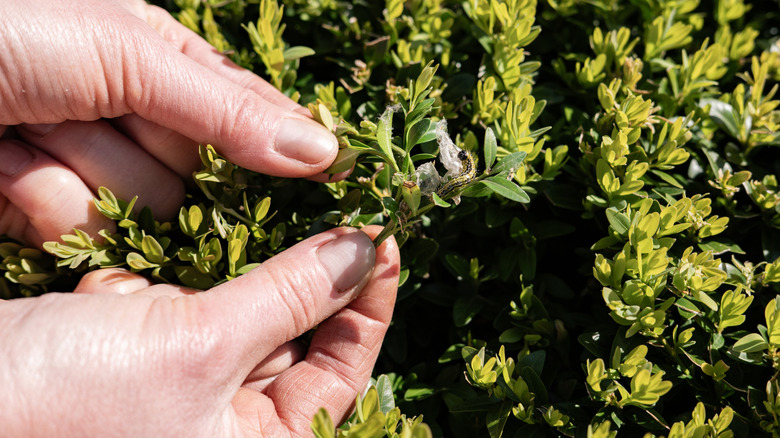
Among hedges and ornamental shrubs, boxwood (Buxus spp.) is a historically popular choice. It's coveted for its attractive leaves and dense growth that can add visual interest to any landscape, and it is deer-resistant, too. Unfortunately, these non-native evergreen shrubs also come with some notorious downsides, including a slow growth rate. They're vulnerable to winter injury, pests, as well as several diseases such as leaf spot, blight, and root rot. These traits are particularly undesirable when you want attractive shrubs that will grow around your home without much fuss. To that end, you may consider the often overlooked inkberry holly (Ilex glabra) as a more durable and faster-growing alternative to tall boxwood shrubs.
Also simply known as "inkberry" or sometimes "gallberry," inkberry holly is another broadleaf evergreen shrub. Notably, unlike boxwood, inkberry holly is a native plant that can withstand moist or sometimes wet soils, and it's not very susceptible to diseases or pests. While boxwoods are suitable for USDA Hardiness Zones 5 to 9, inkberry holly has a slightly larger range and can be planted as a perennial in zones 4 to 11.
As for growth rate, inkberry holly is classified as a slow or moderate grower that gradually spreads via rhizomes. Don't let this deter you if you're choosing between inkberry holly and boxwood, though. When comparing the two plants, inkberry holly is still expected to grow a bit faster and larger than boxwood overall. Boxwoods are known to grow slowly, although there are a few exceptions based on the species and cultivar, with dwarf varieties among the slowest.
How to support inkberry holly for successful growth
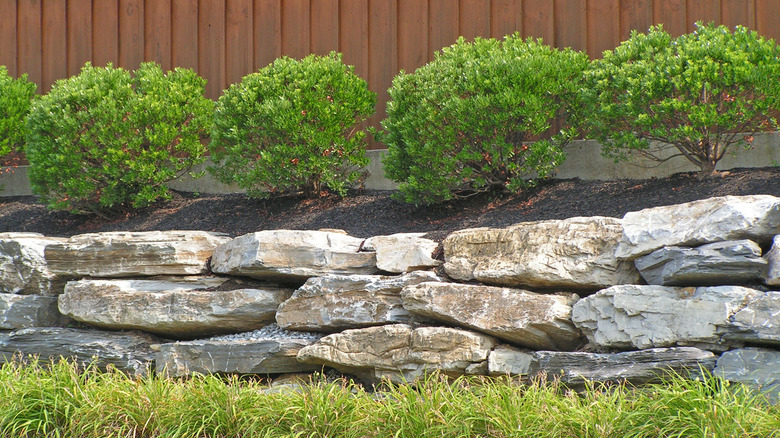
Inkberry holly works particularly well when planted as a privacy screen or hedge. Before proceeding, though, there is one critical caveat regarding the potential fire risks of this plant. Due to its high flammability rating, you do not want to plant inkberry holly immediately next to your home. Aim to plant it at least 30 feet away.
If you do have space for this native shrub, you'll want to pick a spot that gets at least two hours of direct sunlight per day. Inkberry holly does best in moist, acidic, well-draining soil, and can do well in clay and sandy soils. You'll want to prune these plants just before the growing season starts every spring if you're trying to grow them as hedges or as a privacy screen. Otherwise, inkberry holly is among the plants and shrubs you don't necessarily have to prune. When the right growing and maintenance conditions are met, you can expect each inkberry holly shrub to grow between 5 and 10 feet tall and between 5 and 8 feet wide. Just be aware that inkberry holly is also notorious for losing its leaves around its lower branches, which can create an open base not everyone cares for. This can be remedied by cutting the plants back.
Once your inkberry holly starts growing, you can also feel good knowing that this native landscaping plant will support local wildlife. Bees, butterflies, and other pollinators may visit its flowers during the spring and summer months, while birds and small mammals may eat the fruit. Just be aware that inkberry holly is more appealing to deer than its boxwood counterparts.