

Trade In Traditional Metal Garden Beds: The Rust-Resistant Material That Lasts Longer
We may receive a commission on purchases made from links.
If you've been wanting to start a vegetable garden and are eyeing metal garden beds for their convenience and attractiveness, you might be surprised — and a bit overwhelmed — by the available choices. Metal beds come in a range of sizes and configurations. Some have open bottoms, some are enclosed at the base. Some are elevated on legs, while others sit flush with the ground. And, should you read the fine print under the product description, you might also discover that not all the metal is the same either.
Galvanized steel is the most common material for metal bed construction, and can last for decades. But there is another metal that is proving to be even better, particularly for its resistance to rust. It's called aluzinc.
Also known as zincalume or galvalume, aluzinc was first developed by Bethlehem Steel of Pennsylvania back in the 1960s and is now utilized around the world. Exposure tests indicate that aluzinc has an exceptionally low corrosion rate. Due to this, it can, foreseeably, last 25-40 years in most applications, making it a sturdy material for raised garden beds.
Aluzinc is stronger than galvanized metal and absorbs less heat
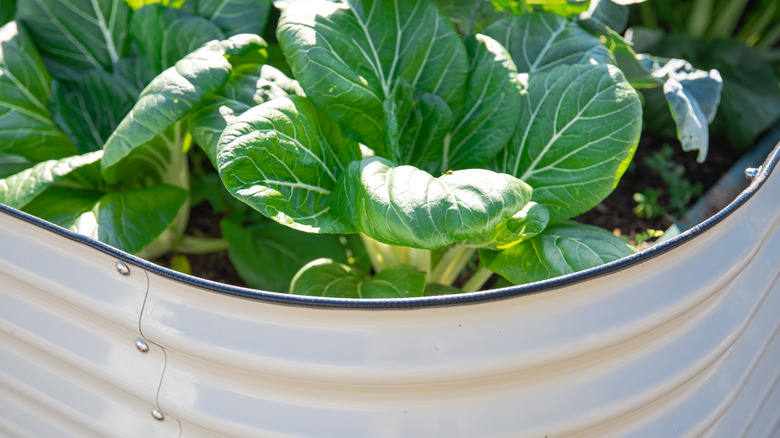
Aluzinc is a close cousin of galvanized steel. Ordinary galvanized metal is made by dipping steel into a molten bath of zinc, making a strong protective seal against rust and corrosion. Aluzinc is slightly different in that the steel is coated in aluminum, zinc, silicon, and sometimes magnesium, creating a metal that is said to be at least three times as durable as regular galvanized steel.
Another benefit of aluzinc over traditional galvanized steel is its ability to reflect light. Galvanized steel, especially in darker colors, tends to heat up soil inside the bed, which can be a concern for gardeners in warmer zones. Because it is coated in shiny, highly-reflective aluminum, aluzinc stays a little cooler in the hot sun.
There is one inevitable drawback: Aluzinc costs more
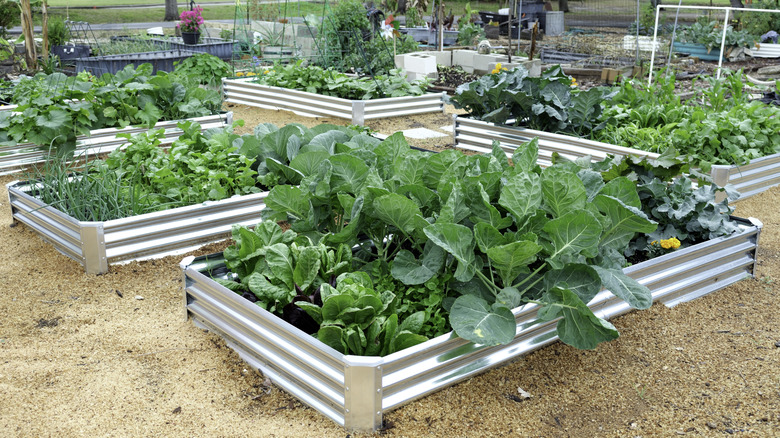
Whether you're a serious home gardener looking for an upgrade or a beginner just starting your raised bed journey, galvanized metal beds appear to be the better choice over traditional wooden beds, and aluzinc steel beds are certainly a step above galvanized steel ones. They're available in plenty of sizes, configurations, heights, and colors. And impenetrable plated walls and superior rust resistance mean you likely won't be repeating your raised garden bed construction in a few years.
But there is one downside to aluzinc for the gardener looking to invest in rust-resistant metal beds: Do expect to pay more up front for the aluzinc coatings. Some of the most top-rated metal garden bed manufacturers use this type of metal, and they can ask a hefty price tag of a few hundred dollars for a single bed. For instance, a medium-sized aluzinc bed from Vego costs over $155. The question for the gardener then becomes, are you willing to pay more for something that could last up to four decades, versus 10-20 years?