

Use Dawn Dish Soap To Clean Your Home's Vinyl Siding (No Pressure Washer Needed)
We may receive a commission on purchases made from links.
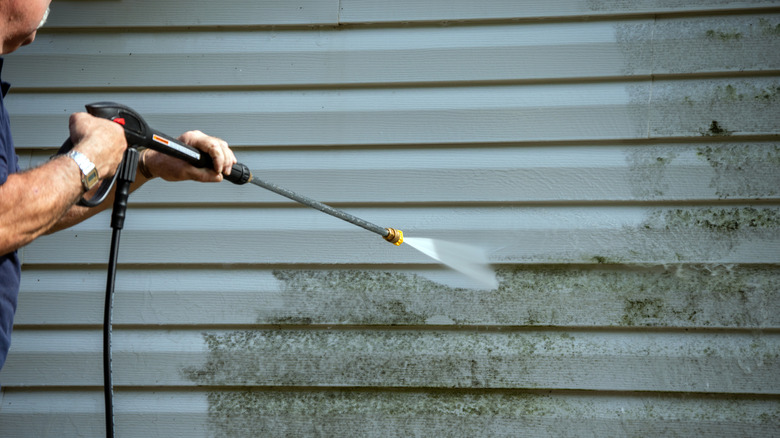
Over time, vinyl siding panels can start looking dingy as they get caked with dirt, grease, mold, and mildew. If you've let the grime sit for a while, you might consider power washing your siding. However, if you're worried about the risk of blasting water behind the panels, it may not be the best choice. In fact, some manufacturers recommend against pressure washing vinyl siding at all. Even when it's not discouraged, other manufacturers give specific instructions on pressure, nozzle, distance, and spray direction which can even impact how you choose a pressure washer. Sounds complicated, right? To simplify things and have your siding looking clean again without the need for specialty gear, just grab a bottle of Dawn dish soap, a bucket, and a long-handled brush. It's a surprisingly effective treatment that costs basically no money.
While using dish soap to clean vinyl siding might sound over-the-top, it works because it's pretty versatile: It's the preferred dish soap for rescue organizations that deal with cleaning oil spill residue off wild animals, for example. According to a report by NPR, the specific formula — dubbed PowerSuds by Dawn — of particularly effective degreasers in a non-irritating solution that's easy to rinse off (along with affordability) is why it's such a popular choice. In other words, the formula that's capable of breaking down cooking grease on your dishes can eliminate grime, road dust, and pollen film off vinyl siding as well, while being sensitive enough not to damage it. So, whether you're doing some seasonal cleaning, putting your house on the market, or simply cleaning because it gives you an oh-so-needed mindfulness boost, a little dish soap can go a long way towards sprucing up the outside of your house. No pressure washer needed.
How to clean dirt off your vinyl siding using Dawn dish soap
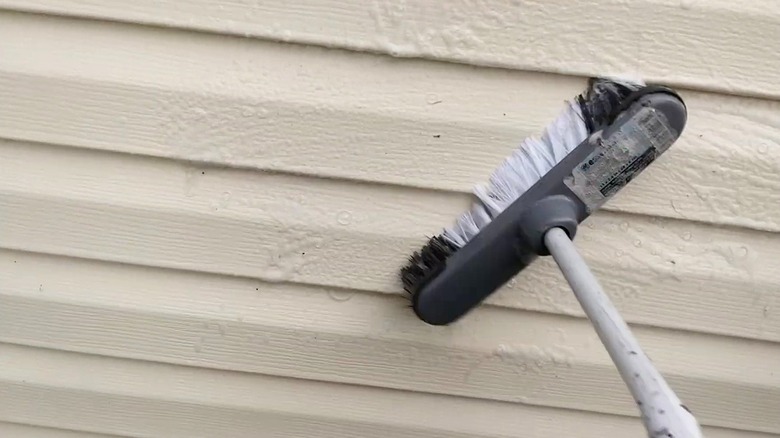
When you have all your gear, use a garden hose to loosen dirt (angling it down when you can) on the siding and help the soap penetrate the grime. Then, combine a couple of ounces of your preferred Dawn dish soap to a bucket of water. Next, dunk a long handled, soft-bristled brush in this solution. Clean one section or panel at a time and scrub in the direction of the grain of your siding to remove dirt more easily. Once it's sufficiently clean, rinse off the residue with a garden hose before moving on to the next section or panel. It's best to clean from the bottom up to avoid streaking, though a final rinse works well from the top down.
There are multiple Dawn formulas, so choose one based on how tough the dirt on your siding is. To elaborate, Dawn Ultra, your everyday dish soap, works well for mild cleaning or regular upkeep. The same goes for the PowerSuds formula. Then there's Dawn Platinum, which the manufacturer claims has four times the grease-cleaning power of its non-concentrated sibling. Opt for this one when cleaning vinyl panels once a season or so. Finally, Dawn Powerwash is different: It's a concentrated spray, intended for particularly heavy grease. This should deal with most any grime on your vinyl siding, especially if you haven't gotten around to cleaning it in years.
If you maintain a garden and are worried about additives in dish soap, consider Dawn Free and Clear, which doesn't contain chlorine, phthalates, dyes or heavy perfumes. And of course you can always try other brands to see if one soap works better for you than another.
You might need extra help to remove tough algae stains, mold, and mildew
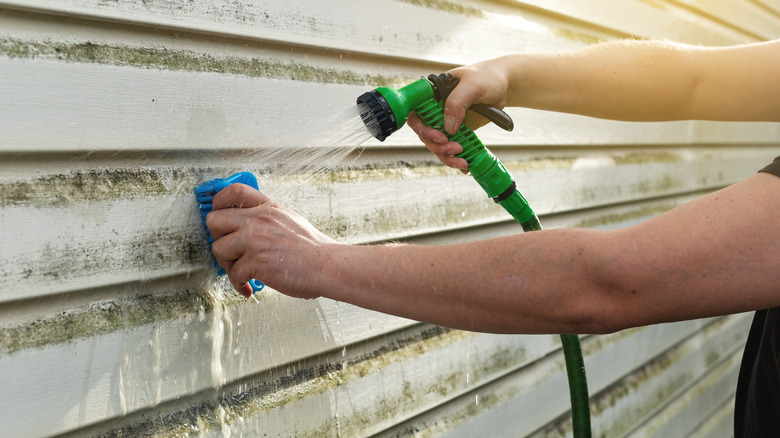
If your vinyl siding stays in the shade — whether it's facing north or east or because trees block the sunlight — chances are the stains you see are algae. If the algae is just starting to establish a stronghold or the growth looks mild, use a soft, long-bristled brush like a car wash or RV brush. Prepare and apply the soapy water solution as mentioned above and let it sit on the wall for 10 to 15 minutes prior to rinsing with a garden hose. You may need to repeat the process to clear the growth entirely. But if the algae is pretty heavy, say, you've bought an old house, then Dawn dish soap with only water won't cut it. In this case, you should call a professional cleaner or replace your vinyl siding entirely.
Vinyl siding is generally resistant to mold and mildew. Still, their spores can grow on accumulated dirt and organic matter and in protected areas, like under the eaves. In such cases, using Dawn dish soap will only remove surface mold but not kill it off. This can present a problem in the long run. So, you'll want to add a disinfectant. Don't worry; you don't need anything fancy. Simply mix 30% household vinegar with 70% water to remove the mold spores for good. You must let it sit for a few hours, though, before scrubbing them off. Another option is to add diluted bleach. However, some experts warn against treating exterior vinyl siding with chlorine bleach, because it can kill nearby plants or lawn. So, go this route only after consulting your manufacturer.