

Not Ceramic Tile: The Durable, More Stylish Alternative For Your Front Porch
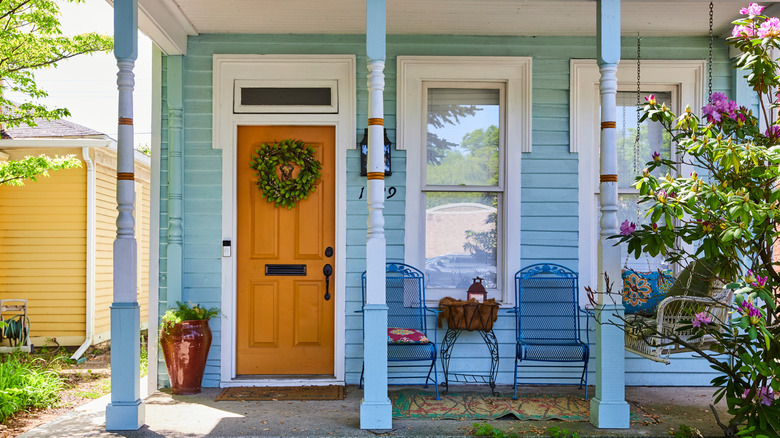
The front porch is the welcome mat for your entire home — it's what people first see as they approach your front door. So it makes sense that you'd want only the best for your front porch, and that includes the materials you choose for the flooring. You have plenty of options for updating your porch's flooring, from painting a basic concrete slab to staining wood boards to installing tile.
Should you go the tile route, you've got options, too — namely, ceramic or porcelain. Both are old-school methods that have been used for centuries, with ceramic tiles being used way back in ancient Egypt and porcelain tiles first used in China during the 15th century. Porcelain has a lot in common with ceramic — it's made from clay and fired in a kiln. Actually, from a technical standpoint — porcelain is a type of ceramic. What sets it apart from other ceramics is its composition and its firing temperature in the kiln — it's fired at a much higher temperature than other ceramics.
While the two materials seem interchangeable, there are distinct differences between the two. Ceramic is the budget-friendly pick, but porcelain has a lot to offer in terms of looks and durability. As you carefully consider your porch flooring options, see why porcelain might just pull ahead in the battle between ceramic versus porcelain tiles.
Pros and cons of porcelain porch tiles
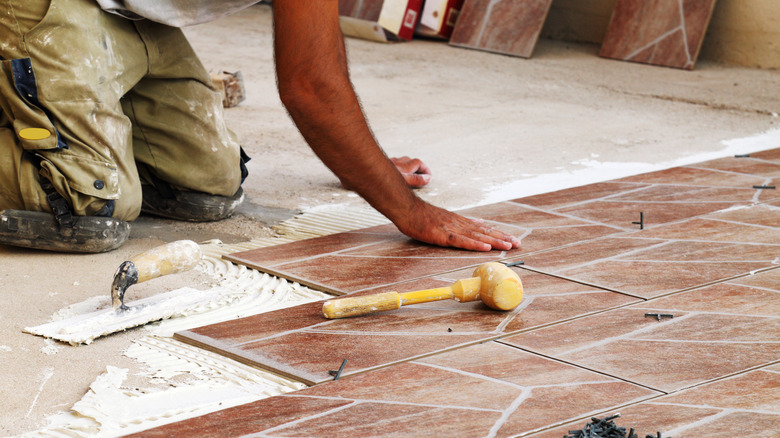
So, what makes porcelain the better pick for your front porch? Let's start with the practical — it has fewer maintenance needs than other types of ceramic. The surface is non-porous, so spills don't seep into the material the way they would on a wood floor or unglazed ceramic floor. It's also impervious and won't absorb water, which means it can withstand repeated freezes and defrosts during the winter without cracking. Since porcelain is denser than other ceramics, it's scratch-resistant and better able to handle lots of foot traffic without looking worn out.
Compared to ceramic tiles, porcelain tiles are available in a wider range of styles. There are porcelain tiles that look like wood, minus the maintenance needs of wood; there are porcelain tiles that look like marble or other types of stone. From a safety perspective, you have the option of treating porcelain tiles to make them slip-resistant.
As for the drawbacks — porcelain tile can be pricey. The cost per square foot depends on the type of tile you choose and can range from $2 to $30, with beautiful mosaic tiles on the more expensive end of the scale. The tile's rating also affects its cost — for an exterior floor with a good amount of foot traffic, you'll want a tile that's rated Grade 4 or 5, which costs more than tiles rated Grade 0 or 1. The installation process for porcelain tiles is also more complicated than that of ceramic tiles and requires specialized tools, which also means a higher installation cost.