

What Are The Disadvantages Of Limewash Paint?
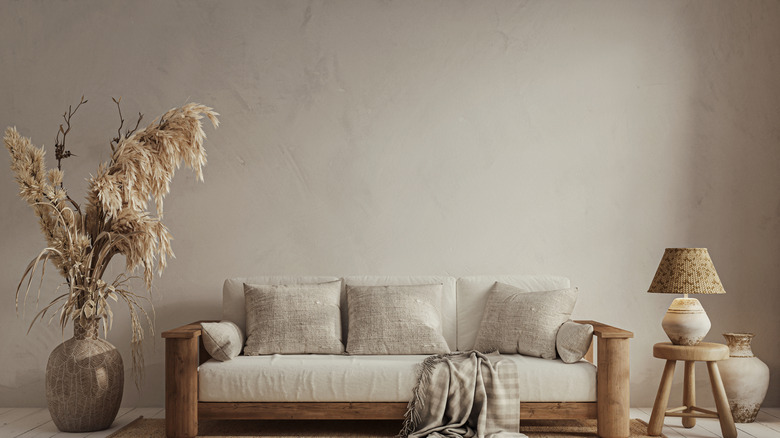
Everyone wants limewash walls, and yes, it is a cheaper way to add style to boring walls since it brings texture and lends personality to an otherwise basic room. But living with it is another matter. For one, it can rub off on contact. Plus, its upkeep never really lets up, and its color palette is always so restrained. And even recreating those Instagrammable cloud-like patterns on your own walls is trickier than it looks.
For that, limewash is applied in a cross-hatch technique — where the first layer is painted in loose, unstructured "X" strokes. Then, the painting of the second coat is done in a different direction. Sometimes, a third coat might be required. This leaves visible brush marks, with some patches appearing lighter and darker depending on the lighting. While this lends the limewashing its signature natural depth, it's not consistent. The inconsistencies, in fact, can stand out when you're looking at the same wall, every day. And let's not forget about its application process itself. The first thing you need to do is brush and dampen the surface. Even then, it's not a roll-on-and-done paint and should be applied by an experienced artisan. This will add to your overall cost.
Limewash is a high-maintenance finish, requiring regular upkeep
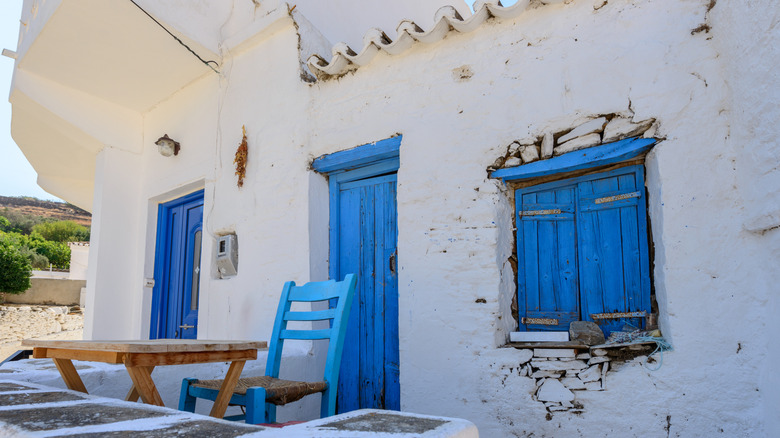
Unlike many modern paints, traditional limewash does not form a tough, washable film on the wall. Instead, it forms a light, porous, mineral coating that hardens as it dries. The resulting finish remains permeable, allowing moisture to move through the surface. Though this property, and its chemical nature, makes limewash mold-resistant, the trade-off, however, is that it's less resistant to rubbing, staining, and repeated cleaning. Regular contact, therefore, can cause chalking. Worse, your painted walls can absorb oils, dirt, and spills as well as leave marks. So, it may not be the best choice in areas that are regularly touched, splashed, or need frequent cleaning, such as kids' rooms, kitchens and bathrooms, or outdoor spaces.
At best, you can lightly wipe limewashed walls with a damp cloth. If you do get it in high-traffic areas, you may need to re-do it again. If you don't, it may accelerate the deterioration process of limewash. Over time (it usually lasts five to 15 years), the top layer can thin out because of rain, wind, or snow physically wearing down the top layer, a.k.a. micro-chalking. There's a workaround for this, but it comes with a catch: applying a topcoat. It can increase the durability of the walls while making them more glossy and stain-resistant. But once applied, the topcoat reduces the classic matte appearance and darkens the paint's natural hue or tone. Plus, you can't recoat the wall for repairs if you choose this option.
Limewash has a very restricted color palette
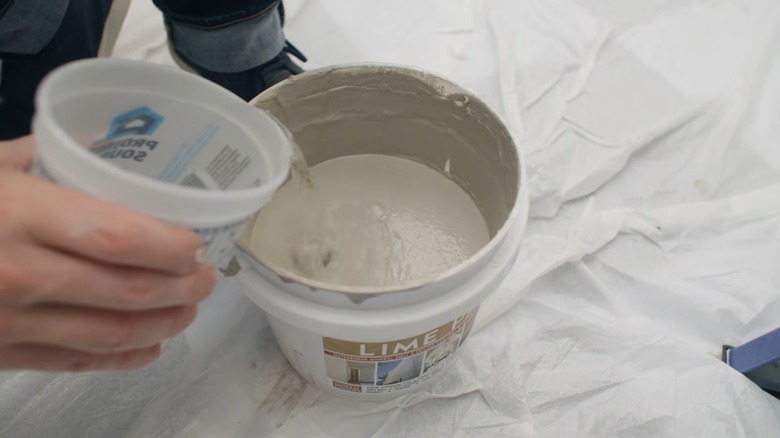
Limewash's muted, pastel-heavy color palette isn't by design. Unlike modern paints, it relies on a unique mineral cure process, wherein it doesn't just dry; it reacts with air and turns into solid rock. As such, if you add any pigment to limewash, it can affect the curing process and turn the finish chalky and brittle. This limits the range of pigments you can add to it and the quantity you can use.
As limewash is very reactive, most vivid pigments are not stable when added to it. Only natural earth pigments, like iron oxides (red, yellow), yellow ochres, umbers, and sienna, survive, which are naturally in earthy tones. And even then, if they're more than 10 to 15% pigment by volume, they can interfere with the limewash's drying process. Alas, this low pigment ratio keeps the overall color muted. Plus, while limewash can appear rich and dark inside the bucket, it's 30% lighter when it dries, so you'll always end up with a pastel shade, no matter how bold a color you start with.